
Commercial Floor Cleaning St. George, UT
866SaniClean maintains commercial hard floors across St. George and Washington County from our office at 1031 S Bluff St, under the same family ownership since 1979.
Machine scrubbing, and why mopping is not the same job
Hard floor work is machine work. A mop moves soil around in progressively dirtier water, and in a market with this much fine grit that is the difference between a floor that holds its finish for years and one that needs stripping every season.
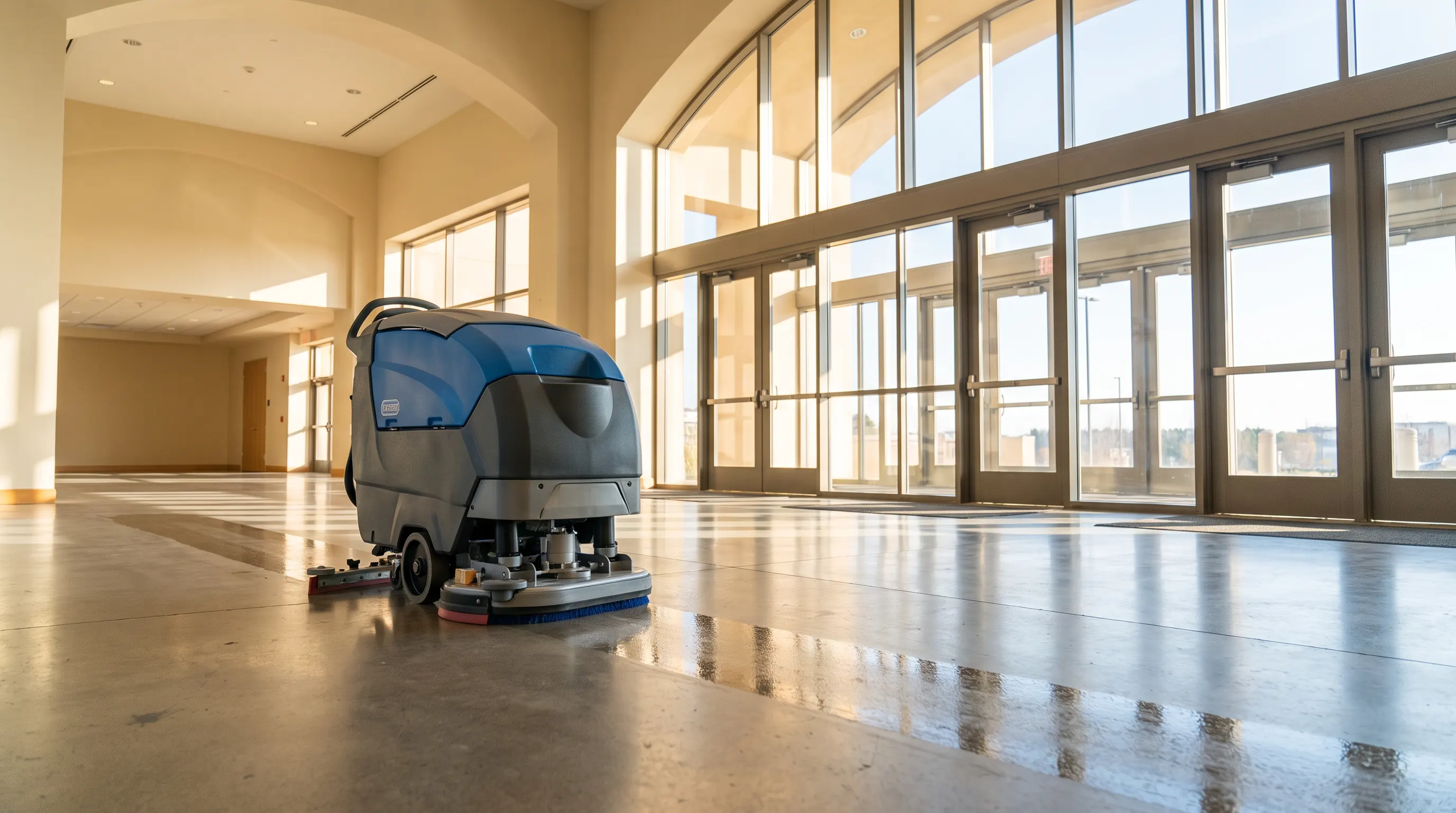
An automatic scrubber lays down solution, agitates the floor with a pad or brush, and vacuums the water back up in one pass. Soil leaves the building. A mop and bucket relies on dilution: the first room gets clean water and the last room gets what came off the first three. On a small restroom that is acceptable. Across a lobby or a corridor it is not, and the gray film that builds up in those spaces is the visible result.
Grit makes this local rather than general. Red sandstone dust is abrasive, so anything left on a floor is working against the finish under every footfall. Dry soil removal comes first, every time. Dust mopping or vacuuming before any wet process is not a nicety here, because wet cleaning over loose grit grinds it in rather than lifting it out.
Pad and chemistry selection does the rest. Neutral pH cleaner on finished floors and on anything sealed, because repeated alkaline cleaning strips finish and etches the wrong substrates. Aggressive pads only where the floor can take them. Most premature finish failure we see in St. George buildings was caused by cleaning, not by traffic.
Vinyl composition tile: strip, seal and finish
VCT is still the most common commercial floor in local offices, schools and clinics, and it is the one that most depends on getting the cycle right.
A full strip removes every coat of old finish and the embedded soil in it, neutralizes the floor, and takes it back to bare tile. Sealer goes down first to lock the surface and stop finish sinking into the tile. Finish follows in multiple thin coats, each one given real dry time, because a thick coat dries skinned over and soft underneath and will powder within weeks. The dry air here shortens those windows, which helps the schedule, but rushing between coats still fails the same way.
After that, maintenance is what decides how long it lasts. Scrubbing and recoating restores gloss and adds back sacrificial finish. Burnishing with the right pad hardens and polishes the top coats. Done on a cycle, a VCT floor can go years between strips. Neglected and then stripped repeatedly, the tile itself wears thin and starts showing seams and pattern loss.
Polished concrete, tile and grout, LVT
Polished concrete is common in newer St. George retail and light industrial space, and it is maintained by pH neutral cleaning and regular dry soil removal rather than by coatings. Acidic and alkaline cleaners both damage the surface. Where a topical sealer or a densifier has been applied, that changes the chemistry allowed on it, so we identify what is actually on the floor before touching it.
Tile and grout is a grout problem rather than a tile problem. Grout is porous, it sits below the tile surface where a mop never reaches, and it holds soil. It needs pressure and recovery rather than scrubbing by hand, and it benefits from sealing afterward. Restrooms and kitchens are where this shows first, and hard local water adds a mineral component that normal cleaner will not touch.
Luxury vinyl plank has largely replaced VCT in new clinic and office fit-outs. It is not a candidate for strip and wax. Most LVT is maintained with neutral cleaning and machine scrubbing only, and applying floor finish to it is a common and expensive mistake.
Hard water film and slip resistance
Local water is hard, and on hard floors the mineral left behind by evaporation builds into a dull film that reads as dirt. It survives ordinary cleaning because it is not soil. Periodic acid or descaling treatment removes it, applied to substrates that tolerate it, which is why identifying the floor matters before the chemistry is chosen.
Slip resistance is the part of floor care that carries real liability. Over-applied finish, the wrong pad, and residue from a cleaner used at the wrong dilution all reduce traction. Entry areas are the critical zone, because that is where grit and water arrive together. Matting, dry soil removal and controlled finish thickness do more for safety at a St. George entrance than any signage.
Scheduling floor work around your building
Strip and seal needs the space released, and that is the real constraint rather than the labor. Most local work runs on weekends or through a shutdown, and school and clinic jobs are scheduled into breaks and closures. Scrub and recoat needs much less time and can often run overnight within a normal route.
Nightly floor passes sit inside janitorial services. Soft flooring is covered on carpet cleaning, and exterior concrete on pressure washing. Kitchen quarry tile has its own requirements, set out on restaurant cleaning. If you are weighing up a gym or studio floor, our gym floor cleaning guide explains what rubber, turf and hardwood each need.
Floor program in St. George
| Cadence | Scope |
|---|---|
| Per visit | Dust mopped or vacuumed, spot mopped, entries and matting cleared, spills answered |
| Weekly | Machine scrub on corridors and restrooms, edges and corners detailed |
| Monthly | Full area scrub, baseboards, grout lines checked, fixture and floor descaling where needed |
| Quarterly | Scrub and recoat on finished floors, burnishing, grout cleaning and sealing |
| Annual or as needed | Full strip, seal and multi-coat finish, polished concrete restoration |
Booking floor work
Call the St. George office on (435) 599-7859 or the main line on (866) 726-4253. You can also request a one-time job quote for strip and seal or restoration work. We identify every floor type and whatever coating is already on it, then give you a written scope with the release window the job actually needs. The St. George hub covers the rest of our Washington County work.
Frequently Asked Questions
How often does VCT need stripping in a St. George building?
Less often than most buildings get it, if the maintenance cycle is right. Scrub and recoat plus burnishing on a regular cycle keeps gloss and adds sacrificial finish, and a local office floor can then run years between strips. Stripping repeatedly wears the tile itself thin. The grit load here makes regular dry soil removal the thing that actually extends the interval.
Why does my floor look dull and gray even after cleaning?
Two causes dominate in Washington County. One is mineral film left by hard water as it evaporates, which is not soil and will not respond to normal cleaner. The other is fine red grit ground into the finish, which scatters light. The first needs a descaling treatment, the second needs dry soil removal before wet work plus a scrub and recoat.
Can you put floor finish on luxury vinyl plank?
Almost never, and it is an expensive mistake to correct. Most LVT in St. George clinic and office fit-outs is designed to be maintained with neutral cleaning and machine scrubbing, with no coating at all. We identify the product before touching it. If a previous contractor has already applied finish, removing it without damaging the wear layer is delicate work.
Do you need the building closed for strip and seal?
The area has to be released, which is usually the binding constraint rather than the hours. Most St. George strip and seal runs over a weekend, and school and clinic work is scheduled into breaks and closures. Scrub and recoat is far less disruptive and often fits inside an overnight route, so we scope which one your floor actually needs.
Is polished concrete cleaned differently here?
Yes, and the local water is the reason. Polished concrete wants pH neutral cleaning and frequent dry soil removal, never acidic or alkaline products. Hard water in St. George leaves a mineral haze that tempts people toward acid, which damages the surface permanently. Where a densifier or topical sealer has been applied, that narrows the chemistry further, so we check first.
What does grit do to floors in Washington County?
It acts as an abrasive underfoot. Red sandstone dust is sharp, and every footfall grinds whatever is on the floor into the finish or the surface. That is why dust mopping and vacuuming come before any wet process on a St. George floor, and why entry matting sized for several footfalls does more for a floor's life here than any product applied to it.
Related services and industries: St. George, Utah medical and dental office cleaning st. george, ut cleaning and commercial cleaning across St. George, Utah.