Commercial Pressure Washing Orange County California
866SaniClean provides commercial pressure washing across Orange County for retail centers, restaurant rows, office parks, association common areas and industrial yards.
Commercial pressure washing in Orange County, surface by surface
Each job is planned around two things: the surface, which decides the method, and the drainage, which decides where every gallon of wash water goes.
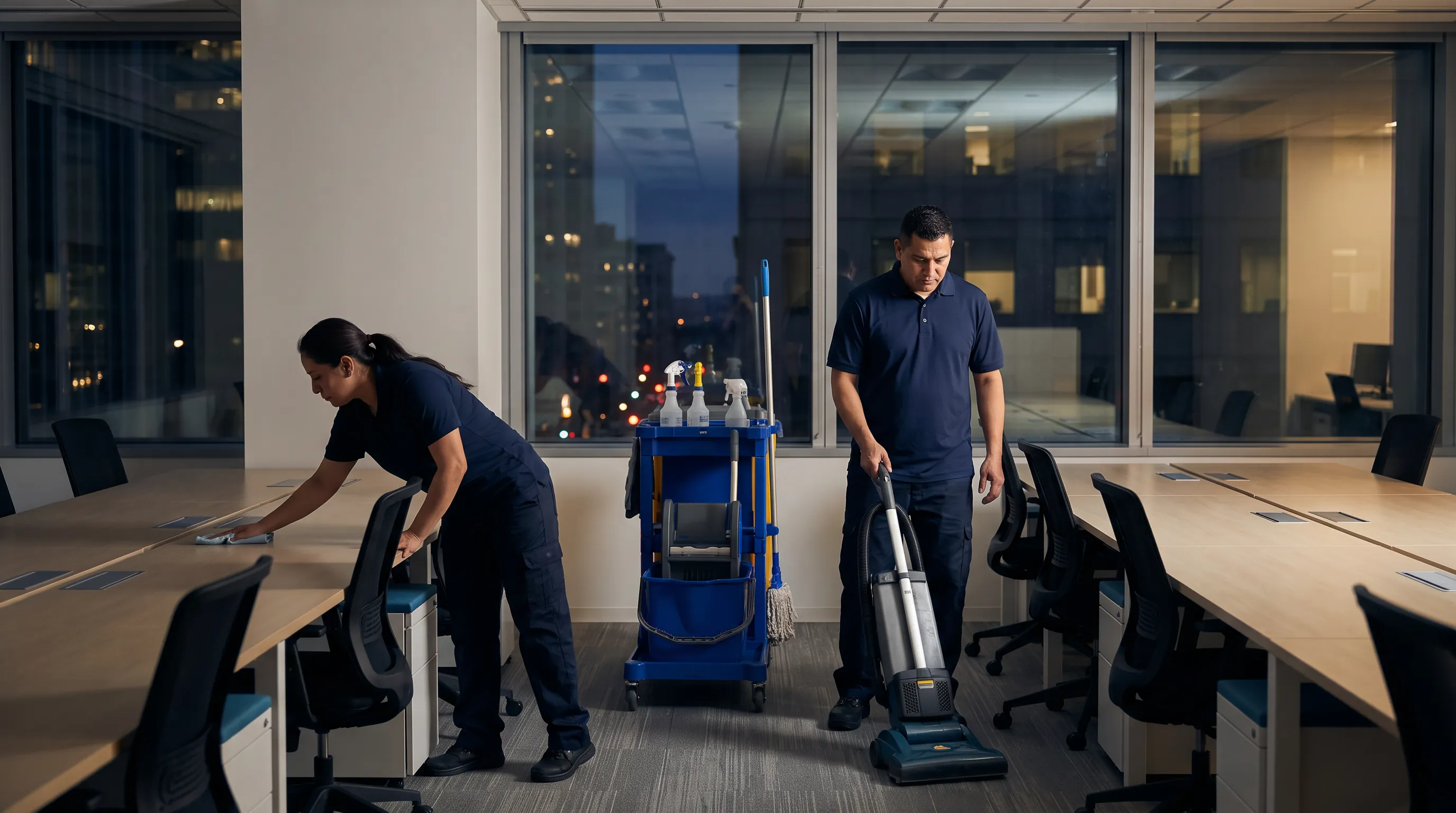
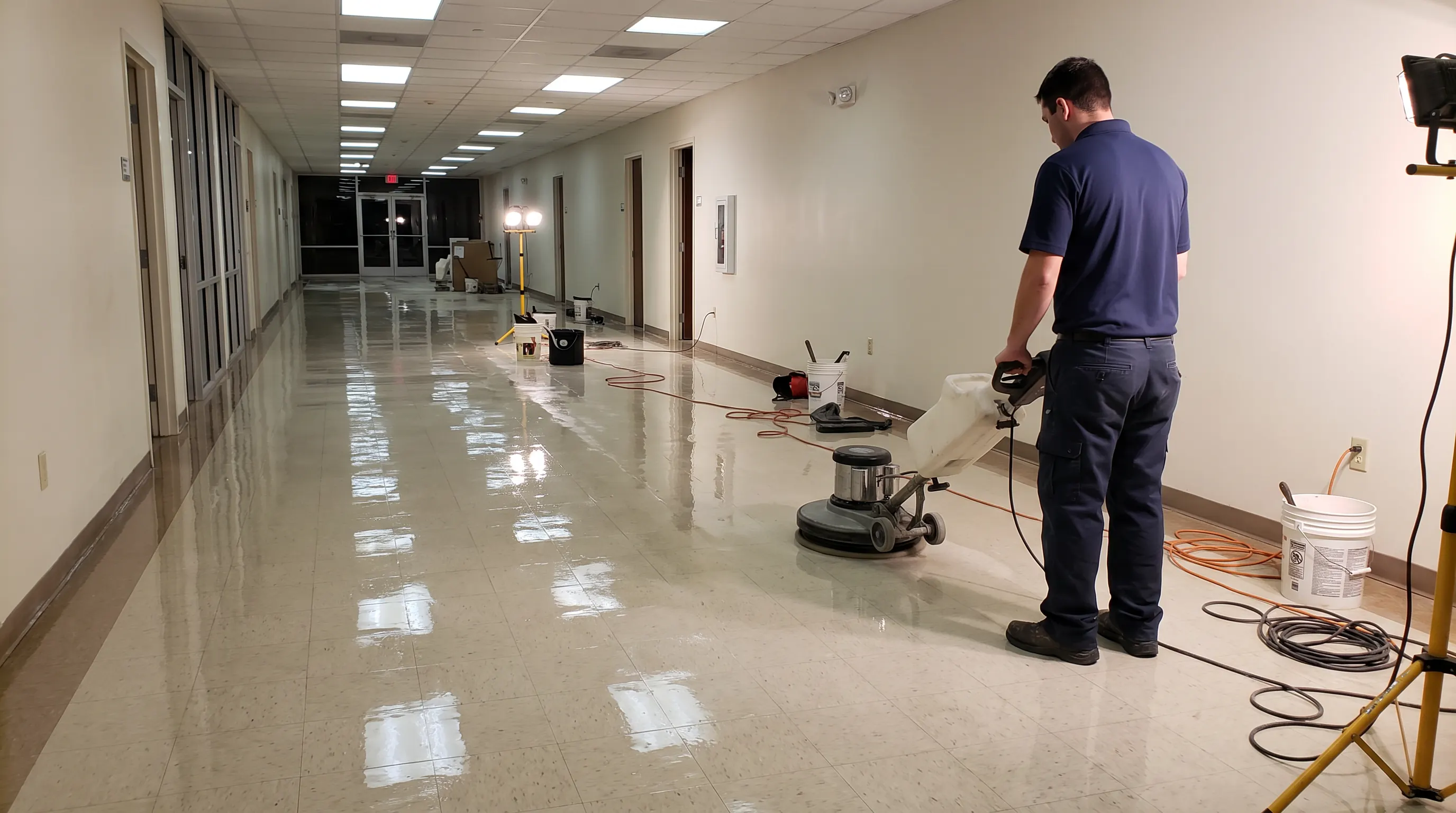
We have run commercial cleaning as a family business since 1979. Exterior washing sits alongside the rest of our commercial cleaning in Orange County, so the same written scope and the same crews can cover the walkway outside and the lobby inside.
The surface decides the method. Pressure, water temperature, detergent and the cleaning head all change with what is being washed, and treating every surface alike is how exterior cleaning causes damage.
- Concrete walkways, sidewalks and entry aprons collect traffic film, spilled drinks and chewing gum.
- Storefronts, signage and painted metal need detergent doing the work, not force.
- Dumpster pads and trash enclosures carry grease, food waste and odor.
- Drive-thru lanes and service windows combine food residue with tire marks.
- Parking structures, ramps and stairwells hold oil drip lines and dust.
- Building exteriors in stucco, brick and tilt-up concrete.
- Awnings, canopies and covered walkways.
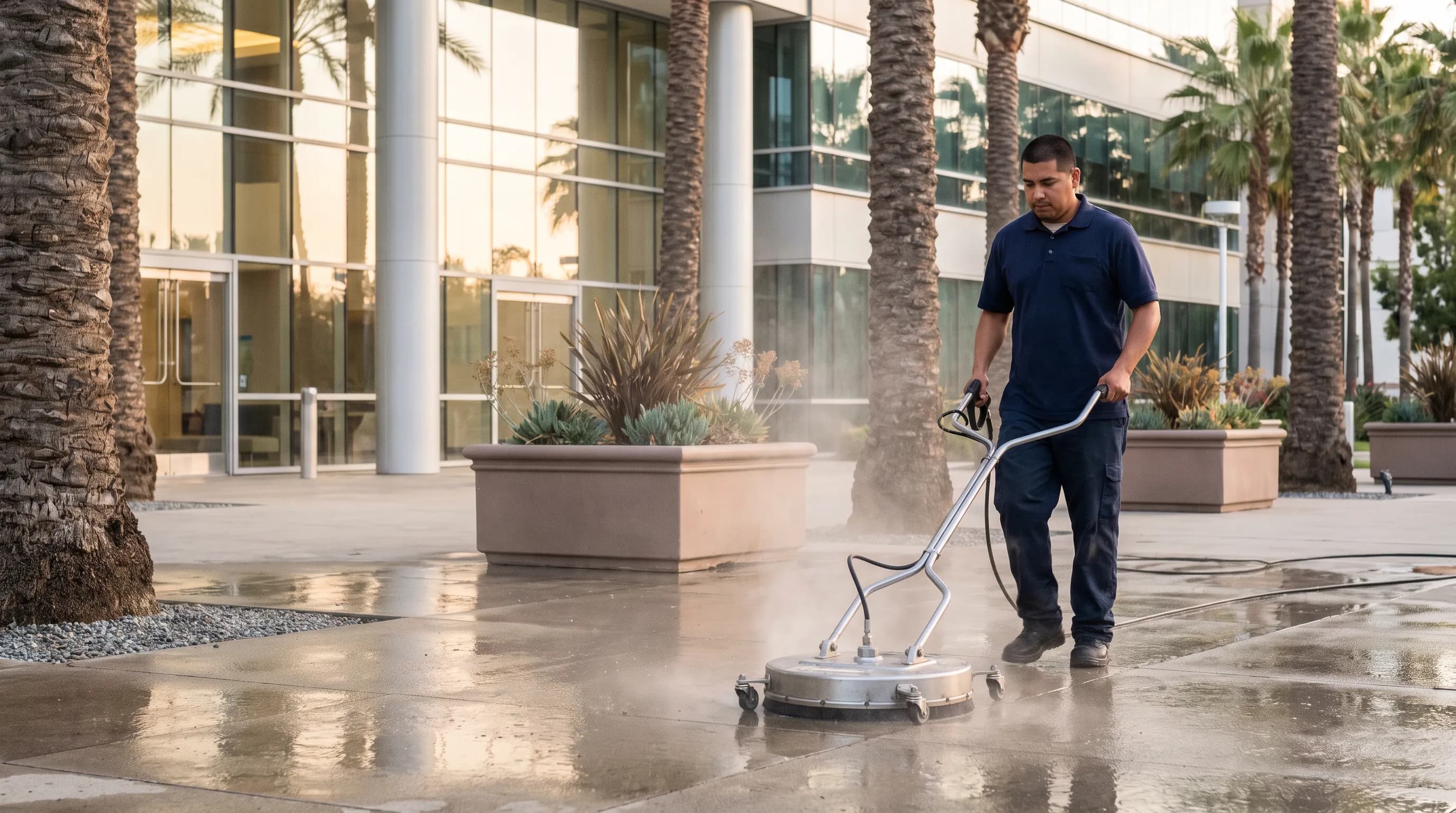
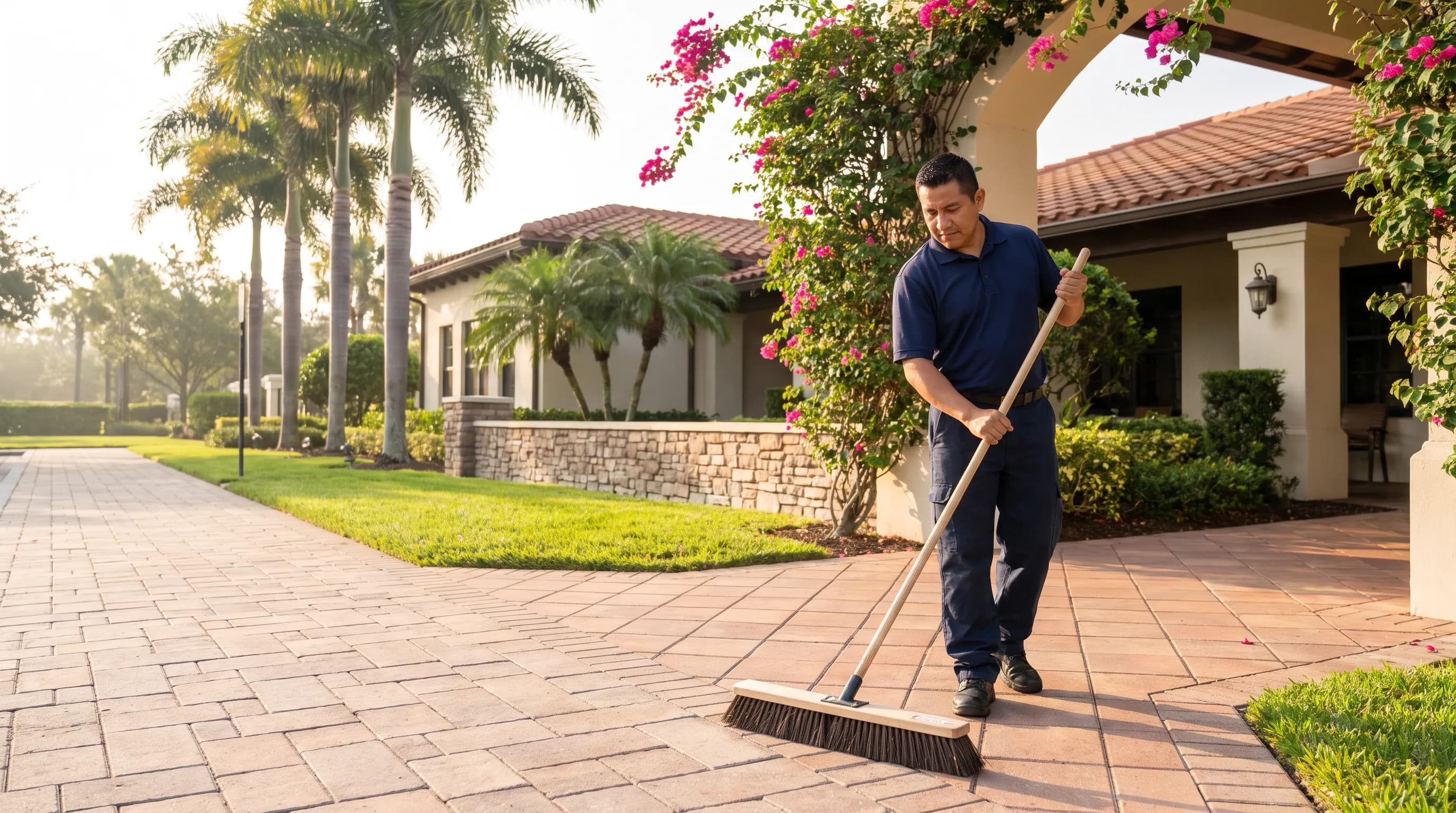
Flat concrete is cleaned with a rotary surface cleaner rather than a wand. A wand leaves the striped pattern every property manager recognizes, and those stripes stay until the whole slab is cleaned properly. Gum is softened and lifted with hot water before the general pass, because washing over it only spreads it.
Hot water, cold water and soft washing
Water temperature decides what comes off. Cold water and pressure move dirt, mud and general traffic film. They do very little to grease. Hot water emulsifies fats and oils so they can be lifted and recovered, which is why dumpster pads, drive-thrus and kitchen back doors need a hot-water machine rather than a bigger cold-water one.
Painted metal, stucco, signage, wood and awnings are washed at low pressure with detergent doing the work, an approach usually called soft washing. Turning up the pressure on a painted storefront strips paint, scars stucco and drives water behind cladding and sealant lines. Concrete flatwork tolerates far more, and the setting is chosen per surface rather than per machine.
How Orange County wash water rules shape the job
In Orange County, wash water is a legal question before it is a cleaning one. With very few exceptions, County of Orange guidance states it is prohibited under federal, state and local law to discharge anything other than clean stormwater runoff to the storm drain system. Storm drains here run to creeks, the harbor and the ocean without treatment.
The countywide stormwater program, H2OC, publishes the practices mobile businesses must follow, and it states that failing to follow them can lead to enforcement. Our sequence follows that guidance:
- Dry cleanup first. Walkways and pads are swept and debris removed before any water is used.
- Protect every drain and catch basin the water could reach, and set up away from storm drain inlets.
- Contain the work area with berms, drain covers or booms before washing starts.
- Wash, then collect all wash water with a vacuum or pump into a closed recovery tank.
- Dispose of it by an approved route: into landscaping with the owner's permission where it fully soaks in, into a sewer cleanout or utility sink with the owner's permission after heavy debris is removed, or off site to a sanitary sewer.
Ask any contractor to explain those five steps before they arrive. A crew that washes a dumpster pad straight into the gutter leaves the property owner holding a discharge that traces back to the address. The County's 24-hour pollution hotline is 1-877-89-SPILL.
Retail centers, restaurants and HOA common areas
Most exterior work in an Orange County retail center starts at the restaurant tenants. Grease migrates from back doors onto the shared walkway, and once it soaks into unsealed concrete it stains permanently unless it is treated early. Center walkways commonly run quarterly, with entries, dumpster pads and drive-thru lanes on a tighter cycle.
Office parks and medical plazas are judged at the entrance. Entry concrete, planters, bench areas and the parking structure stairwells carry most of the visible soil, and a twice-yearly program usually holds them.
Association common areas follow the board's calendar: pool decks, clubhouse entries, mail areas and walkways, usually before the busy season. Our HOA cleaning in Orange County covers the interior side of the same amenities.
Industrial yards, docks and parking structures
Industrial and flex sites carry a different soil: tire rubber, hydraulic fluid and diesel residue on dock aprons, truck courts and forklift routes. That load is hot-water work with a degreaser, run in sections so loading never stops, and recovered rather than rinsed toward a yard drain.
Parking structures concentrate oil at drip lines and dust at stairwells and ramps. Drains inside a structure may lead to the storm system, so each one is covered before washing starts. Stairwells and elevator lobbies are done first, since they are what tenants walk through. Inside the warehouse itself, our warehouse cleaning in Orange County covers floors and racking on the same schedule.
Choosing a commercial pressure washing company in Orange County
A commercial pressure washing company should be able to show its plan before it shows its machine. Ask how wash water is captured and where it goes, which surfaces get low pressure, and whether hot water is used on grease. Ask for a written scope listing each surface and its frequency, so a missed area is easy to point to.
Coastal properties add one more question. Salt film returns to glass, railings and metalwork faster near the shoreline, so exterior schedules in places like Newport Beach and Dana Point usually run shorter than an inland site of the same type. For Nevada properties, our pressure washing in Las Vegas runs under Nevada's separate discharge rules.
Service scope for Orange County pressure washing
| Cadence | Scope |
|---|---|
| Monthly | Restaurant dumpster pads and trash enclosures, drive-thru lanes, kitchen back doors |
| Quarterly | Retail walkways and entries, gum removal, storefront glass frames and signage soft wash |
| Twice yearly | Office and medical plaza entries, parking structure stairwells, HOA pool decks and walkways |
| Annually | Building exteriors, awnings and canopies, full parking structure wash |
| Every visit | Dry cleanup first, drain protection, containment, wash water recovery and approved disposal |
Frequently Asked Questions
Where does the wash water go?
It never goes to the storm drain. Wash water is contained, vacuumed or pumped into a closed tank, then disposed of by an approved route: landscaping where it fully soaks in, a sewer cleanout or utility sink with the property owner's permission, or off site to a sanitary sewer. Orange County storm drains run untreated to creeks, the harbor and the ocean.
Will pressure washing damage our storefront or signage?
Not if the pressure is matched to the surface. Painted metal, stucco, signage, wood and awnings are cleaned at low pressure with detergent doing the work rather than force. Damage almost always comes from using concrete settings on a clad surface. Coastal Orange County storefronts need particular care, since salt exposure weakens sealant lines that then let water behind panels.
How often should a retail center be pressure washed?
Walkways commonly run quarterly with entries more often, dumpster pads and drive-thru lanes monthly, and building exteriors annually. Restaurant tenants shorten every interval, because grease migrates from back doors onto shared walkways. Coastal Orange County properties usually need a tighter cycle again, since salt film accumulates on glass and metalwork faster near the shoreline.
Can you remove oil stains from concrete?
Often, though results depend on how long the oil has been there and whether the concrete was sealed. Fresh spills lift with hot water and a degreaser. Oil soaked into unsealed concrete for years will lighten without disappearing, because the stain sits within the slab. On Orange County walkways that were never sealed, old drip lines rarely recover fully, so sealing after a deep clean is worth discussing.
What does commercial pressure washing cost?
Cost depends on the area, surface type and condition, whether hot water is required, how much containment and water recovery the site needs, and access hours. Orange County sites with no convenient approved disposal point take longer than those with one. We quote after seeing the property, since drainage layout drives the work.
Can you wash before our Orange County center opens?
Yes, and most properties prefer it. Containment, hoses and recovery equipment across a walkway do not mix with customers, so retail and restaurant work in Orange County is usually scheduled overnight or before opening. Drive-thru lanes are often split into sections so one lane stays open while the other is washed and recovered.
Related services and industries: Commercial Pressure Washing in Las Vegas, Orange County gym & fitness center cleaning and commercial cleaning across Orange County.