Green Cleaning Orange County California
866SaniClean provides green cleaning across Orange County, California, using low-impact products and methods on the same nightly scope and to the same standard as any other route.
What eco green cleaning in Orange County changes on the route
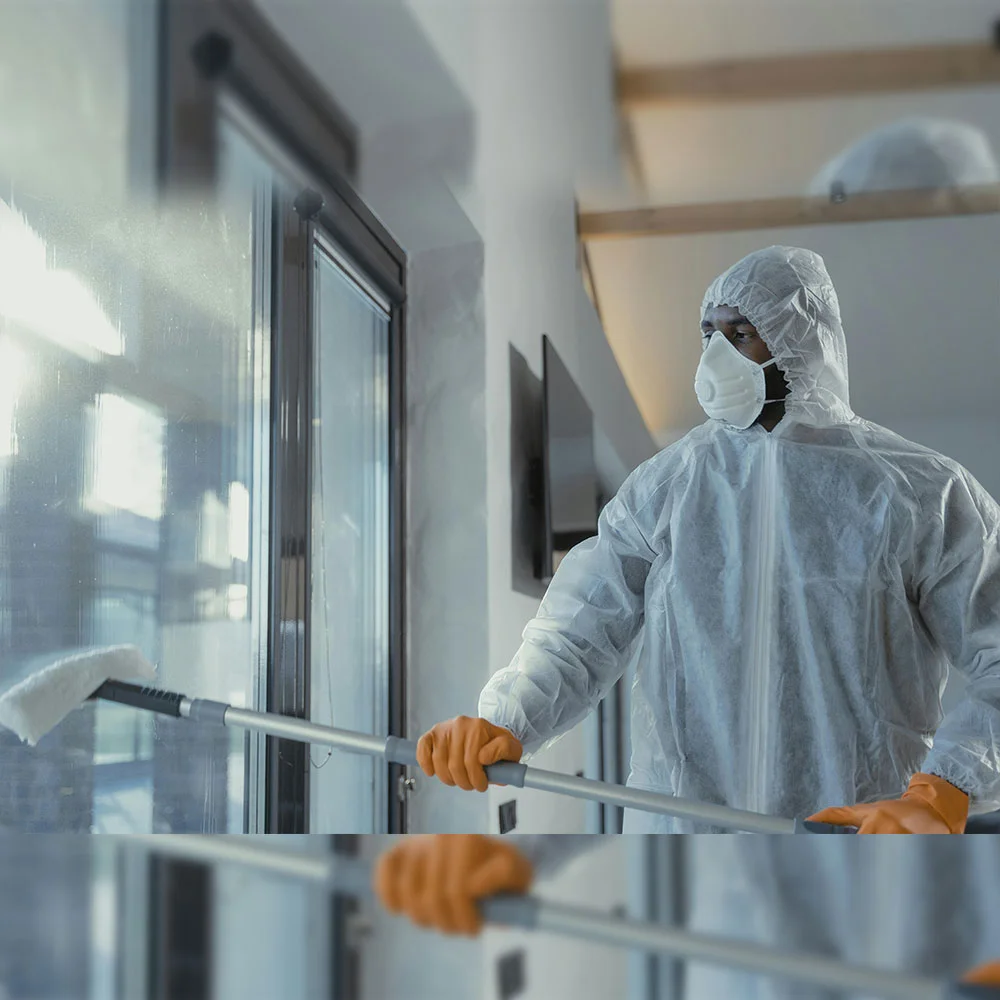
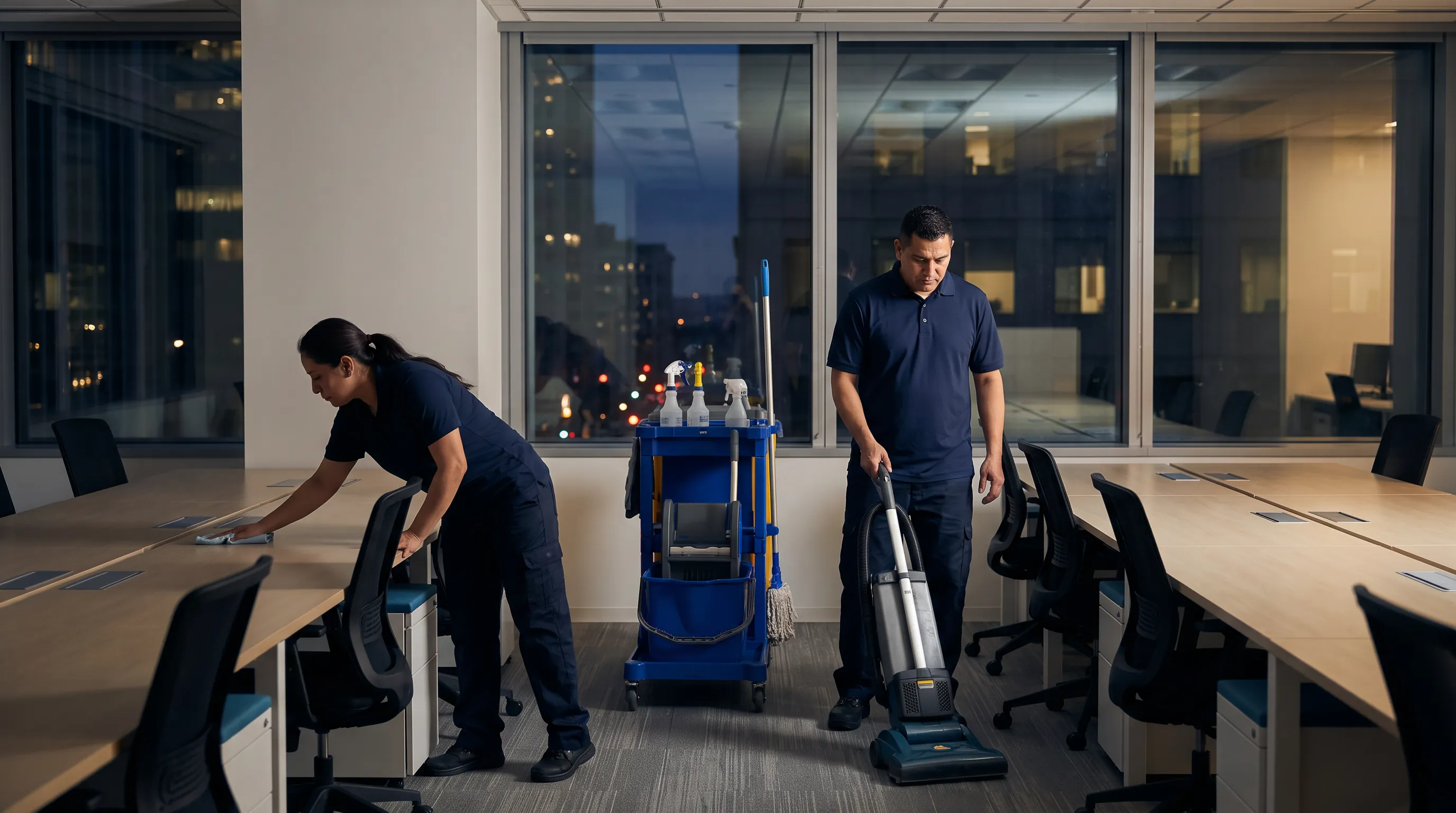
The chemistry changes while the checklist does not, so restrooms, floors, break rooms and touch points get full attention with less residue left in the air and on surfaces.
Low-toxicity products run across our normal route rather than as a premium add-on. Where a building has sensitive occupants, such as a clinic, a classroom or staff who react to fragrance, we tighten the approach and write each difference into the scope.
Eco green cleaning is mostly a matter of method rather than a different bottle. Measured dilution, low-toxicity products for routine soil, microfiber in place of cotton and filtered vacuums remove most of the chemical and dust load a conventional route puts into a building. Swapping one spray for another without changing the method achieves very little.
Dilution control comes first. Concentrates are mixed through metered dispensers instead of being poured by eye, which keeps each product at the strength its label intends. Overmixing is the usual reason an office smells of cleaner in the morning, and the sticky film it leaves collects soil faster.
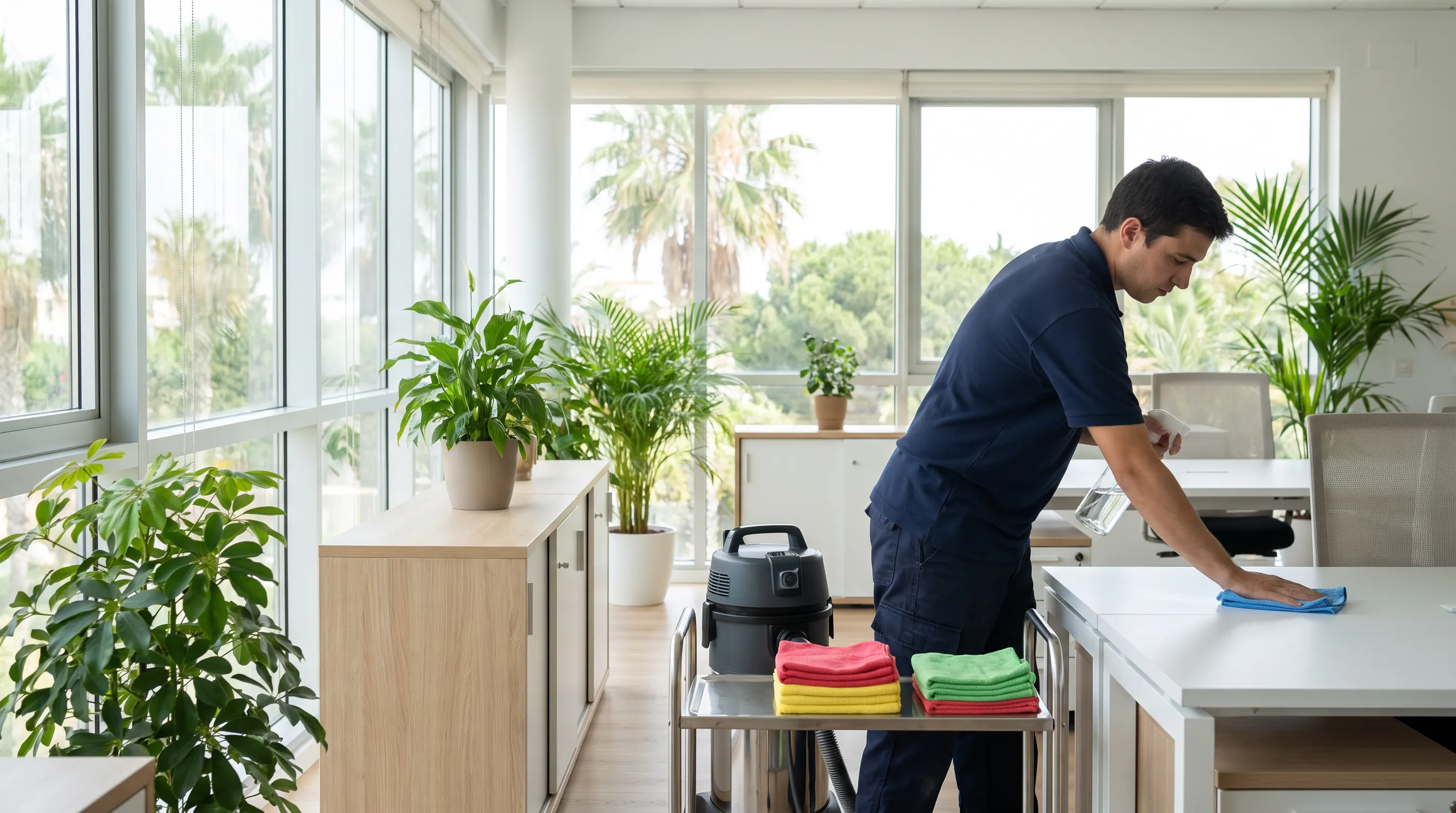
Routine soil, meaning the dust, fingerprints and food residue behind most nightly work, comes off with fragrance-free general cleaners and neutral floor products. Microfiber grabs and holds fine particles using little water and little chemistry. Cloths are color-coded, so a restroom cloth never ends up wiping a break room counter.
Vacuums carry HEPA filtration, so fine dust stays in the machine rather than leaving through the exhaust. Aerosol cans are replaced with trigger bottles or pre-dampened cloths, which puts product on the surface instead of into the air people breathe.
Disinfection is where green has limits
A green program does not skip disinfection. It uses disinfection where it does real work instead of everywhere out of habit. Restroom fixtures, shared touch points and any area where illness is circulating still get a registered disinfectant, applied properly.
Sequence is not optional. CDC guidance puts cleaning ahead of disinfecting, since a soiled surface keeps the active ingredient from reaching the microbes underneath. After that, the product needs to sit wet for the full contact time its label specifies, which is usually far longer than a quick wipe allows. A green cleaner without a disinfection claim cannot stand in for one, however good its environmental profile.
Targeting it also cuts how much disinfectant occupants breathe and touch. Desks, walls and low-touch surfaces in an ordinary office are cleaned, not disinfected, unless there is a specific reason.
How California green cleaners work inside state rules
California already sets a floor under every cleaning product sold here, which is why a green program has to mean more than compliance. The state air board sets limits on volatile organic compounds in consumer products, and county storm drain rules control where cleaning water may go.
The California Air Resources Board's consumer products program sets VOC limits for more than 130 product categories, because VOCs are an important precursor of ground-level ozone. Cleaning products are among the common products made with them, and a product in a regulated category has to meet its limit to be sold here. A lower-impact program goes further: fewer products in the closet, fragrance-free wherever possible, and concentrates that cut plastic and delivery trips.
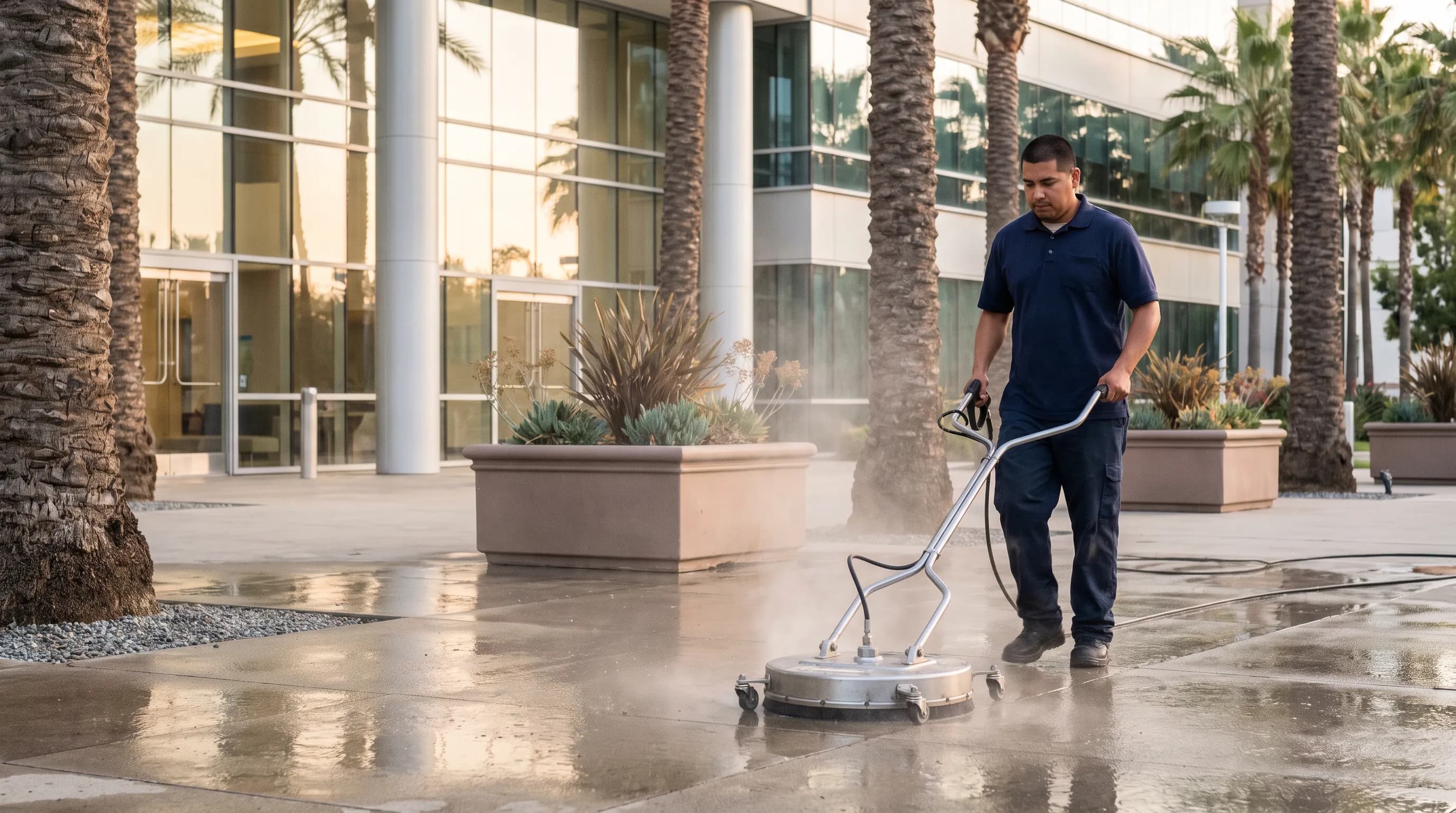
Water is the second local point. Mop buckets and machine recovery tanks are emptied into a sanitary drain inside the building, never onto a parking lot, because Orange County storm drains reach creeks and the ocean without treatment.
Crew safety belongs in the same discussion. Title 8, section 3203 obliges every employer in the state to document how it prevents workplace injury and illness, and chemical handling sits within that program. A shorter, milder product list makes that plan easier to live up to, with less to mix, store and train on.
Green carpet cleaning in Orange County and hard floor care
Floors are where green methods pay off most visibly. Carpet and resilient tile soak up whatever residue a program leaves behind, and that residue becomes the next layer of soil. Lower-residue chemistry keeps floors cleaner for longer, which is the environmental case and the budget case at once.
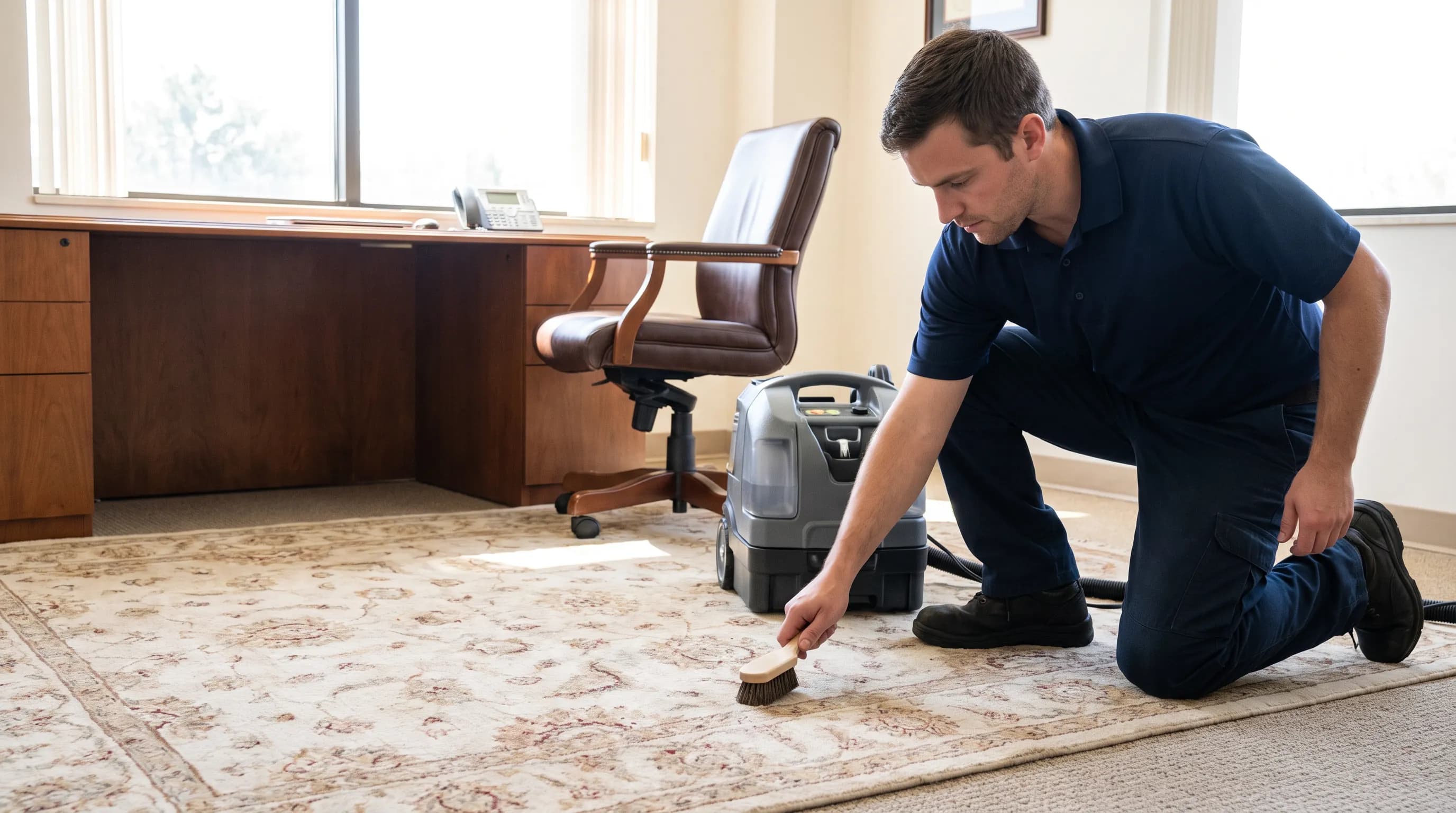
Green carpet cleaning relies on low-moisture methods for interim lane work and a near-neutral rinse during extraction, so less detergent stays in the pile to attract dirt. Spots are treated with an agent matched to the stain rather than a strong all-purpose spotter. Extraction cycles and drying windows are covered on the Orange County carpet cleaning page.
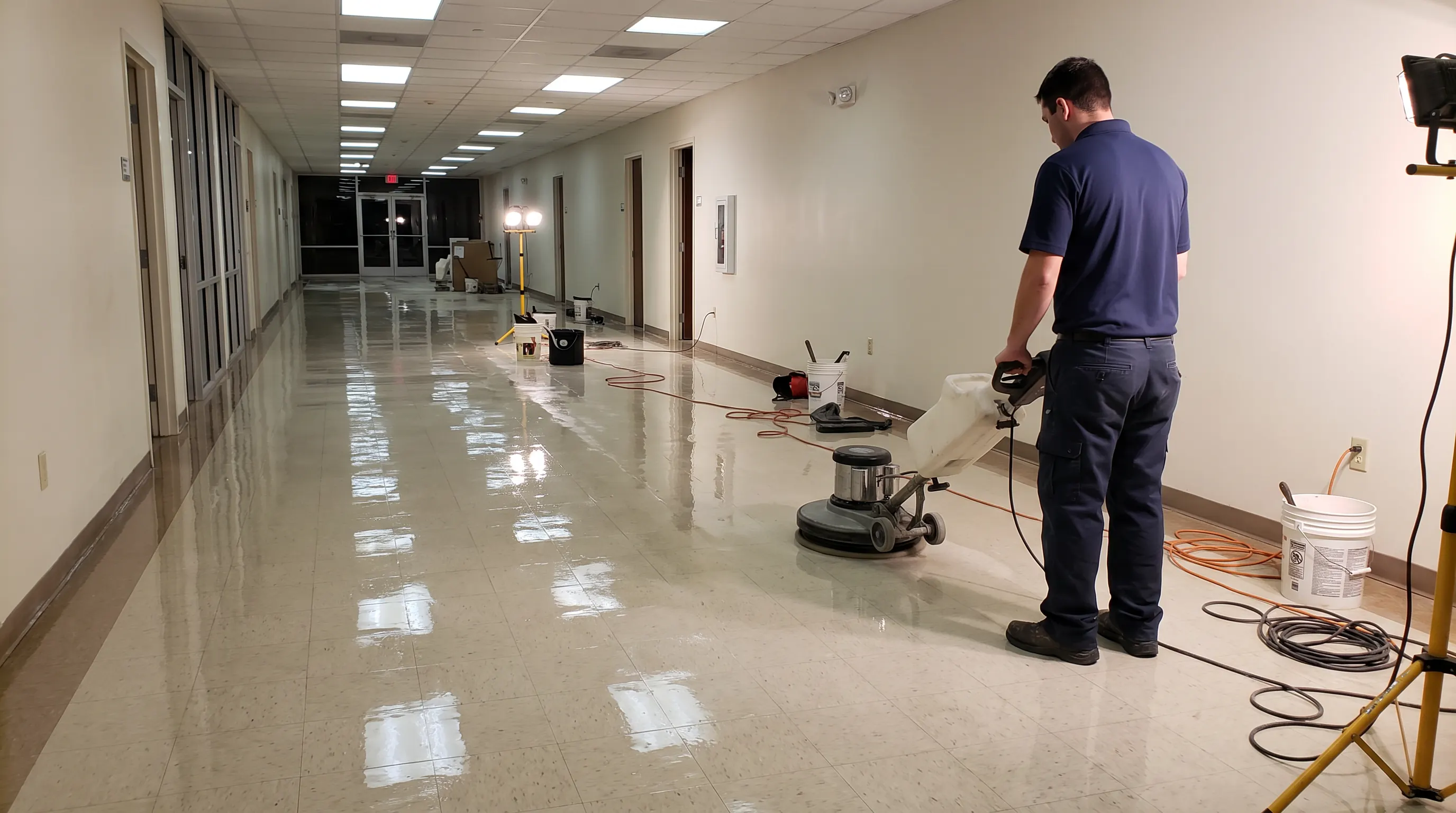
Hard floors follow the same logic. Neutral daily cleaners protect the finish and lengthen the gap between strips, and every strip avoided is a bucket of alkaline waste never created. Auto-scrubbers lay down measured solution and recover it in one pass. Surface-by-surface detail is on our commercial floor cleaning page.
Eco-friendly cleaning in Orange County buildings with sensitive occupants
Some buildings need eco-friendly cleaning for reasons beyond policy. Clinics, schools and childcare rooms, fitness studios and offices with fragrance-sensitive staff all benefit from a stricter version of the same approach.
For those spaces we narrow the product list, go fragrance-free throughout, schedule any stronger product for hours when the building is empty, and ventilate after restroom and floor work. Entry matting gets extra attention, since soil stopped at the door never has to be removed with chemistry later.
Four questions test any contractor claiming to be green: which products handle routine work and which disinfect, how dilution is controlled, what filtration the vacuums carry, and where the mop water goes. Clear answers say more than a leaf printed on a label. The wider countywide program is described under Orange County commercial cleaning, and fitness facilities follow their own routine under gym and fitness center cleaning.
Green cleaning scope
| Cadence | Scope |
|---|---|
| Per visit | Routine surfaces with fragrance-free, low-toxicity products at metered dilution; color-coded microfiber; HEPA vacuuming; restroom fixtures washed first, disinfectant then left for its labeled dwell time. |
| Weekly | Detail dusting with microfiber; entry mats vacuumed and edges detailed; break room appliance fronts. |
| Monthly | Entry mats laundered; vents and high surfaces dusted; floor drains treated. |
| Quarterly | Low-moisture encapsulation on carpet lanes; neutral scrub of resilient floors in place of stripping where finish allows. |
| Annual | Carpet extraction with a near-neutral rinse; product list reviewed with the property manager. |

Frequently Asked Questions
Does green cleaning cost more in Orange County?
Usually not by much, and sometimes not at all. Low-toxicity products run across our standard Orange County route rather than as a surcharge, and concentrates bought in bulk are often cheaper per use than ready-to-use sprays. Cost only rises where a building asks for a stricter program, such as fragrance-free everything or added ventilation time, and those differences are written into the scope before pricing.
Do green products clean as effectively as standard chemistry?
For routine soil, yes. Dust, fingerprints, food residue and traffic film in an Orange County office respond to the right product at the right dilution, used with microfiber and agitation, and none of that needs harsh chemistry. Green products fall short on disinfection, which is why restroom fixtures and shared touch points still get a registered disinfectant held for its label contact time.
How can we tell whether a cleaning contractor is really green?
Ask about practice rather than packaging. A contractor working in California should name its routine products and its disinfectants separately, explain how dilution is controlled, confirm its vacuums use HEPA filtration, and say where mop and recovery water goes. Every product sold in the state already meets California VOC limits, so legality alone says nothing about whether a program is genuinely lower impact.
Is green cleaning better for occupants with allergies or asthma?
It reduces common irritants, though no cleaning program can promise a medical outcome. Going fragrance-free, dropping aerosol sprays and using HEPA-filtered vacuums cuts the scents and airborne particles occupants most often complain about in Orange County offices. For a clinic, a childcare room or a staff member with a known sensitivity, we narrow the product list further and schedule anything stronger for when the space is empty.
Can a green program cover restrooms too?
Yes, with one rule. Restrooms in an Orange County green program get the full nightly service, cleaned with low-toxicity products first, then disinfected on fixtures and touch points with a registered product left wet for its label contact time. Floors, glass, break rooms and offices run on low-toxicity chemistry throughout. Only the disinfection step keeps a conventional product, because efficacy there is not negotiable.
Where does the dirty cleaning water go?
Into a sanitary drain inside the building. Mop buckets, scrubber tanks and carpet extraction recovery water are all emptied there, never onto a parking lot or into a gutter, because storm drains across Orange County carry their flow untreated into local creeks and out to the Pacific. Exterior washing uses containment and recovery, so wash water never reaches a storm inlet.
Related services and industries: Orange County gym & fitness center cleaning and commercial cleaning across Orange County.