
#1 Commercial Cleaning Company In Santa Ana, California
Santa Ana businesses increasingly want cleaning that does not fill the building with harsh chemistry, and that request arrives more often here than anywhere else we work.
Green and eco-conscious cleaning
866SaniClean provides commercial cleaning, janitorial and green cleaning services across the city, and we have run this as a family business since 1979.
Green cleaning is a real practice rather than a label, and the difference shows in three decisions.
The first is product selection. Certified low-toxicity cleaners handle the large majority of routine work — floors, surfaces, glass, restroom cleaning — without the fumes and residues that conventional chemistry leaves in an enclosed office. Where disinfection is genuinely required, the product is chosen for efficacy against the organism of concern and used at its label contact time, because a green product that does not disinfect is not doing the job it was brought in for.
The second is dilution and volume. Most chemical exposure in a cleaned building comes from over-application rather than the product itself. Controlled dilution and correct quantities reduce both the exposure and the cost.
The third is equipment. HEPA-filtered vacuums capture fine particulate instead of redistributing it, microfibre lifts soil with less water and less product than cotton, and color-coded cloths prevent the cross-contamination that makes people reach for stronger chemistry in the first place.
Our green cleaning in Orange County page covers the products and methods in full, including which tasks genuinely suit low-toxicity chemistry and which do not.
Commercial cleaning and janitorial services
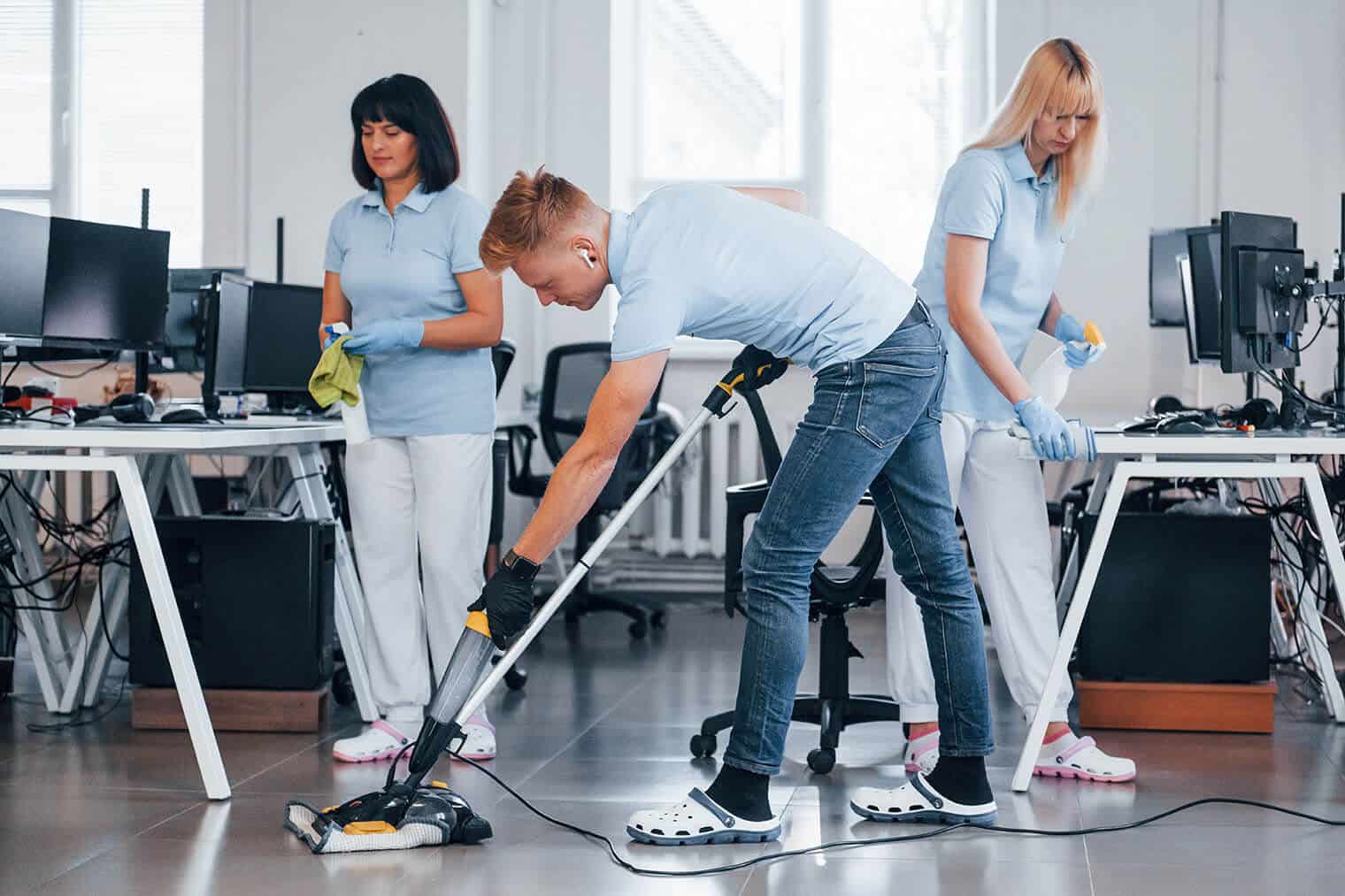
Hiring a commercial cleaner in Santa Ana comes down to whether the core route holds. It is unglamorous and it is the whole job: restroom work done properly, waste out, surfaces and break areas reset, glass clear, floors handled. What separates contractors is not the list but whether the list survives a busy week, a short-staffed night and a crew that has worked the building for eleven months.
Frequency follows headcount rather than floor area. Restrooms set the minimum in every building, because they deteriorate on their own schedule regardless of how tidy the workspace looks.
Santa Ana's commercial stock ranges from civic and professional buildings downtown to industrial and warehouse space, and the same contractor rarely handles both well. We staff those separately: office work goes to crews trained on detail, industrial work to crews with machinery.
Industrial and manufacturing spaces
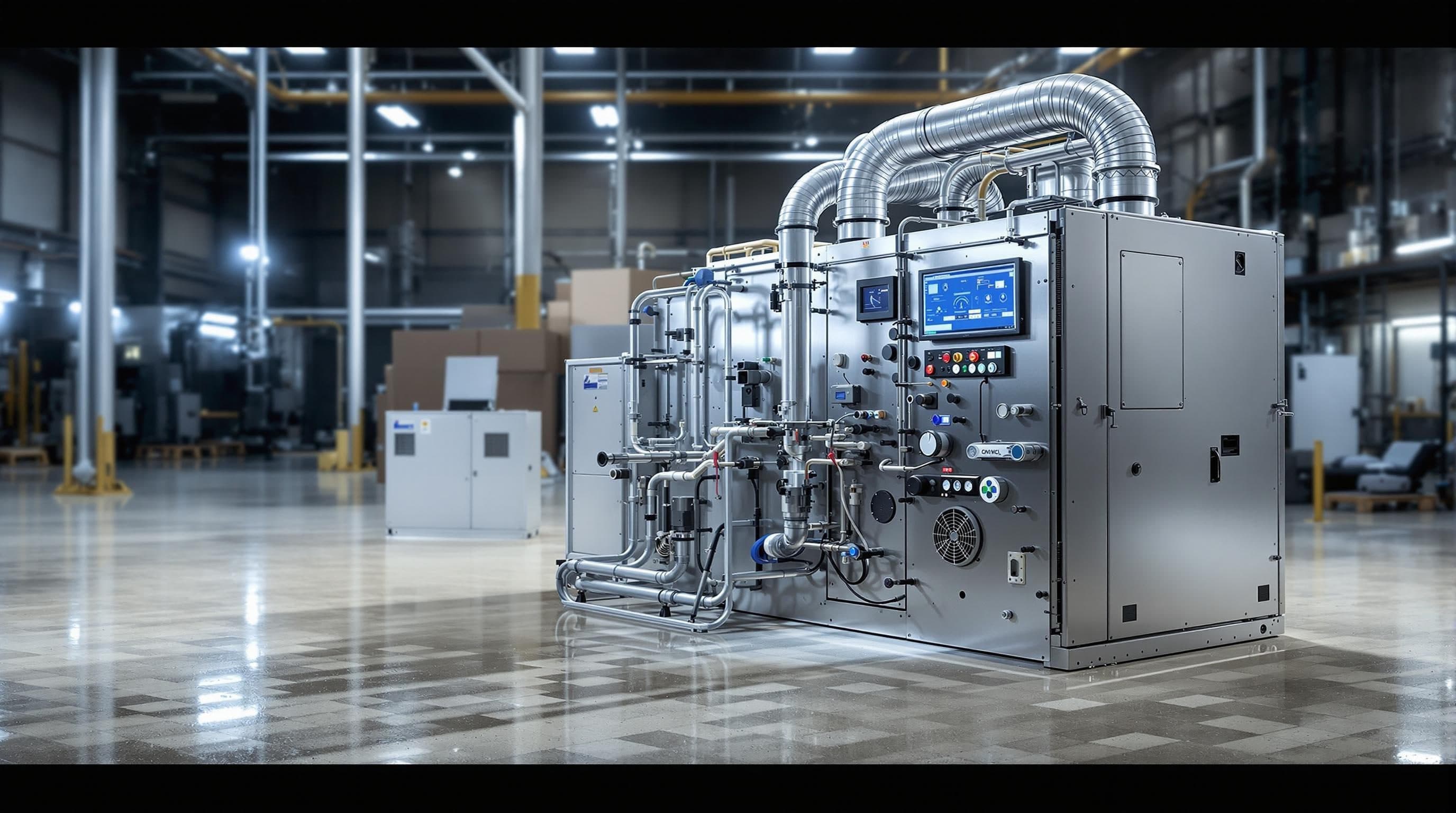
Industrial buildings need machinery rather than mops. Floor scrubbing rather than mopping, dust control on racking, dock and roll-up door areas on the shortest cycle in the building, and spill response for oil or hydraulic fluid treated as a safety matter rather than an appearance one.
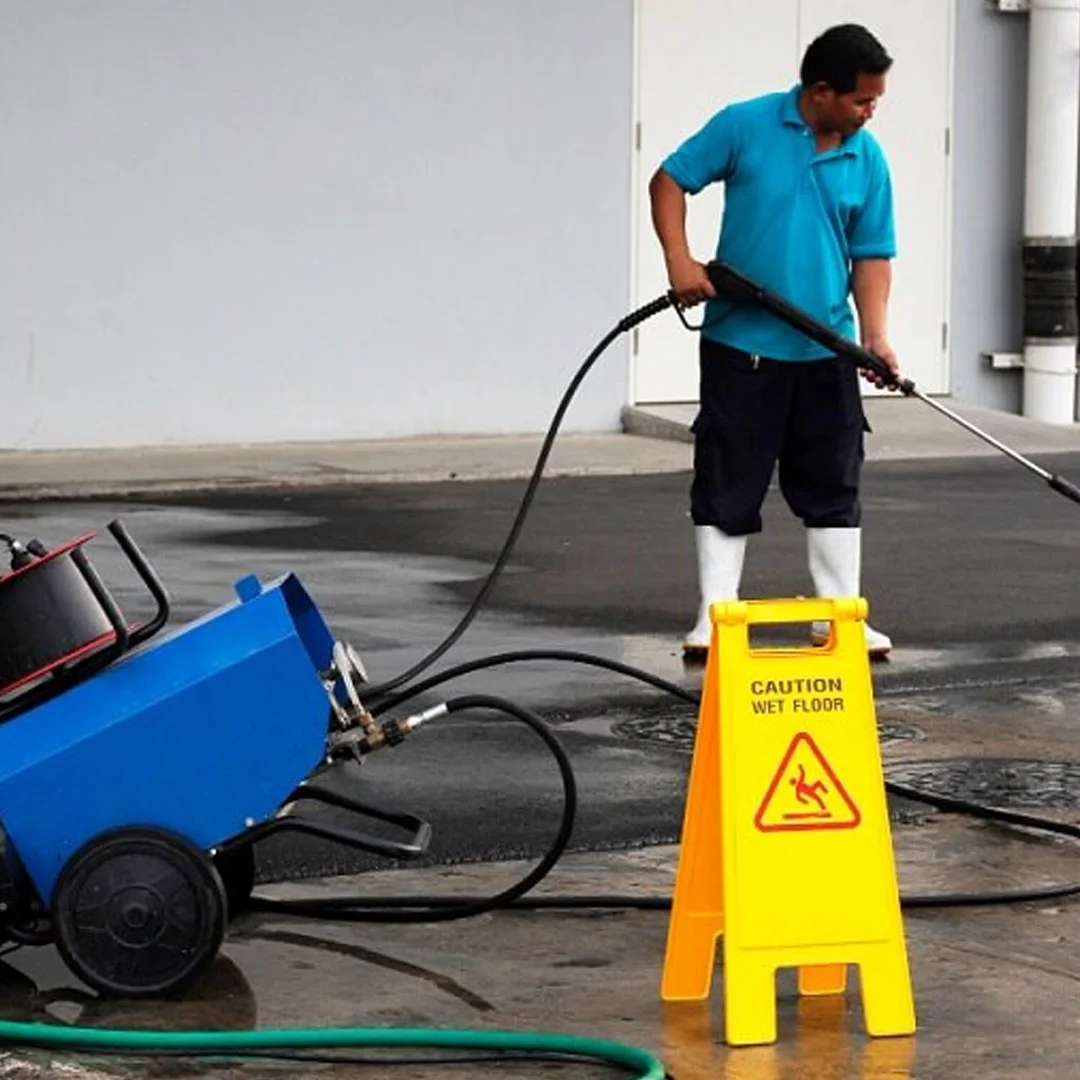
OSHA's walking-working surfaces rule requires floors kept clean and, to the extent feasible, dry, and free of hazards such as spills. In a building where pedestrians and powered equipment share lanes, that obligation is continuous.
Flex units with an office frontage and a production area behind need both approaches under one schedule. Splitting them between two contractors leaves a seam where neither is responsible.
Restrooms and the high-touch program
Restrooms generate more complaints than every other part of a commercial building combined, and they are the clearest signal a building sends about how it is managed.
The work is not complicated but it is unforgiving. Fixtures cleaned and disinfected rather than wiped. Consumables restocked before they run out rather than after somebody reports it. Floors cleaned properly, including the edges and behind fixtures where soil accumulates. Drains treated on a schedule, because odor returning within hours of cleaning almost always comes from a drain or from grout rather than the surfaces.
Grout is the other recurring problem. Tile lines hold organic soil that mopping passes straight over, so they need agitation and dwell time on a periodic cycle rather than more frequent mopping.
Buildings with heavy daytime use need mid-day restroom attention rather than a single nightly clean, since one pass will not hold through an afternoon. That is a scheduling decision rather than a scope one, and it is usually the cheapest improvement a Santa Ana building can make.
Supply management sits inside the same program. Consumables get restocked on every visit against actual usage rather than a fixed quantity, because a restroom serving forty people empties at a different rate from one serving eight. Where a Santa Ana building keeps running short, the dispenser type is usually the cause rather than the schedule, and changing it costs less than adding visits.
Frequency is the other lever. Buildings with heavy public footfall need mid-day restroom attention rather than one nightly clean, and that single change resolves more complaints than any other adjustment we make to a scope.
Nearby coverage
We service Tustin, Costa Mesa and Garden Grove from the same dispatch, within commercial cleaning across Orange County.
Downtown Santa Ana buildings add a parking and loading constraint that suburban business parks do not. Crews carry equipment further from the vehicle, which affects how a route is sequenced and how long it realistically takes, so we plan those buildings around the access rather than pretending it does not exist.
Service scope
| Cadence | Scope |
|---|---|
| Nightly | Restrooms cleaned and restocked, trash and recycling, desks and surfaces, break rooms, glass, floors |
| Weekly | Detail dusting, interior glass, corridors and stairwells, high-touch disinfection pass |
| Monthly | Vents and high dusting, baseboards, hard floor scrub, appliance interiors |
| Quarterly | Carpet extraction, upholstery, floor recoat, light fixtures, racking dust removal |
| On request | Post-construction, vacancy cleaning, response disinfection, degreasing |
Frequently Asked Questions
What makes a cleaning service genuinely green?
Product selection, dilution control and equipment, rather than a label on a bottle. Certified low-toxicity products handle most routine work, controlled dilution limits exposure, and HEPA-filtered vacuums capture particulate instead of redistributing it. Where disinfection is genuinely needed, efficacy comes first and the product is held for its label contact time.
Do green products disinfect as well as conventional ones?
For routine cleaning, low-toxicity products remove soil perfectly well, and cleaning is what removes most contamination. Disinfection is a separate step with its own requirements, and there we select an EPA-registered product effective against the organism of concern. Santa Ana clients usually want green routine work with targeted disinfection rather than either extreme.
What does commercial cleaning cost in Santa Ana?
Cost follows cleanable square footage rather than gross area, frequency, restroom count, floor types and headcount. Buildings mixing office and industrial space price as two scopes because the work and equipment differ. Santa Ana buildings needing weekend or restricted-hours access price differently again, so we quote after walking the property.
Do you clean industrial buildings in Santa Ana?
Yes. Industrial work uses floor scrubbing rather than mopping, dust control on racking and product surfaces, dock area cleaning on the shortest cycle in the building, and spill response treated as a safety obligation. Flex units with an office frontage get both approaches under one schedule rather than split between contractors.
How often does a Santa Ana office need service?
Occupancy decides it rather than square footage. A busy office with shared restrooms usually needs five nights a week, while a lightly occupied suite holds at two or three. Restrooms set the floor either way, since they degrade on a schedule unrelated to how tidy the offices look.
Can you use green products in a building with allergy concerns?
Yes, and it is one of the more common reasons Santa Ana employers ask for them. Low-toxicity products and HEPA filtration reduce both airborne particulate and chemical residue. We can also schedule higher-odor tasks such as floor refinishing for periods when the building is empty for long enough to ventilate fully.
