
Best Commercial Cleaning Services Costa Mesa CA
866SaniClean provides commercial cleaning in Costa Mesa for design and showroom space, retail and restaurants, professional offices, medical suites and light industrial units. The company has been family-owned since 1979.
Commercial maintenance services in Costa Mesa
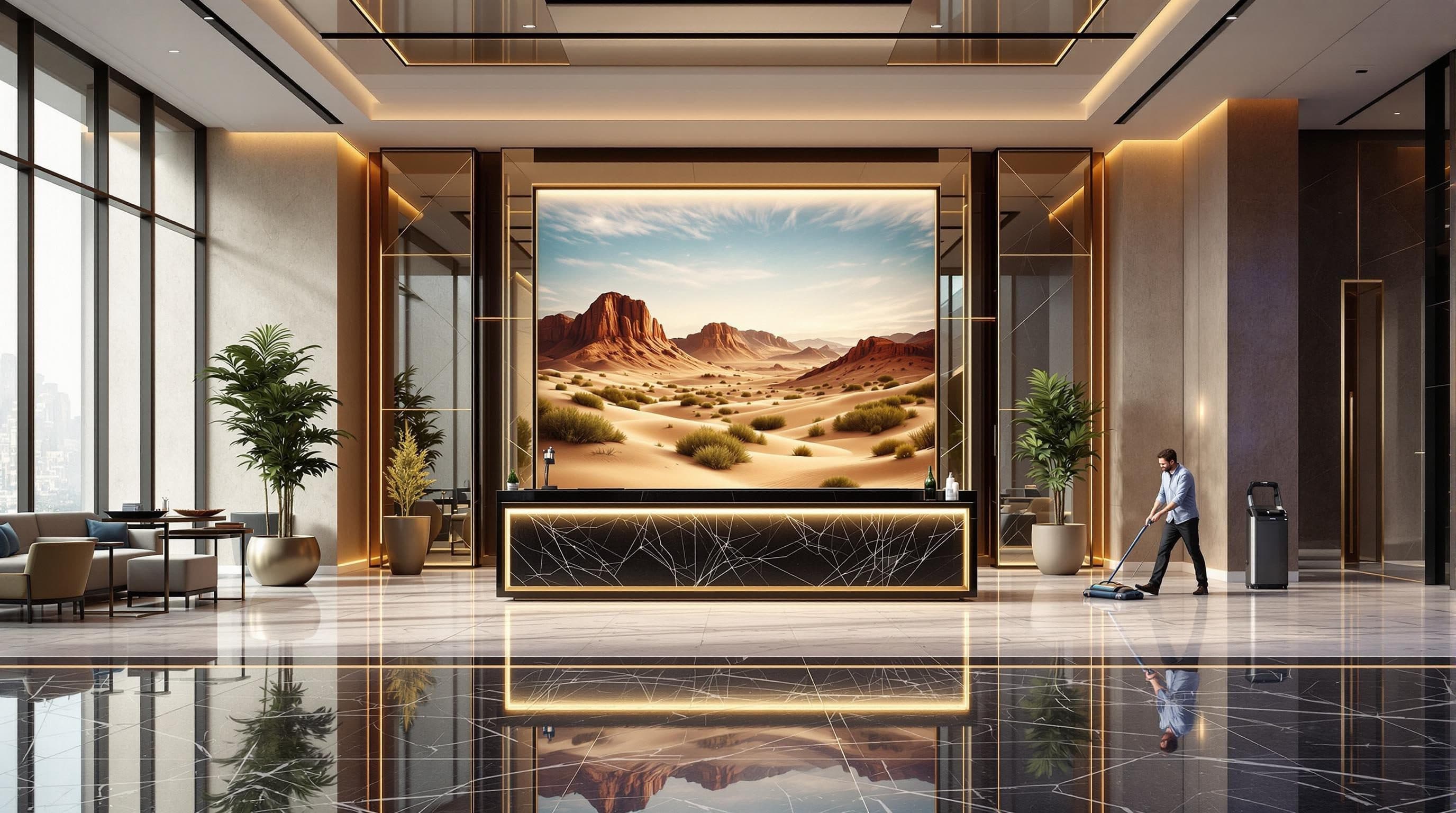
Costa Mesa has a commercial character the rest of the county does not: a dense concentration of design, furnishing and showroom businesses sitting alongside conventional office and retail stock. Showroom space is judged the way a retail floor is judged, continuously and at close range, but it holds materials that a retail floor never does.
Most buildings here do not want cleaning as a single line item. They want maintenance, meaning a defined program covering the recurring work, the periodic work and the reactive work, with each priced and scheduled rather than negotiated whenever something happens.
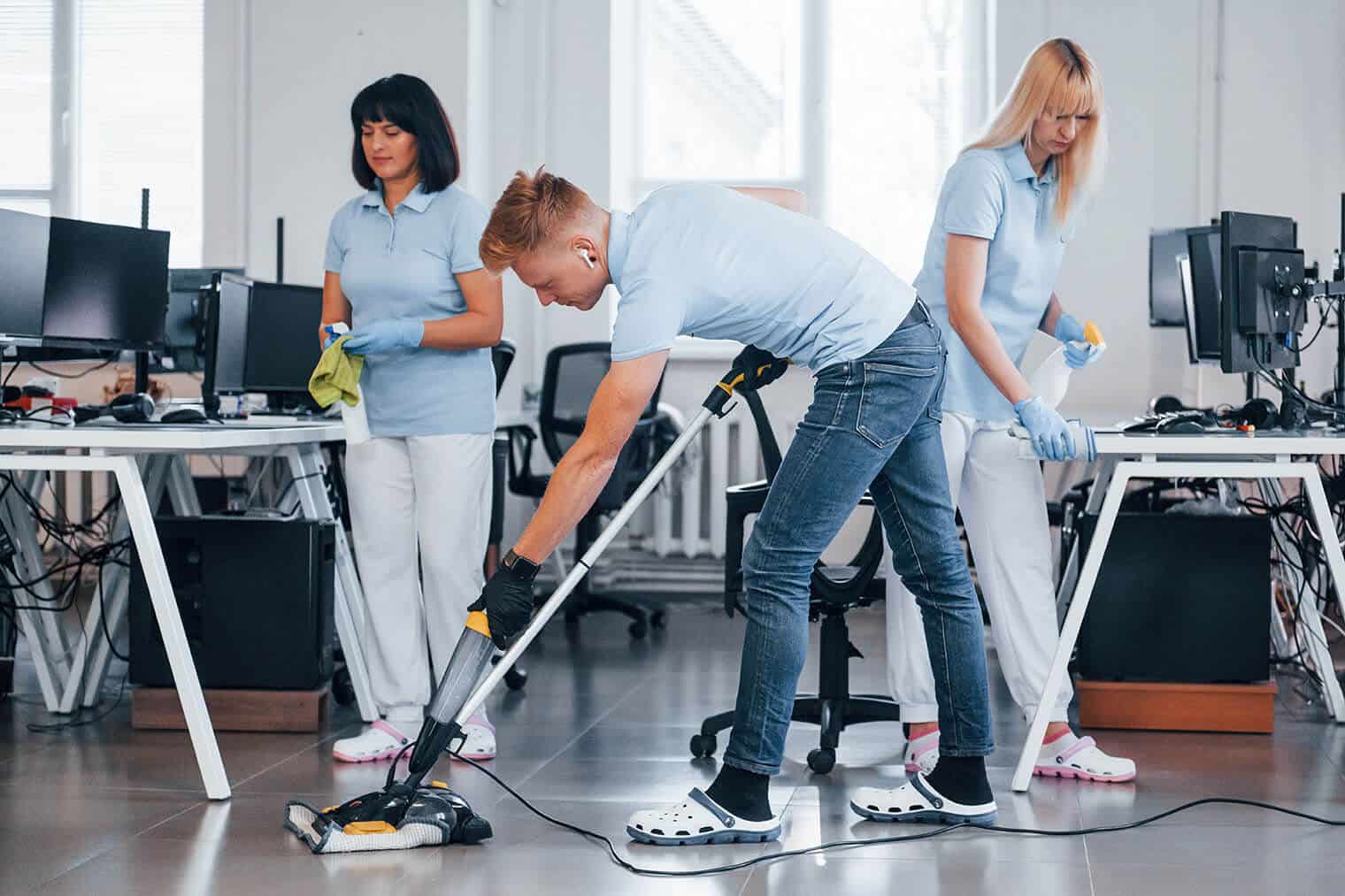
The recurring layer is the nightly or alternate-night route. The periodic layer covers carpet extraction, hard floor machine work, high dusting, vents and light diffusers, each on its own interval. The reactive layer is the one most contracts handle badly: spills, a failed fixture, a delivery that leaves a mess in the lobby, a tenant move-out at short notice.
Writing all three into one program is what makes a building predictable to run. It also makes the budget legible, because a facilities manager can see which layer is growing rather than watching a single number rise for reasons nobody can name.
Reactive work needs a response standard attached to it or it is not really in the contract. That means an agreed contact, an agreed window, and an agreed rate for out-of-scope work, decided in advance rather than under pressure.
Showrooms and design district space
Showroom and furnishing space concentrates a set of materials that ordinary commercial cleaning is not set up for.
Upholstery, rugs, finished timber, stone samples, glass display and specified paint finishes all sit in the same room, often unprotected and frequently for sale. A general-purpose product used across that mix will damage something expensive, and the damage is usually discovered by a customer rather than by staff.
The practical approach is to establish what may be touched and with what, in writing, before the first visit. Some surfaces get cleaned. Some get dusted only. Some get left alone entirely and handled by the tenant's own people. A crew that knows which is which is worth considerably more than a crew that works quickly.
Floors carry the visual load in these spaces. Polished concrete, sealed timber and large-format tile all show traffic patterns under display lighting that would be invisible in an office, so the maintenance interval is set by how the floor looks under those lights rather than by how soiled it technically is.
Glass display and partitions need a squeegee and dry pass rather than a spray and wipe, since residue film is exactly what display lighting picks up.
Retail, restaurants and trading hours
Street-level retail and food businesses here are judged during trading, so the work has to sit outside it. In practice that means before opening or after close, with the window written into the scope rather than renegotiated weekly.
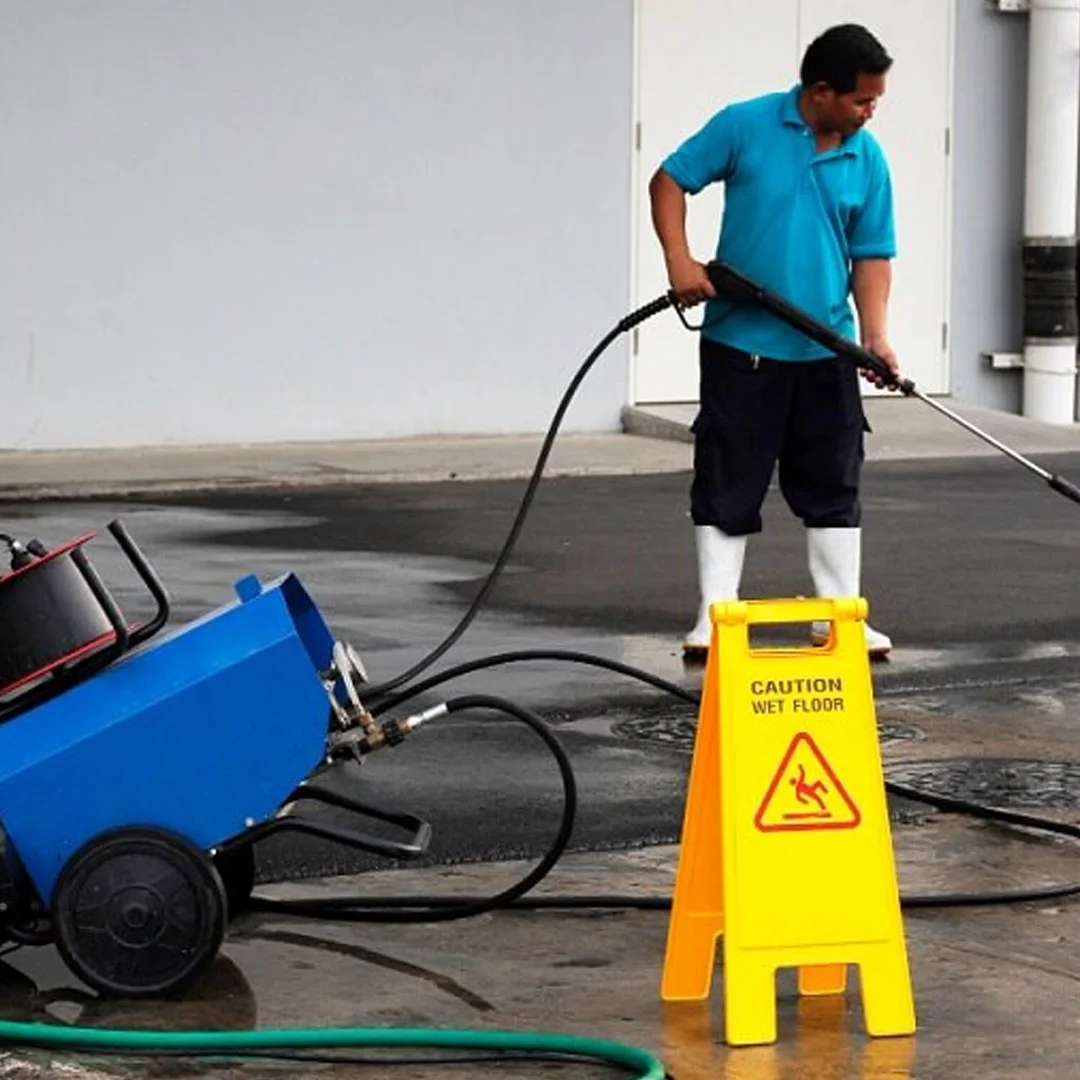
Restaurants concentrate the difficult work. Grease travels from kitchens and back doors onto shared walkways and soaks into unsealed concrete, where it stains permanently unless it is dealt with early. Kitchen and service floors need a degreasing cycle of their own, because general-purpose mopping mostly relocates grease.
Restrooms in trading businesses cannot be held by a single visit. A restroom that was clean at opening is not clean by mid-afternoon in a busy unit, and daytime checks are usually the cheapest reputational insurance a business can buy.
Offices, medical suites and light industrial
The conventional stock behaves conventionally. Attendance is set by how many people use a floor rather than by its size, with restroom load setting the minimum.
Medical suites take a scheduled scope through public and administrative areas while clinical rooms stay under the practice's own protocol. Light industrial units want machine floor work, dust taken off racking on its own cycle, and the loading area treated as the dirtiest point in the building.
Vacancy and fit-out between tenants
Costa Mesa turns space over often, and a good deal of what looks like cleaning work here is really handover work.
A unit coming back needs its floors taken to lettable condition, restrooms restored rather than merely serviced, kitchen and staff areas degreased, and wall and door marks removed wherever they will come out. Showroom space adds a step, because display fixings leave anchor holes and adhesive residue that a routine clean is not scoped to touch.
Fit-out cleaning is the other half and the one most often underestimated. Fine construction dust keeps settling for days after trades leave, so a single clean at handover is almost always followed by a second pass once the air has cleared. Booking one visit and hoping is how a tenant moves into a unit that looks finished until the light changes.
Both are quoted as defined jobs against square footage, floor materials and a handover date rather than folded into a recurring rate.
Nearby coverage
The same crews also work Newport Beach, Fountain Valley and Santa Ana, inside commercial cleaning across Orange County.
Service scope in Costa Mesa
| Cadence | Scope |
|---|---|
| Recurring | Restroom service and restock, waste cleared, surfaces and break areas reset, entry and display glass, floor pass by material |
| Weekly | Detail dusting, partition and display glass, corridors, high-touch surfaces, matting lifted and washed |
| Periodic | Carpet and upholstery extraction, hard floor machine work, high dusting, vents, light diffusers |
| Reactive | Spill response, fixture failures, delivery mess, short-notice turnover, agreed rate and response window |
| Annually | Strip and refinish where the material takes it, deep restroom restoration |
Frequently Asked Questions
What do commercial maintenance services include in Costa Mesa?
A maintenance program covers three layers rather than one: the recurring route, the periodic work on its own intervals, and reactive work with a response standard attached. Each is priced and scheduled separately. That is what makes a building predictable to run and lets a facilities manager see which layer is growing instead of watching one number rise unexplained.
Can you clean showroom and design district space?
Yes, and it needs a written list of what may be touched and with what. Upholstery, finished timber, stone, glass display and specified paint often share one room, and a general-purpose product across that mix damages something expensive. Some surfaces get cleaned, some dusted only, some left to the tenant's own people entirely.
How do you handle restaurants and food businesses?
Work sits outside trading hours, agreed in the scope rather than renegotiated weekly. Kitchen and service floors get a degreasing cycle of their own, since general-purpose mopping relocates grease rather than lifting it. Grease that reaches unsealed concrete on a shared walkway stains permanently, so it is treated early rather than at the next deep clean.
Why do our showroom floors show traffic marks so clearly?
Display lighting is the reason. Polished concrete, sealed timber and large-format tile all reveal traffic patterns under directional light that would be invisible under office lighting. The maintenance interval therefore follows how the floor reads under those lights rather than how soiled it technically is, which usually means a shorter cycle than the square footage suggests.
How is a Costa Mesa cleaning contract priced?
By layer rather than by one rate. The recurring route prices on occupancy, restroom count and surface materials. Periodic work prices per cycle and per surface. Reactive work carries an agreed rate and response window so it is not negotiated under pressure. Showroom space usually costs more per square foot because of the materials rather than the area.
