hardwood floor cleaning orange county California
866SaniClean provides hardwood floor cleaning in Orange County, California, along with maintenance for every other hard floor a commercial building is likely to have: VCT, luxury vinyl, sealed concrete, tile and grout.
Commercial hardwood cleaning is finish maintenance
Each surface gets its own chemistry, machine and cycle, because the process that keeps one floor looking new will slowly ruin another.
Most buildings carry three or four of these surfaces under one roof, from a wood-floored reception to tiled restrooms and a VCT back corridor. We scope them floor by floor in writing, as part of our wider commercial cleaning in Orange County.
On a sealed wood floor, foot traffic never touches the wood. It touches the coating on top. Keep that layer intact and recoated on time and the boards underneath last for decades. Let it wear through and the fix is sanding, which is a flooring contractor's project rather than a cleaning cycle.
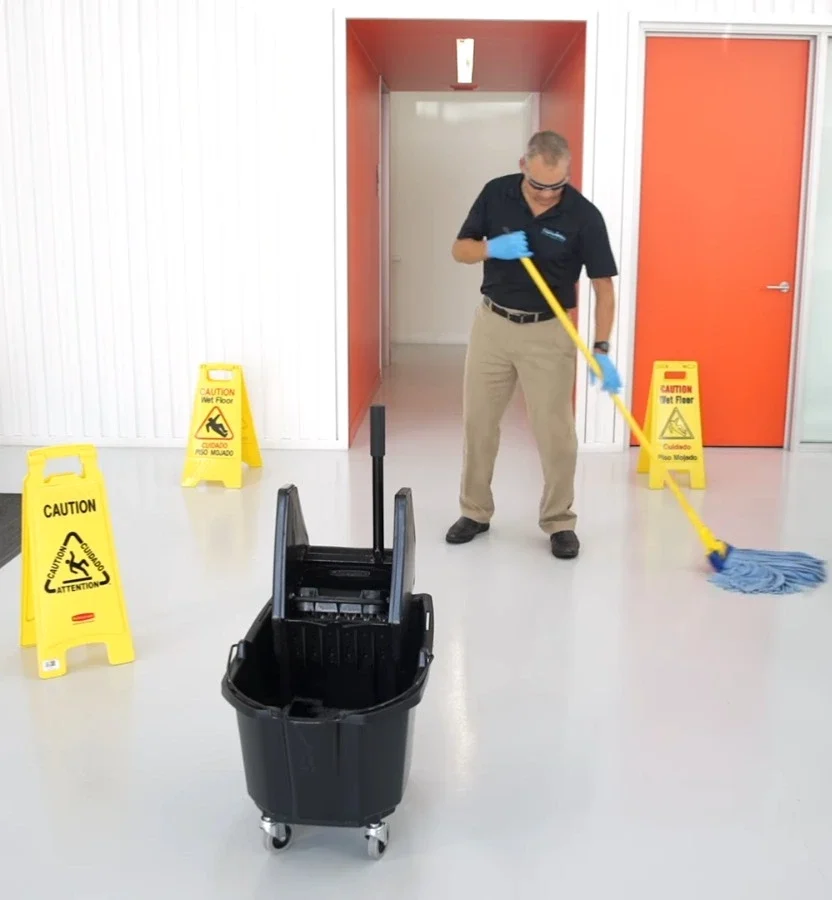
The daily threat is grit. Sand and fine soil under a heel act like abrasive paper, so the nightly routine is a dry microfiber dust mop worked with the grain, followed by a damp pass with a pH-neutral hardwood cleaner wrung nearly dry. Wet mops, steam machines and general-purpose cleaners stay off wood entirely. Water at the seams swells boards, and alkaline products haze the finish.
The first job on any new account is identifying that finish. A surface-cured polyurethane is maintained by screening, a light abrasion of the top coat, then a fresh coat of compatible finish. An oiled or penetrating finish takes a maintenance oil instead, and polyurethane laid over it will not bond. Engineered planks carry a thinner wear layer than solid boards, which limits how often they can ever be sanded and makes the recoat cycle more important.
Commercial hardwood floor cleaning also covers the small things nobody budgets for: felt pads on chair legs, walk-off matting at every door onto the wood, and quick response to standing water from umbrellas and planters. Those habits decide how long a recoat lasts.
Hardwood floor cleaning in Irvine, Tustin and Mission Viejo
Wood floors in commercial space usually sit where first impressions count: reception areas, boutique retail, design studios, restaurants and association clubhouses. Each use wears the finish in its own pattern, so the schedule should follow the use rather than the square footage.
Hardwood floor cleaning in Irvine reception areas is mostly about pivot and rolling wear at the front desk and along the path to the conference room. Those lanes dull first. A screen and recoat on the lane alone, feathered into the field around it, can buy a year before the whole floor needs attention.
Restaurants and shops with wood floors in Tustin see the opposite pattern: broad, even traffic plus food and drink spills. Those floors need spill response during opening hours, not only at night, and a recoat interval measured in months.
Clubhouses and community rooms in Mission Viejo face event traffic. Rented tables, dragged chairs, heels and spilled drinks arrive concentrated into single nights. A post-event dust mop and damp clean, plus chair pads that actually stay on the furniture, protect the finish better than any deeper clean afterward.
Beyond hardwood: other hard floors in Orange County buildings
Many floors here look alike and need opposite treatment. VCT wants a sacrificial finish that is periodically stripped and rebuilt. Luxury vinyl wants very little finish work. Sealed concrete wants neutral cleaning and an intact sealer. Confusing their routines is the most common floor problem we find when taking over a building's cleaning.
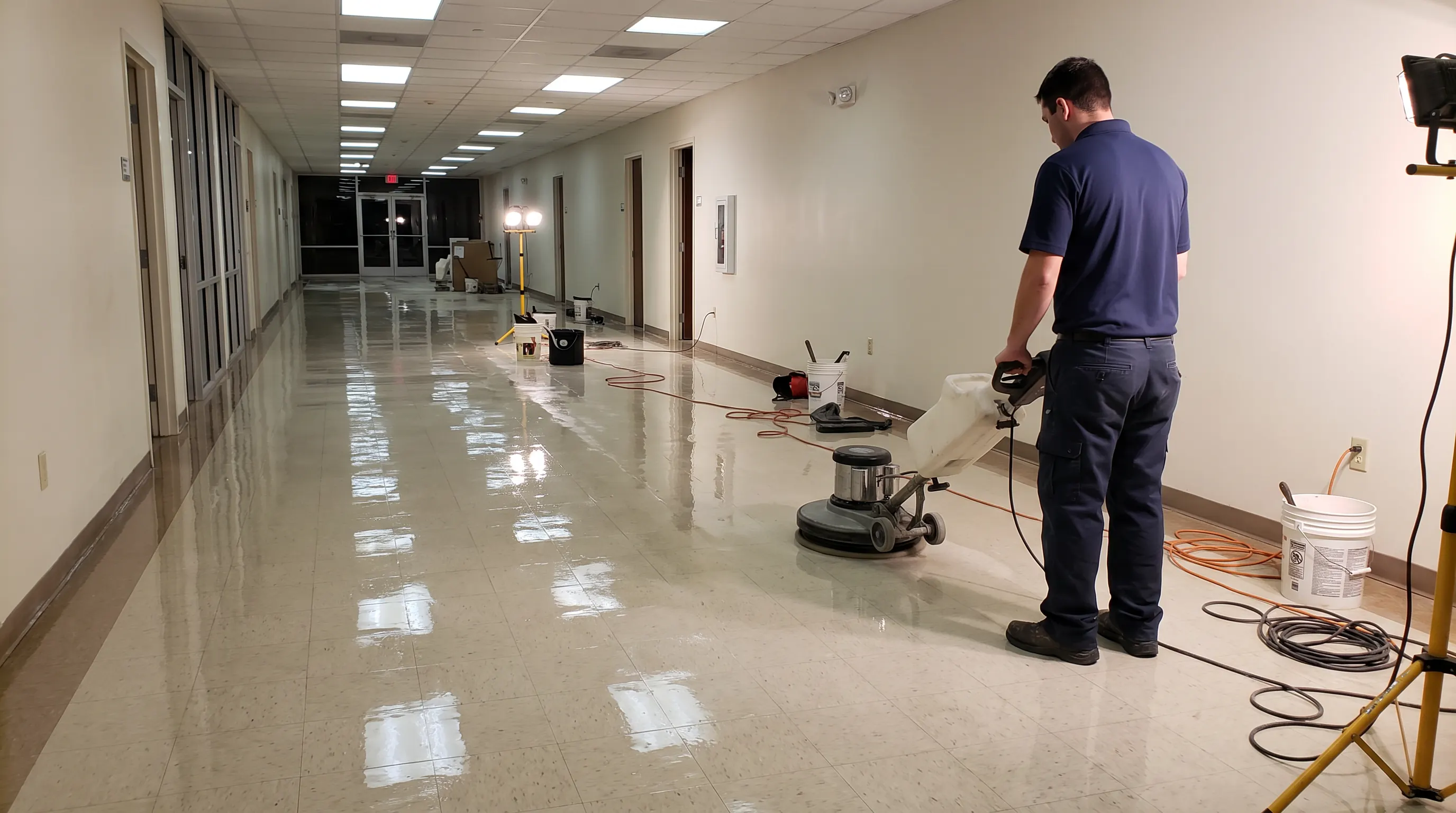
VCT, or vinyl composition tile, is porous and depends on layers of floor finish. Routine care is auto-scrubbing or damp mopping with a neutral cleaner, with scrub-and-recoat passes and a full strip only when the finish has failed. Stripping slurry is strongly alkaline and full of old finish, so it is wet-vacuumed and sent to a sanitary drain, never rinsed out a back door. The county's MS4 permit bars non-stormwater discharges to the storm drain system without specific authorization, and anything that gets in travels untreated to creeks and the ocean.
Luxury vinyl tile and plank rely on a factory wear layer. Aggressive pads or stripper can remove that coating and the look of the plank with it, so we read the manufacturer's care guidance before the first visit rather than applying a VCT routine out of habit.
Sealed concrete in flex units, showrooms and warehouses is scrubbed with a cleaner matched to the soil, and the sealer is renewed on its own cycle. Polished concrete is a separate system with no topical coat, covered in the questions below.
Tile, grout and restroom floors
Ceramic and porcelain tile rarely fail. Grout does. Being porous and recessed below the tile face, where a mop glides past it, grout holds the organic soil behind dark lines and lingering odor. It needs its own cycle rather than a harder mop.
Restroom and kitchen grout gets a suitable cleaner left to dwell, agitation with a brush or cylindrical scrubber, and extraction of the loosened soil rather than spreading it around. Sealing after a deep clean slows the next round. Floor drains are treated on the same visit, since a trap that has dried out lets sewer odor back into a spotless room.
Wet tile is also a safety question. Under 29 CFR 1910.22, OSHA requires floors kept clean and, where feasible, dry, so restroom floors finish with a dry pass and stay signed while wet. Cal/OSHA's Title 8 section 3203 also obliges every California employer to put its Injury and Illness Prevention Program in writing, and slip hazards fall squarely inside the hazard identification that plan has to cover.
Wood floor cleaning for businesses: scheduling and scope
Wood floor cleaning for businesses holds up when it is written down. A scope naming each floor, its finish, its nightly routine and its periodic cycle survives staff changes and busy weeks. One that just says floors cleaned nightly leaves every judgment to whoever is on shift.
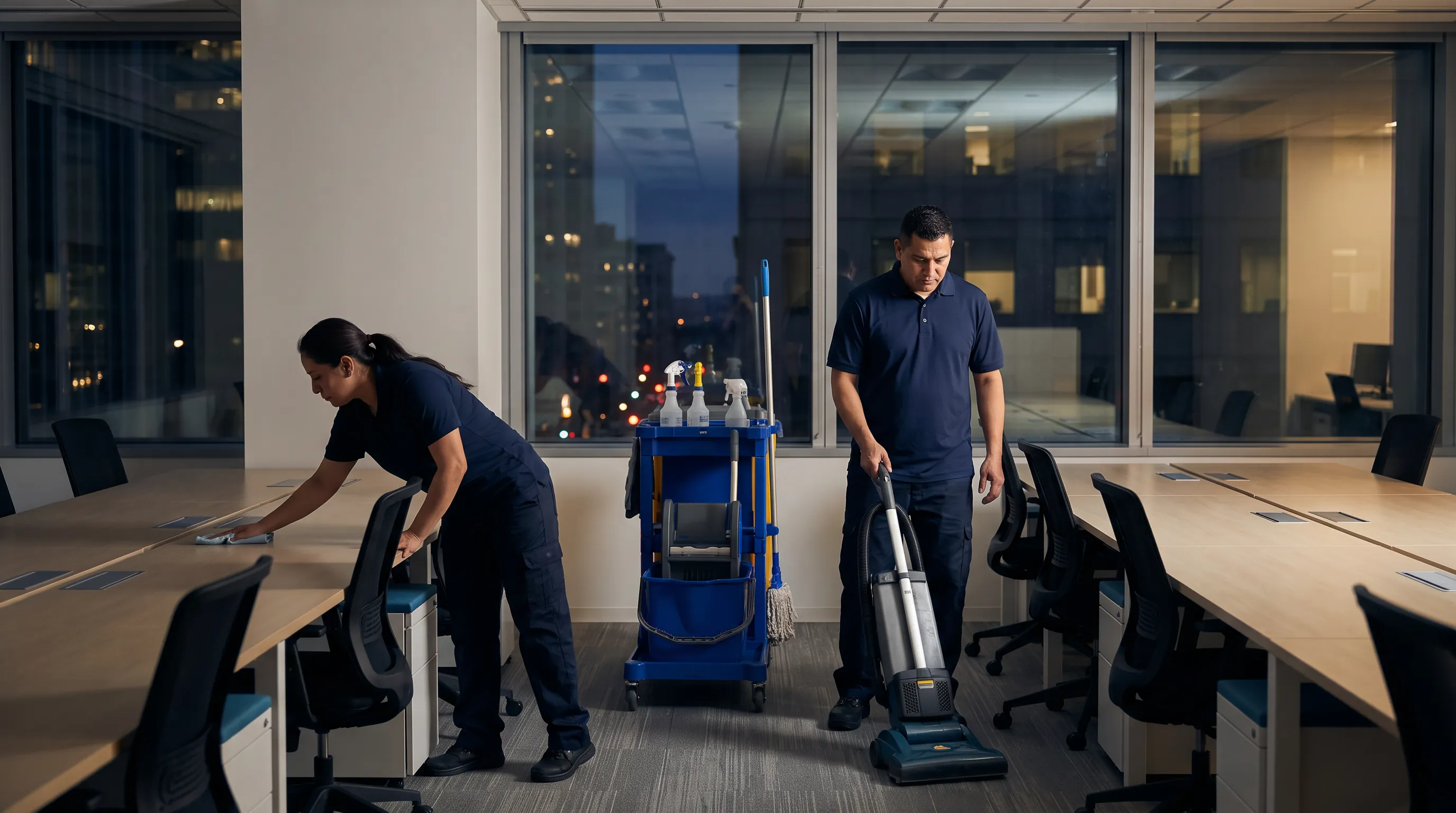
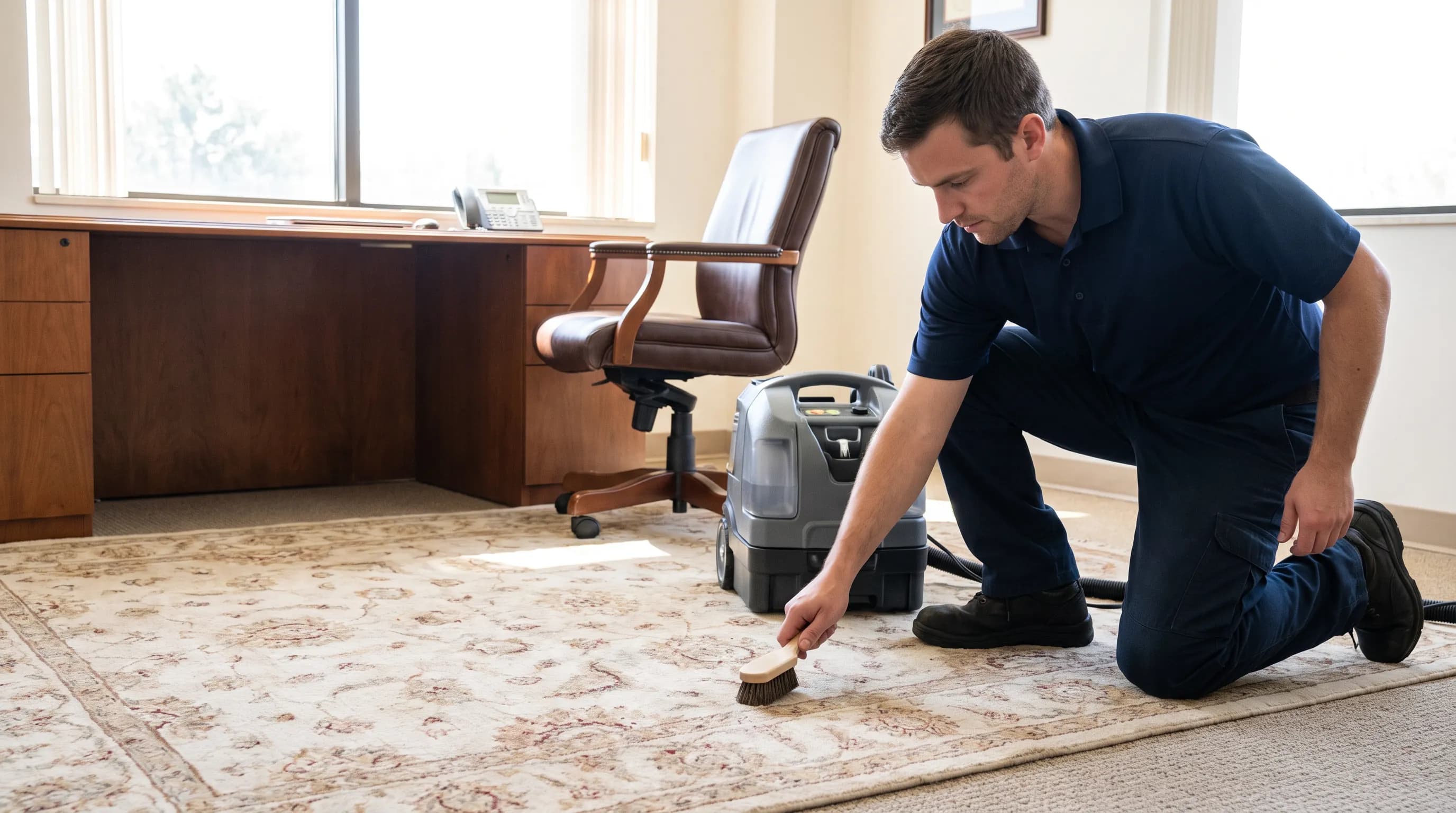
We walk the building, identify every surface and finish, note the doorways where grit gets in, and set frequencies from traffic. Machine work is planned around access, because recoats need hours of curing with nobody walking on them, so they land on Friday nights or ahead of a closure. Sports floors follow the same coating logic on a shorter cycle, explained in our gym floor cleaning guide and on the gym and fitness center cleaning page. Carpeted rooms in the same building fall under commercial carpet cleaning in Orange County.
Floor care cadence
| Cadence | Scope |
|---|---|
| Per visit | Dust mop wood and resilient floors; damp clean with a surface-specific product; spot spills; dry pass on restroom tile. |
| Weekly | Auto-scrub VCT, LVT and concrete corridors; detail edges and corners; clean entry mats. |
| Monthly | Buff resilient floors where the finish allows; deep clean restroom grout and treat floor drains. |
| Quarterly | Scrub and recoat VCT traffic lanes; screen and recoat worn wood lanes. |
| Annual | Strip and refinish VCT where finish has failed; full screen and recoat of wood; reseal grout and concrete. |
Frequently Asked Questions
How often does VCT need stripping and waxing?
Most Orange County offices strip and refinish vinyl composition tile once a year, with scrub-and-recoat passes in between. Traffic decides it rather than the calendar: a corridor may need refinishing annually while private offices go two or three years. Stripping more often than necessary is its own damage, because each strip removes a little tile along with the finish.
What is the difference between buffing and burnishing?
Buffing runs a slower machine, usually under 1,000 rpm, to smooth scuffs and restore a soft sheen. Burnishing runs at high speed to produce a wet-look gloss, and it needs a finish hard enough to take the heat. Using a burnisher on a soft finish melts and clouds it, which is the most common way a good floor gets ruined in an Orange County office.
When is a scrub-and-recoat enough instead of a full strip?
A scrub-and-recoat works whenever finish remains across the floor and the problem is dulling, light scratching or embedded soil. Full stripping is for finish that has worn through to tile, yellowed, or built up unevenly at the edges. Recoating costs less, closes the space for less time, and extends the life of the existing build, so it should be the default in Orange County suites on a maintenance cycle.
How is polished concrete maintained differently from VCT?
Polished concrete has no coating to strip. It is maintained with neutral-pH cleaner and periodic re-polishing or densifier treatment, and using a stripper on it removes nothing while etching the surface. Orange County buildings that converted to polished concrete during a refit frequently keep the old VCT schedule by mistake, which does slow damage over several years.
How do you look after hardwood in a commercial building?
Commercial hardwood is a finish system, so it is dust mopped daily, damp cleaned with a hardwood-specific product, and screened and recoated on a cycle rather than wet cleaned. Standing water is the main threat. Coastal Orange County buildings add a second one, because marine layer humidity moves boards seasonally and opens gaps that trap grit against the finish. Sports and gym courts follow the same finish logic on a tighter cycle, which our gym floor cleaning guide covers surface by surface.
What does commercial floor cleaning cost in Orange County?
Cost depends on floor area and surface type, current condition, how much furniture must be moved, the service chosen, and access hours. Stripping and refinishing costs considerably more than a scrub-and-recoat because of the labor and the downtime involved. Multi-tenant Orange County buildings restricting work to evenings and requiring freight elevator booking also lengthen the job beyond the floor work itself.
Related services and industries: Orange County gym & fitness center cleaning and commercial cleaning across Orange County.