
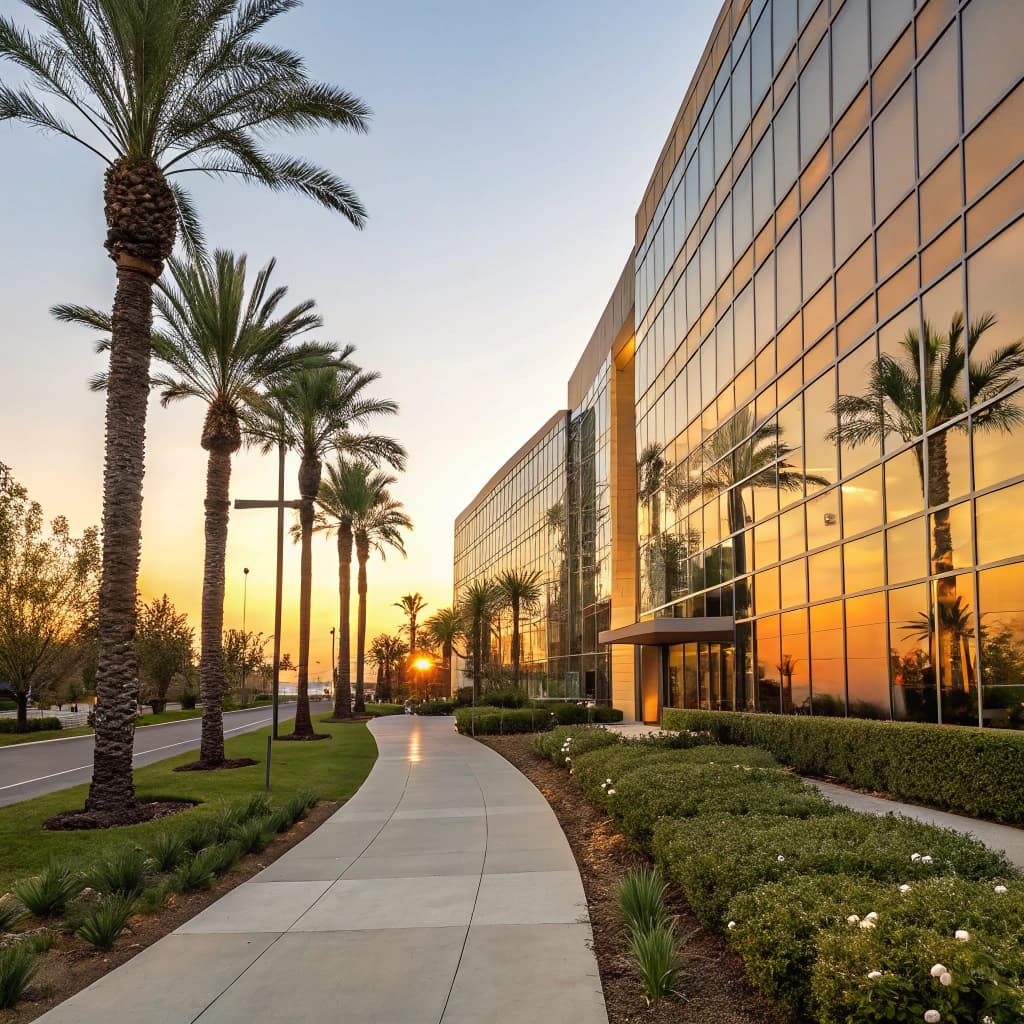
Commercial Pressure Washing Orange County California
866SaniClean provides commercial pressure washing across Orange County for retail centers, office properties, restaurants and industrial sites.
Surfaces we clean
Exterior surfaces are the first thing a customer sees and the last thing anyone budgets for, so most properties come to us after a walkway or storefront has been left long enough that ordinary cleaning will no longer recover it.
We have run commercial cleaning as a family business since 1979, and exterior work carries an obligation ordinary cleaning does not: the water has to go somewhere legal.
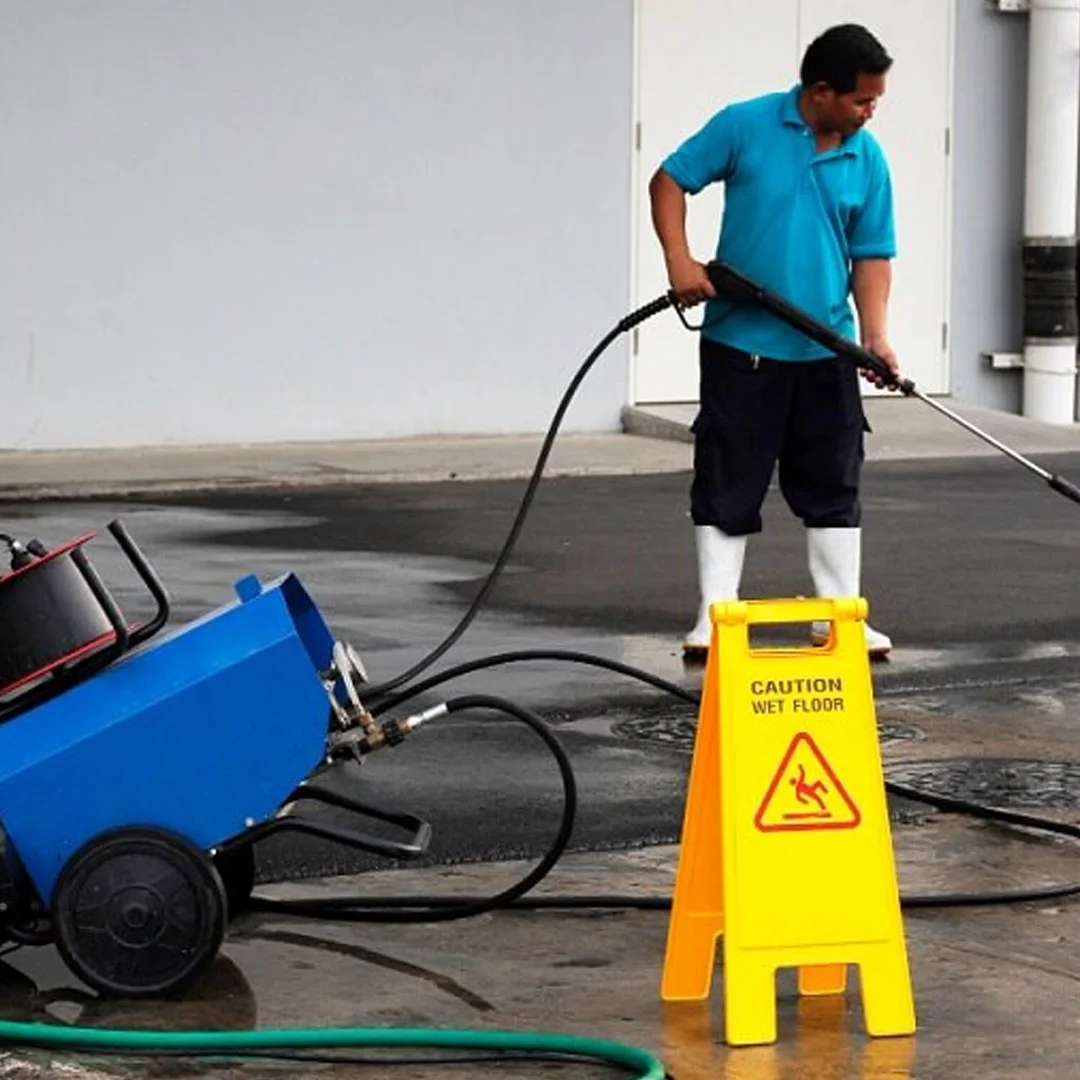
Each surface takes a different machine setup, and treating them alike is how exterior cleaning does damage.
- Concrete walkways, sidewalks and entry aprons, where traffic film and gum accumulate.
- Storefronts, signage and painted metal, which need chemistry rather than force.
- Dumpster pads and trash enclosures, which carry grease, leachate and odor.
- Drive-thru lanes and service windows, where food residue and tire marks combine.
- Parking structures, ramps and stairwells, including oil drip lines.
- Building exteriors in stucco, brick and tilt-up concrete.
- Awnings, canopies and covered walkways.
Restaurant tenants generate most of the difficult work in an Orange County retail center. Grease migrates from back doors onto the common walkway, and once it soaks into unsealed concrete it stains permanently unless it is treated early.
Hot water, cold water and pressure selection
Cold water and pressure handle dirt, mud and general traffic film. They do very little to grease. Hot water emulsifies fats and oils so they can be lifted and recovered, which is why dumpster pads, drive-thrus and kitchen exteriors need a hot-water machine rather than a bigger cold-water one.
Pressure is matched to the surface, not to the machine. Typical commercial units run in the region of three to four thousand psi, which concrete flatwork tolerates well. Painted metal, stucco, signage, wood and awnings do not: those are washed at a fraction of that pressure with detergent doing the work, an approach usually called soft washing. Turning up the pressure on a painted storefront strips paint and drives water behind cladding.
Flat concrete is cleaned with a rotary surface cleaner rather than a wand. A wand leaves the striping pattern every property manager recognizes, and the marks are effectively permanent until the whole slab is cleaned properly.
Wash water capture and California discharge rules
This is where exterior cleaning stops being a cleaning question. Non-stormwater discharges into the municipal storm drain system are prohibited under the Orange County MS4 permit unless specifically authorized, and untreated wash water from mobile commercial washing is exactly the kind of discharge that prohibition covers. Storm drains here run to creeks, the harbour and the ocean without treatment.
Compliance means physically preventing wash water from reaching a storm drain. We use containment berms, drain plugs and absorbent booms to hold water on the property during the work, then vacuum or pump the collected water for disposal to the sanitary sewer, which requires pre-authorization from the local sewer agency rather than simply tipping it down a cleanout.
Ask any contractor how they capture and dispose of wash water before they arrive. A crew that washes a dumpster pad straight into the gutter has transferred a compliance problem onto the property owner, and the discharge is traceable back to the property rather than the contractor.
Scheduling and frequency
Frequency follows use rather than appearance. Restaurant dumpster pads and drive-thru lanes usually need monthly or quarterly attention, because grease and food residue build continuously. Retail center walkways commonly run quarterly, with entries more often. Parking structures suit an annual or twice-yearly deep clean with spot treatment of oil drip lines in between. Building exteriors are typically annual.
Most Orange County properties want the work done before opening or overnight, since containment equipment and hoses across a walkway are incompatible with trading. Coastal properties add a second consideration: salt film returns to glass, railings and metalwork faster near the shoreline, so exterior schedules there tend to run shorter than inland sites of the same type.
Frequently Asked Questions
Where does the wash water go?
Wash water is contained on site with berms, drain plugs and booms, then vacuumed or pumped for disposal to the sanitary sewer with the local sewer agency's authorization. It does not enter the storm drain, because non-stormwater discharges to the Orange County storm drain system are prohibited and those drains run untreated to creeks, the harbour and the ocean.
Will pressure washing damage our storefront or signage?
Not if the pressure is matched to the surface. Painted metal, stucco, signage, wood and awnings are cleaned at low pressure with detergent doing the work rather than force. Damage almost always comes from using concrete settings on a clad surface. Coastal Orange County storefronts need particular care, since salt exposure weakens sealant lines that then let water behind panels.
How often should a retail center be pressure washed?
Walkways commonly run quarterly with entries more often, dumpster pads and drive-thru lanes monthly or quarterly, and building exteriors annually. Restaurant tenants shorten every interval, because grease migrates from back doors onto shared walkways. Coastal Orange County properties usually need a tighter cycle again, since salt film accumulates on glass and metalwork faster near the shoreline.
Can you remove oil stains from concrete?
Often, though results depend on how long the oil has been there and whether the concrete was sealed. Fresh spills lift with hot water and a degreaser. Oil soaked into unsealed concrete for years will lighten without disappearing, because the stain sits within the slab. Many older Orange County retail centers have unsealed walkways, which is why their drip lines never fully recover.
What does commercial pressure washing cost?
Cost depends on the area, surface type and condition, whether hot water is required, how much containment and water recovery the site needs, and access hours. Orange County sites where wash water must be pumped a long way to an authorized sewer connection cost more than those with a convenient point. We quote after seeing the property, since drainage layout drives the work.
Related services and industries: Commercial Pressure Washing in Las Vegas, Orange County gym & fitness center cleaning and commercial cleaning across Orange County.