
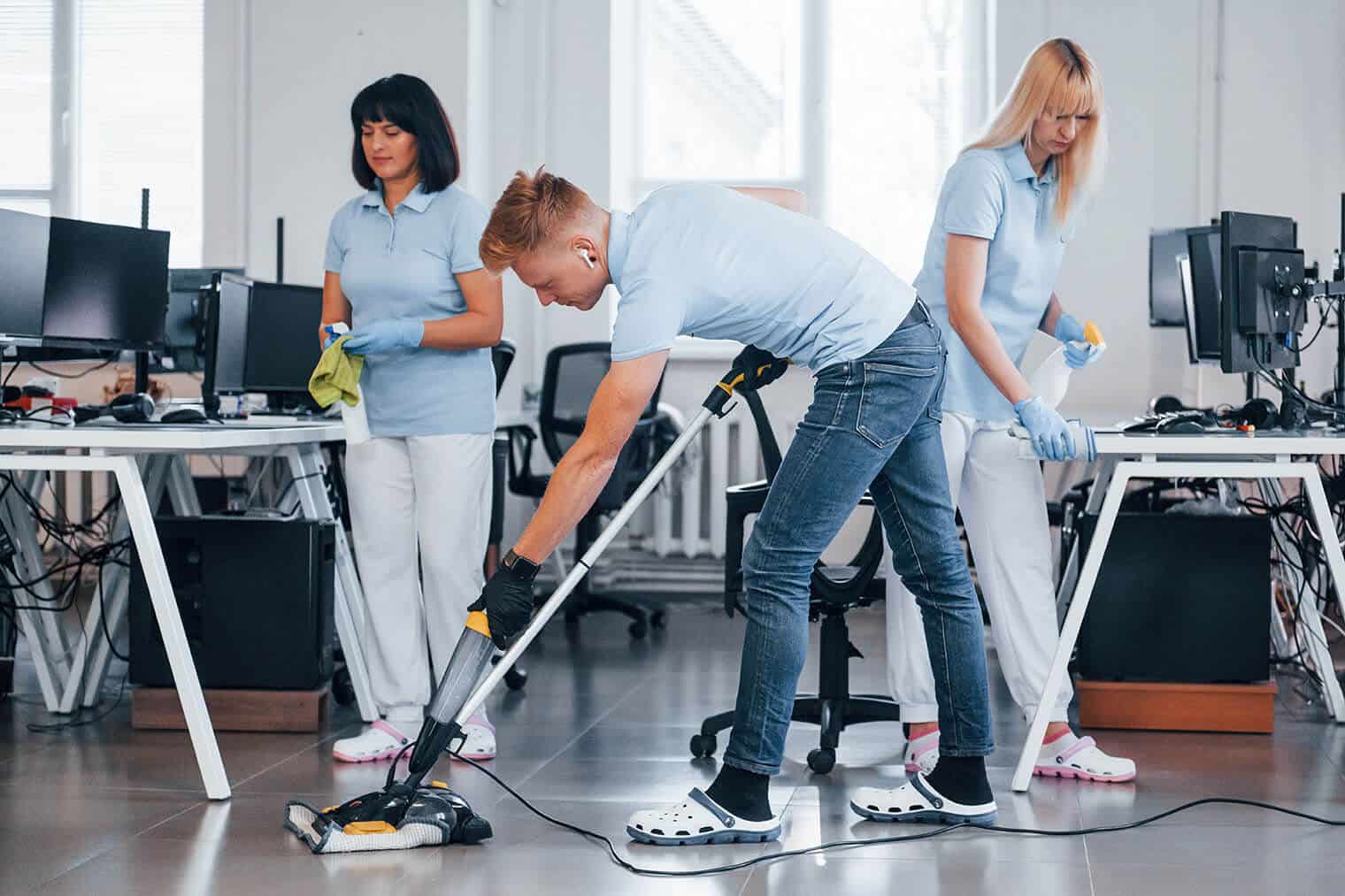
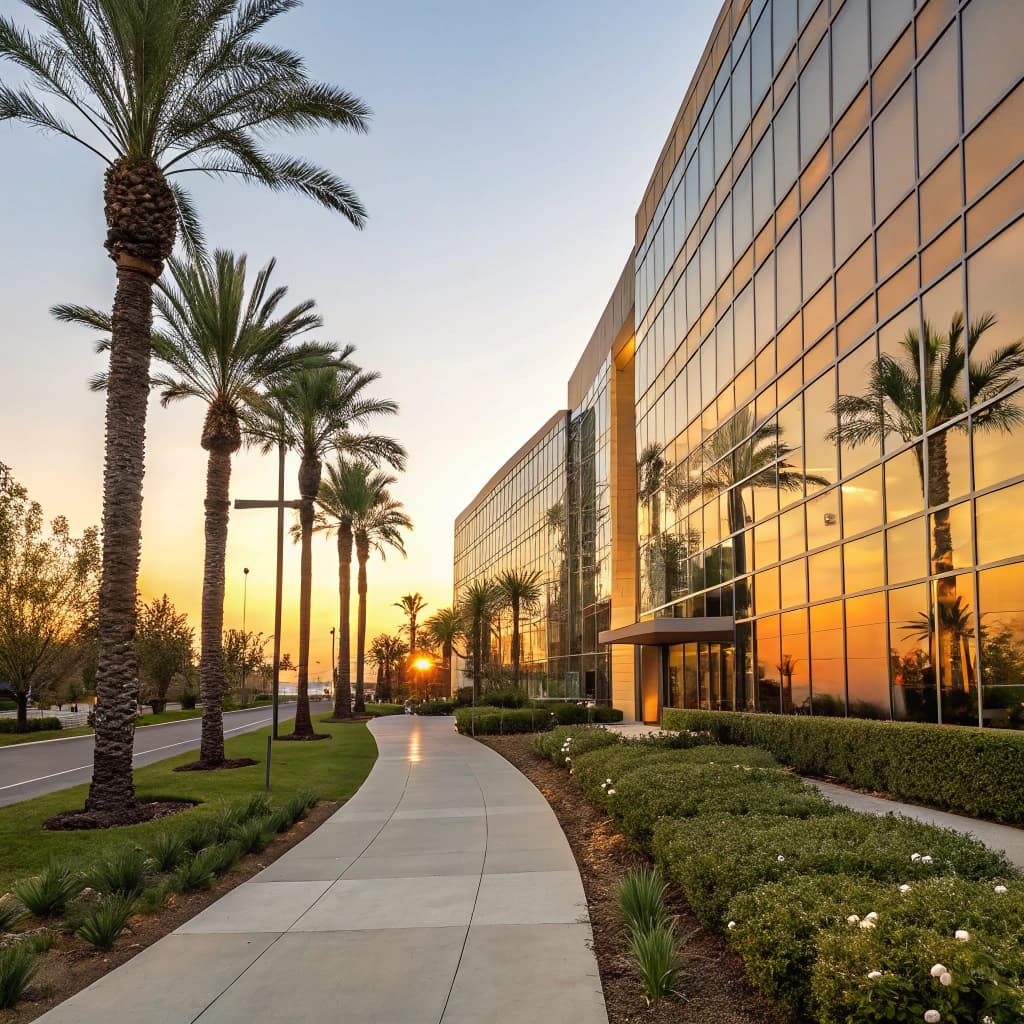
Best Commercial Cleaning Services in Orange County CA
866SaniClean is an Orange County commercial cleaning contractor working across the county, from the north county industrial corridors to the south county business parks and the coast.
What the Orange County market actually looks like
The company has been owned and run by one family since 1979, and in that time it has completed more than 1,000 projects for over 170 clients.
Orange County is not one cleaning market. It is roughly thirty of them, and the difference between a coastal retail unit, an Anaheim distribution warehouse and an Irvine research suite is large enough that a single service design applied countywide will do most of them badly.
The county's commercial stock divides into a handful of building types that each behave differently once you have to clean them.
Business park and low-rise office space is the largest category by volume. It is mid-sized, multi-tenant, and it turns over. Buildings of this kind rarely justify an in-house janitor, so the practical comparison is between a scheduled route and nobody.
Industrial and flex space concentrates in the north and along the freeway corridors. It is machine work rather than mop work, and its housekeeping obligations are partly safety obligations rather than appearance ones.
Medical and professional plazas run throughout the county, most of them multi-tenant, which means a practice is judged on corridors it does not control before a patient reaches its own door.
Retail and hospitality cluster on the coast and around the visitor economy inland. These are judged during trading hours by people who are comparing them to somewhere else, which changes when the work has to happen rather than what it is.
Association-managed property is a larger share of the county than most contractors plan for, and it is scoped by amenity rather than by floor area.
How coverage across thirty cities actually works
Countywide coverage is easy to claim and harder to structure, so it is worth being specific about what it means here.
Crews are organized by corridor rather than dispatched individually from a single point. North county buildings are worked by crews already in the north, south county buildings by crews already in the south. That is what makes a fixed service window credible in San Clemente as well as in Fullerton, and it is why a portfolio spread across several cities does not end up with one property quietly deprioritized because it is inconvenient.
The second structural piece is that crews stay with their buildings. A crew returning to the same property learns which fixture scales, which entrance takes the grit and which tenant works late, and none of that transfers through a checklist. Consistency in this business is mostly a staffing question wearing a cleaning costume.
The third is a written scope. A portfolio held under one contract with per-building scopes and frequencies lets a facilities manager compare properties honestly and lets us be held to something specific. Blended countywide rates hide which building is subsidizing which.
Industry work across the county
The county's sectors carry genuinely different requirements, and we maintain separate service pages for the ones where the difference is substantive rather than cosmetic.
Warehouses and distribution buildings need aisle and dock discipline treated as a safety function, which is set out on our warehouse and industrial cleaning page. Offices and coworking floors need shared surfaces reset far more often than a private suite of equivalent size, covered under office and coworking cleaning. Medical buildings, schools, churches, shopping centers, event venues and car dealerships each have their own page for the same reason.
On the service side, the work that most often gets bought separately is floor care, carpet and exterior washing. Our janitorial services in Orange County page covers the nightly base, and commercial floor cleaning covers the machine and finish work that sits on its own cycle.
Standards that apply countywide
Two obligations come up on almost every Orange County contract and are worth stating plainly, because they are frequently assumed rather than checked.
California employers owe their staff a written Injury and Illness Prevention Program under Cal/OSHA Title 8 section 3203, covering hazard identification, training and correction. Any contractor putting crews in your building should have one, and it is reasonable to ask to see it.
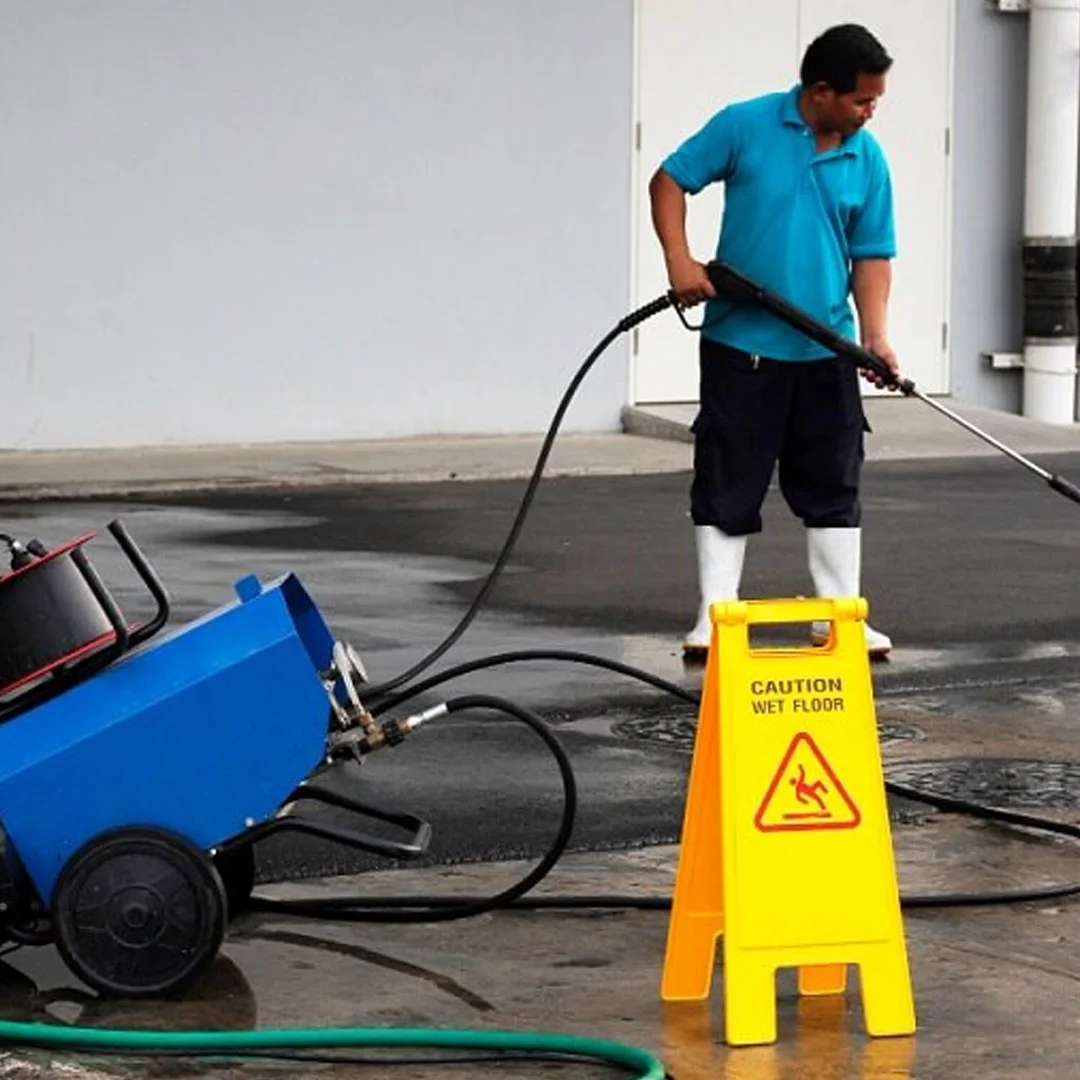
Exterior work carries a separate obligation. Non-stormwater discharges into the municipal storm drain system are prohibited under the Orange County MS4 permit unless specifically authorized, and untreated wash water from mobile commercial washing is exactly what that prohibition covers. Storm drains here run to creeks and the ocean without treatment, so wash water has to be contained, recovered and disposed of to the sanitary sewer with the local agency's authorization.
Choosing frequency and scope
Two questions decide most of a commercial cleaning contract, and neither is square footage.
The first is how many people use the building, because people generate the work and floor area does not. Restroom load is the number that usually sets the minimum attendance, and it is the first thing worth counting on a walkthrough.
The second is when the building can be released. A property that empties at six is straightforward. A property running shifts, trading hours or continuous operation needs the work sectioned and rotated, which takes longer and costs more than an open run. Establishing that before pricing avoids the most common source of disappointment in this industry, which is a route designed for an empty building and then squeezed into a window that never existed.
Periodic work belongs on its own cycle and its own line. Carpet extraction, hard floor machine work, high dusting, vents and light fixtures are the first things to disappear when a nightly price is under pressure, and separating them is what stops that happening quietly.
Service scope across Orange County
| Cadence | Scope |
|---|---|
| Continuous | Day porter coverage where a building is judged during opening hours |
| Nightly | Restroom service and restock, waste and recycling cleared, shared surfaces and break areas reset, entry glass, floor pass by material |
| Weekly | Detail dusting, interior and partition glass, corridors and stairwells, high-touch surfaces, matting lifted and washed |
| Monthly | Vents and high dusting, baseboards, appliance interiors, scrub cycle chosen per floor type |
| Quarterly | Carpet extraction, upholstery, hard floor recoat or polish, light diffusers, exterior attention |
| Annually | Strip and refinish where the material takes it, deep restroom restoration |
Frequently Asked Questions
Do you cover the whole of Orange County?
Yes, and it is structured rather than promised. Crews work by corridor, so north county buildings are served by crews already in the north and south county buildings by crews already in the south. That is what makes a fixed window credible at both ends of the county and stops an outlying property being deprioritized whenever a schedule tightens.
Can one contract cover buildings in several Orange County cities?
Yes, and it is usually the better structure for a portfolio. One agreement holds per-building scopes and frequencies rather than a single blended rate, which lets you compare properties honestly and see which building is actually driving cost. It also means one contact and one standard instead of a different contractor and a different result per city.
How do I decide how many nights a week a building needs?
Count the people and the restrooms rather than the square footage. Occupancy generates the work, and restroom load usually sets the minimum. A small suite with one restroom often runs two or three nights, while a busy floor sharing facilities needs five. We would rather scope the attendance a building genuinely uses than sell nights that coast.
What insurance and compliance should I ask a cleaning contractor for?
Certificates of general liability and workers' compensation naming your entity, issued by the insurer or broker rather than forwarded by the contractor. For California work, also ask for the written Injury and Illness Prevention Program that Cal/OSHA Title 8 section 3203 requires of every employer in the state. If exterior washing is in scope, ask how wash water is contained and where it is disposed of.
What drives the price of commercial cleaning in Orange County?
Occupancy, restroom count, the surface materials in the building, how much periodic work sits on top of the nightly route, and how easily the building can be released for work. A property that has to be cleaned in sections around occupants costs more than one that empties. Multi-site portfolios generally price better per building than single sites of the same size.
Commercial cleaning across Orange County
We clean offices, medical facilities, schools, churches and industrial sites across Orange County. Choose your area for local service details.
- Commercial cleaning in Anaheim
- Buena Park janitorial services
- Office cleaning in Costa Mesa
- Fullerton commercial cleaning services
- Commercial cleaning in Garden Grove
- Irvine janitorial services
- Office cleaning in La Habra
- Laguna Niguel commercial cleaning services
- Commercial cleaning in Lake Forest
- Newport Beach janitorial services
- Office cleaning in Santa Ana
- Aliso Viejo commercial cleaning services
- Commercial cleaning in Cypress
- Dana Point janitorial services
- Office cleaning in Fountain Valley
- Laguna Beach commercial cleaning services
- Commercial cleaning in Laguna Woods
- Los Alamitos janitorial services
- Office cleaning in Mission Viejo
- Placentia commercial cleaning services
- Commercial cleaning in Rancho Santa Margarita
- San Clemente janitorial services
- Office cleaning in San Juan Capistrano
- Seal Beach commercial cleaning services
- Commercial cleaning in Stanton
- Villa Park janitorial services
- Office cleaning in Westminster
- Yorba Linda commercial cleaning services
- Commercial cleaning in Tustin

Industries we serve in Orange County
Different industries need different cleaning approaches to meet their own safety and health standards.
- Gym & fitness center cleaning in Orange County
- Orange County industrial warehouse cleaning
- Hospital cleaning services in Orange County
- School cleaning in Orange County
- Orange County building & property cleaning
- Car dealership cleaning services in Orange County
- Office & co-working space cleaning in Orange County
- Orange County church & religious center cleaning
- Event center cleaning services in Orange County
- Entertainment venue cleaning in Orange County
- Orange County bank & financial institution cleaning
- Shopping center cleaning services in Orange County
More from this site: our commercial cleaners page and our full site index.