
Commercial Pressure Washing St. George, UT
866SaniClean pressure washes commercial exteriors across St. George and Washington County from our office at 1031 S Bluff St, family owned since 1979.
The stormwater rule that governs this work
Exterior washing here carries an obligation that most buyers are never told about: the water has to be captured. A contractor who washes your walkway and lets the runoff reach the gutter has moved a compliance problem onto your property.
St. George runs its stormwater program under a UPDES MS4 permit issued by the Utah Division of Water Quality. Under that program an illicit discharge is any substance entering the storm drain system that is not composed entirely of stormwater, and discharging it is prohibited. The city's own guidance on outdoor cleaning and mobile washing is explicit: wash water must never be allowed to flow into the street, gutter or storm drain.
That matters because storm drains here are not connected to treatment. They carry what enters them to local drainage channels, washes and rivers. Soap, degreaser, grease from a dumpster pad and the fine sediment off a concrete slab all arrive downstream unchanged.
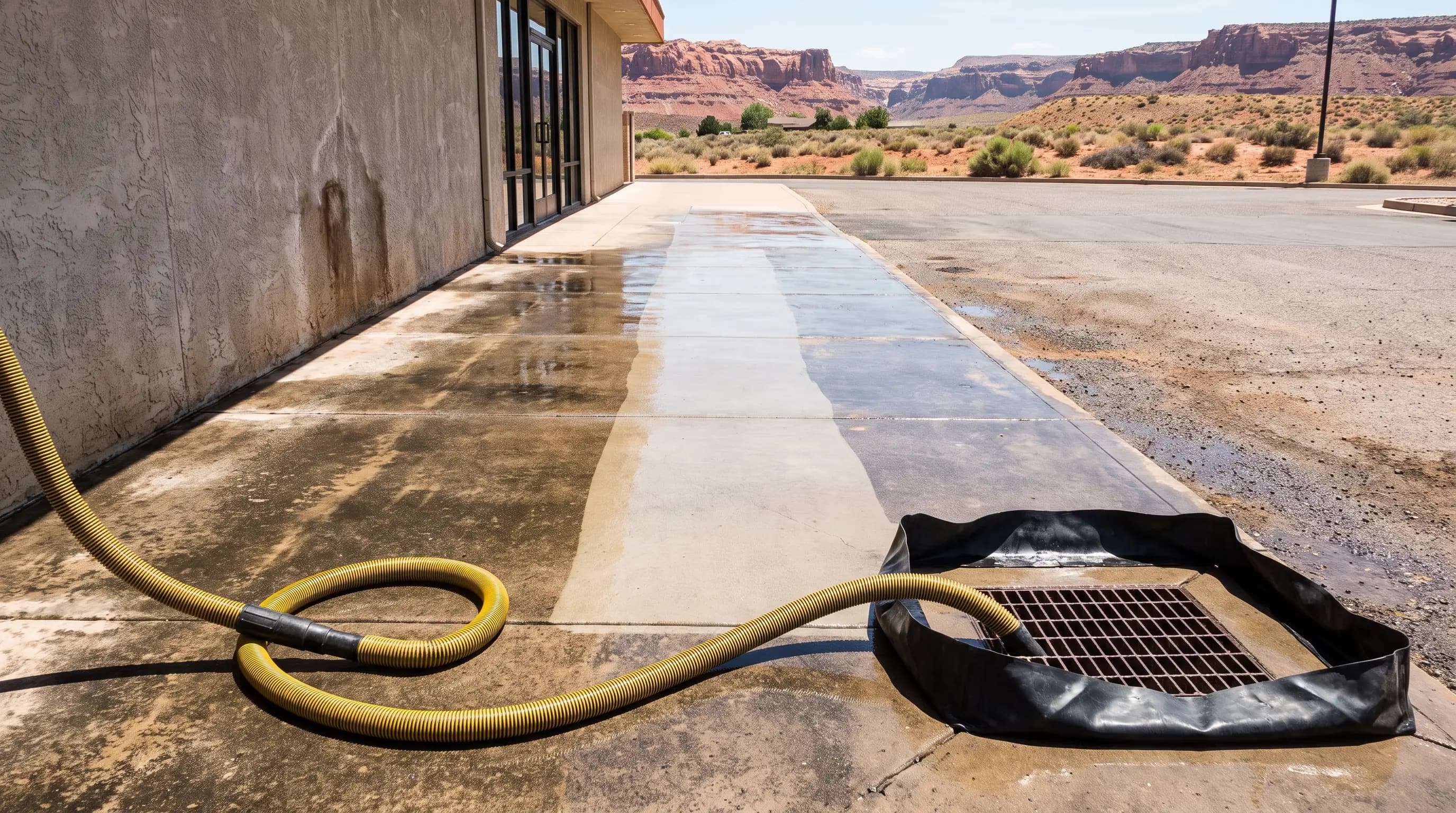
So containment is part of the job rather than an upgrade. Drains are blocked or bermed, wash water is dammed and recovered with a wet vacuum, and the recovered water is disposed of appropriately rather than rinsed to the nearest inlet. Where a surface can be cleaned with less water or without chemicals, that is the better answer. A quote that does not mention recovery is quoting a different job from the one the city requires.
What we wash, and how each surface differs
Concrete sidewalks and entries are the most common work and the most visible. They hold ground-in grit, gum, drink spills and the gray film that builds on unsealed concrete. Surface cleaners with rotating jets do this evenly, which matters because a hand wand leaves stripes that are more obvious than the dirt was.
Dumpster pads and service areas are a grease problem rather than a dirt problem, and they are where containment matters most. Degreaser plus hot water lifts it, and all of it has to be recovered. This is the surface where cutting the corner is most tempting and most consequential.
Building facades and awnings need low pressure and chemistry rather than force. Stucco, EIFS and painted surfaces are easily damaged, and in this region the usual failure is a contractor using the pressure that worked on concrete. Soft washing cleans them without driving water into the wall assembly.
Drive-throughs, loading areas and parking structures accumulate oil and tire marking, and all three want hot water, dwell time and recovery rather than higher pressure.
Oil that has soaked into unsealed concrete is a different problem from oil sitting on top of it. Washing lifts the surface layer and often reveals how far the rest has penetrated, which reads as a clean that failed. Deep staining needs a degreaser left to dwell and draw, sometimes repeated across visits, and some of it never fully leaves. We tell you which category a stain is in before quoting it rather than afterward.
Red dust, hard water and timing
Two local conditions shape exterior work here more than anything else.
Fine red sediment settles on every horizontal surface and streaks every vertical one after wind and rain. It is also why rinsing without recovery is so visible: the sediment ends up in the gutter where anyone can see where it went.
Hard water is the other. Water left to dry on glass, painted metal or polished stone leaves mineral spotting, and the dry air accelerates it. A wash that ends with air drying in direct sun can look worse than it did beforehand. Work is sequenced so rinsed surfaces are not left to evaporate, and glass gets a squeegee and dry pass rather than a rinse.
Summer heat sets the schedule. Surfaces too hot to hold chemistry do not clean well, and water flashes off before it can work. Exterior washing moves to early morning through the hot months, which also keeps it clear of your trading hours.
Frequency and what it is worth
Most St. George retail and office properties land on quarterly washing for entries and walkways, with dumpster pads more often because of odor and pests, and facades annually. Properties on the busier corridors need entries done more frequently, since grit arrives straight off the sidewalk and then gets tracked inside, where it goes to work on your floors and carpet.
That connection is worth naming. Exterior grit is the main input to interior floor wear in this county. Washing the walkway and sizing the entry matting properly reduces what reaches the floor cleaning and carpet cleaning budget inside. Interior routes are covered under janitorial services.
Asking a pressure washing contractor the right questions
Three questions separate contractors in this market. Where does the wash water go, and can you describe the recovery method. What pressure and chemistry will you use on the facade, and why that rather than more pressure. Are you insured for property damage, because stucco, glazing and signage are what gets damaged.
A contractor who cannot answer the first question is the one most likely to leave you with a stormwater problem and a streaked walkway.
Exterior program in St. George
| Cadence | Scope |
|---|---|
| Monthly | Dumpster pads and service areas degreased with full wash water recovery |
| Quarterly | Entries, walkways and sidewalks surface cleaned, gum and spills removed |
| Semi-annual | Drive-throughs, loading areas, parking structure stalls, exterior glass |
| Annual | Facade soft washing, awnings, signage faces, roofline and soffit cleaning |
| On request | Graffiti removal, post-event cleanup, oil stain treatment, storefront detailing |
Booking exterior washing
Call the St. George office on (435) 599-7859 or the main line on (866) 726-4253. You can also request a one-time job quote. We walk the property, identify every surface and its tolerance, locate the storm drains that need protecting, and give you a written scope that states how wash water will be captured. The St. George hub covers the rest of our work across Washington County.
Frequently Asked Questions
Is it legal to pressure wash into the storm drain in St. George?
No. St. George operates under a UPDES MS4 permit issued by the Utah Division of Water Quality, and an illicit discharge is anything entering the storm drain system that is not entirely stormwater. City guidance on outdoor cleaning states plainly that wash water must never reach the street, gutter or storm drain. Recovery is part of the job here, not an optional extra.
Where does the wash water actually go?
We block or berm the drains, dam the water on the surface, and recover it with a wet vacuum for appropriate disposal. None of it is rinsed to the inlet. Storm drains in Washington County carry straight to local channels, washes and rivers with no treatment in between, so soap, degreaser and dumpster pad grease would arrive downstream unchanged.
How often should a St. George retail property be washed?
Entries and walkways usually quarterly, dumpster pads monthly because of odor and pests, and facades annually. Properties on the busier St. George corridors need entries more often, since red grit arrives off the sidewalk continuously. That same grit is the main driver of interior floor and carpet wear, so exterior frequency is partly an interior maintenance decision.
Can you pressure wash stucco without damaging it?
Not with pressure, which is how stucco and EIFS get damaged across Washington County. Those surfaces need soft washing: low pressure plus appropriate chemistry and dwell time. The common local failure is a St. George contractor carrying over the pressure that worked on a concrete walkway. We identify the facade assembly first and quote the method, not just the area.
Why does the glass look spotted after an exterior wash?
Hard water plus dry air. Water left to evaporate on glass or painted metal in St. George leaves its dissolved mineral behind as visible spotting, and direct summer sun makes it worse. We sequence the work so rinsed surfaces are not left to air dry, and glass gets a squeegee and a dry pass so the water leaves the surface before it can evaporate on it.
When do you schedule exterior work in summer?
Early morning. Surfaces hot enough to flash off water will not hold chemistry long enough to work, so a midday wash in a St. George summer cleans poorly and wastes water. Early starts also keep the crew and the hoses clear of your trading hours, which matters most on retail walkways and drive-throughs where access has to stay open.
Related services and industries: St. George, Utah medical and dental office cleaning st. george, ut cleaning and commercial cleaning across St. George, Utah.