
Restaurant Cleaning St. George, UT
866SaniClean cleans restaurants across St. George and Washington County from our office at 1031 S Bluff St, under one family's ownership since 1979.
Front of house
Restaurant work splits cleanly in two. Front of house is judged by your guests, continuously, while they are sitting in it. Back of house is judged by an inspector and by your plumbing. The two halves need different scopes, different chemistry and different frequencies, and a contract that treats them as one room will fail at both.
Dining room floors carry the load. Food, grease carried out on shoes, drink spills and red grit from the sidewalk all land there, and the mix is why dining floors go dull faster than office floors. They want machine scrubbing with recovery rather than mopping, because a mop in a dining room redistributes a grease and soil emulsion into the grout lines.
Restrooms are where guests form a judgment they will not tell you about. They need servicing through trading hours rather than once after close, with fixtures, dispensers, touch points and floor drains covered. Hard local water shows on restroom fixtures quickly, so a descaling cycle belongs in the scope.
Entry glass, high chairs, booth seams, condiment stations and the underside of tables are the surfaces most often missed and most often noticed. Patio furniture and the walkway outside need their own cycle, and in this region that means grit and the mineral spotting left when water dries in the sun.
Back of house, and the code that shapes it
Kitchens in St. George sit under the city's fats, oils, grease and soil control code, section 8-4-14, administered through the city's pretreatment program. It changes how a kitchen may be cleaned, which is why it belongs in a cleaning conversation rather than only a plumbing one.
A few requirements matter directly. A business with a three-compartment sink must have a grease interceptor or a grease trap, and traps are only permitted in place of interceptors where installation is physically impossible, by variance. Interceptors have to be emptied and cleaned so accumulation stays under a quarter of the design hydraulic depth, and once a violation is noticed service is due within ten days. Grease traps have to be cleaned no less than weekly and inspected at least monthly. Records go back three years and have to be available to the city's pretreatment coordinator, including cleaning dates, hauler names, spill records and kitchen best practice logs covering employee training.
Then there are the prohibitions, and one of them is a direct constraint on cleaning crews. Emulsifiers, enzymes and degreasers may not be added as sewer aids to plumbing that leads to an interceptor. Those products do not remove grease, they suspend it so it passes the interceptor and sets further down the line. Nothing above 140 degrees may enter a grease control device, which rules out flushing a floor drain with very hot water as a shortcut. Cooking oil never goes to the sewer, and material pumped out of an interceptor never goes back in.
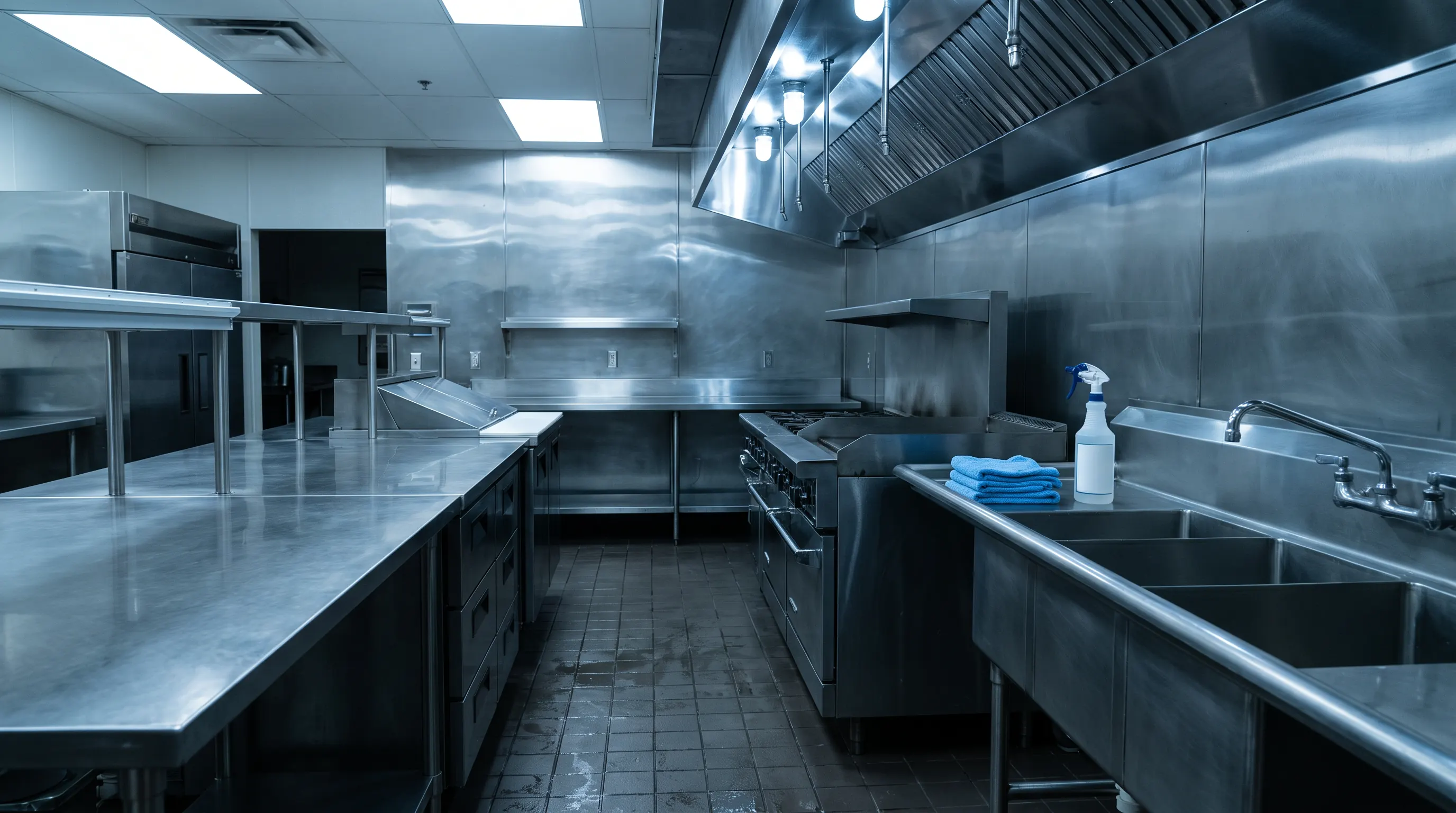
So our kitchen scope is built on mechanical removal and correct chemistry rather than on pouring something down a drain. Floor drains are cleaned and screened rather than dosed. Quarry tile and its grout get pressure and recovery, because grout sits below the tile surface where a mop never reaches and holds the grease that produces odor. Degreasing on walls, equipment exteriors, legs, casters and the floor under and behind the line is where the real work is.
We do not pump your interceptor and we do not clean hoods. Interceptor pumping is a licensed hauler's job, and kitchen exhaust systems are a certified specialty with their own standard. We will tell you when either is due and we will keep our work documented so it supports your records rather than complicating them.
Health inspections and what cleaning can and cannot do
Food establishments in Washington County are inspected by the Southwest Utah Public Health Department. A cleaning contractor does not get you through an inspection. Food handling, temperatures, labeling and storage are yours, and any contractor offering to take responsibility for them is offering something they should not.
What a contractor can do is remove the findings that are genuinely about cleaning: grease on surfaces and behind equipment, soiled floors and drains, dust on ceiling vents and shelving, and the grout and corner conditions that get written up. Those are scheduled rather than fixed in a panic the week an inspection is due.
Scheduling around service
Restaurants have the hardest schedule to clean around, and the answer is to split the work by when it can happen. Nightly work happens after close on the areas that can be released. Periodic deep work on hoods adjacent surfaces, walk-in shelving, equipment pulled away from walls, and full floor and grout restoration is scheduled into closures or slow mornings. Daytime coverage handles restrooms, the dining floor and the entry while you are trading.
Closing checklists only work if they are specific. A list that says "clean kitchen" produces a different result every night. A list naming the floor under the fryer, the drain screens, the hand sink and the gasket seals produces the same result every night.
Restaurant scope in St. George
| Cadence | Scope |
|---|---|
| Daytime | Restroom rounds and restocking, dining floor spot work, entry glass, patio and walkway checks |
| Nightly | Dining floors machine scrubbed, kitchen floors degreased, drain screens cleared, touch points, waste out |
| Weekly | Grout detailed, equipment exteriors and legs degreased, walk-in shelving, baseboards and corners |
| Monthly | Ceiling vents and high surfaces, under and behind the line, restroom fixture descaling |
| Quarterly | Quarry tile deep clean with recovery, grout sealing, patio and sidewalk pressure washing with wash water captured |
Booking restaurant cleaning
Call the St. George office on (435) 599-7859 or the main line on (866) 726-4253. You can also request a quote. We walk front and back separately, identify floor and grout condition, note where your grease control device sits and what cannot go into it, and give you a written scope with the daytime and after-close work split out.
Exterior surfaces are covered on pressure washing, dining room carpet on carpet cleaning, tile restoration on floor cleaning, and nightly routes on janitorial services. The St. George hub covers the county.
Frequently Asked Questions
Can you pour degreaser down my kitchen drains?
No, and St. George code is the reason. Section 8-4-14 prohibits adding emulsifiers, enzymes or degreasers as sewer aids to plumbing leading to a grease interceptor. Those products suspend grease so it passes the interceptor and sets further along the line. We clean and screen floor drains mechanically instead, and degrease surfaces where the grease actually is.
Do you clean grease interceptors or kitchen hoods?
Neither. Interceptor pumping in St. George is a licensed hauler's job, and kitchen exhaust cleaning is a certified specialty with its own standard. We will tell you when each is coming due, and our documentation is kept so it supports the three year records the city's pretreatment coordinator can ask for rather than muddling them.
How often does a grease trap have to be cleaned here?
Under St. George city code, grease traps must be cleaned no less than weekly and inspected at least monthly. Interceptors are different: they have to be emptied so accumulated grease and solids stay below a quarter of the design hydraulic depth, and once a violation is observed service is due within ten days. Those are the city's floors, not ours.
Will cleaning get my restaurant through a health inspection?
Not on its own. Food establishments in Washington County are inspected by the Southwest Utah Public Health Department, and food handling, temperatures, labeling and storage stay with you. What we remove are the findings that are genuinely about cleaning: grease behind equipment, soiled drains and floors, dust on vents and shelving, and the grout conditions that get written up.
Why do my St. George dining room floors go dull so fast?
A grease and grit mix that office floors never see. Cooking grease carried out on shoes combines with the fine red sediment tracked in from the sidewalk, and a mop emulsifies it into the grout rather than removing it. Machine scrubbing with recovery takes it out of the building. Pressure washing the walkway outside cuts how much arrives in the first place.
Can you work around our service hours?
That is how restaurant scopes are built. Daytime covers restrooms, the dining floor and entry glass while you trade. After close covers the kitchen floors, drains and dining floor machine work. Deep work on walk-in shelving, equipment pulled off the wall and full grout restoration is scheduled into closures or slow St. George mornings rather than squeezed into a nightly window.
We also clean commercial cleaning across St. George, Utah.