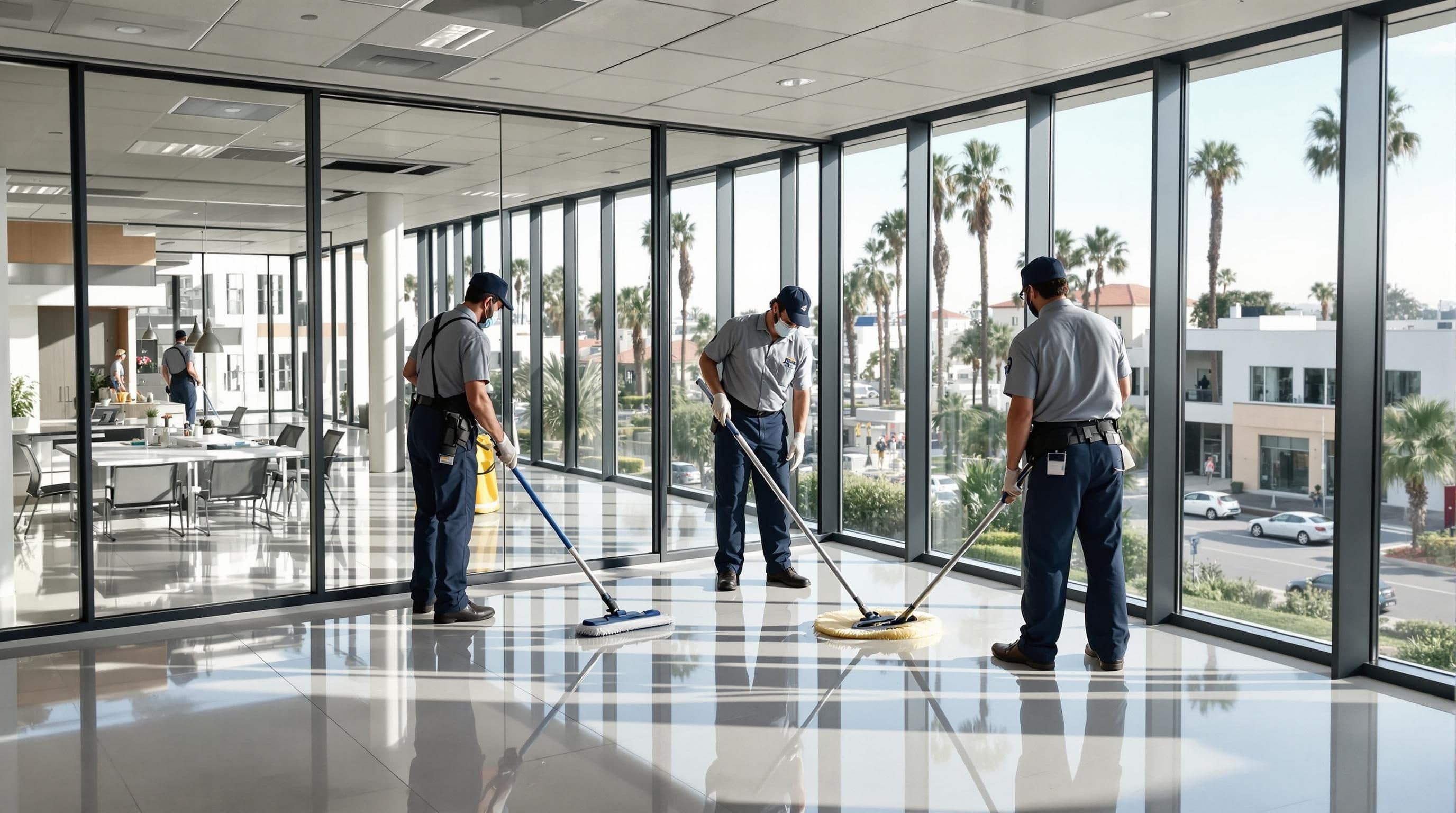
A good commercial cleaning arrangement in Tustin rests on four things: a written scope that names every task, frequencies set by how the space is actually used, a price you can trace back to that scope, and a contractor who answers plain questions about staffing and supervision. Get those right and the rest is execution.
This guide covers each one from the buyer's side of the table. Our family has run commercial cleaning since 1979 from a Tustin headquarters, so the advice reflects what goes wrong in local contracts. For the service itself, see our page on commercial cleaning in Tustin.
What a commercial cleaning contract should contain
The contract is the scope, and the scope is where most cleaning relationships succeed or fail. A one-page agreement that says "general cleaning, five nights" gives you nothing to hold anyone to. A useful contract reads like a checklist you could hand to a new crew member on their first night.
The scope, area by area
Each area of the building should appear on its own: entries and lobby, private offices, open work areas, conference rooms, break rooms, restrooms, and any specialty space such as an exam room or a server closet. Under each area, list the tasks. Restroom work, waste removal, surfaces, glass and floor care should be separate lines rather than one line reading general cleaning.
A frequency on every task
Every task needs a frequency next to it: each visit, weekly, monthly or quarterly. Without one, the crew decides, and a crew under time pressure decides the convenient way. Desk surfaces cleared of paper are a common gray area, so state whether the crew wipes around items or leaves desks alone.
Periodic work on its own lines
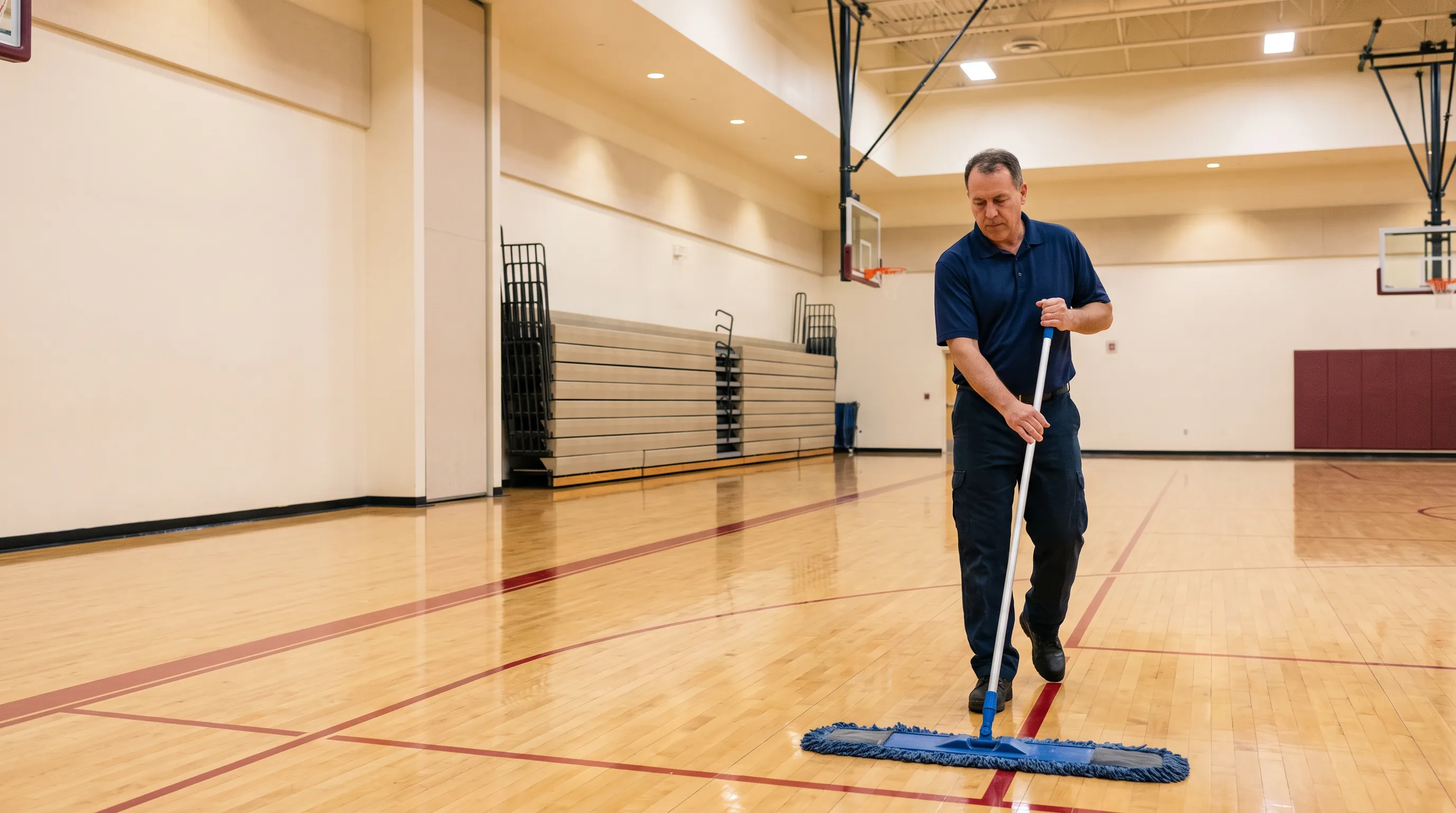
Carpet extraction, hard floor machine work, high dusting, vents and light fixtures belong on a separate schedule with their own price. These are the first tasks to slip when a nightly rate gets squeezed, and separate lines make a skipped cycle visible.
The practical terms
The contract should also settle who buys paper, soap and liners, how keys and alarm codes are handled, what happens when a crew member is out, and how you report a miss. Check the exit terms too. We do not use long-term contracts, and a contractor confident in its work should not need to lock you in.
How cleaning frequency is decided
Frequency follows use, not square footage. Two suites of the same size can need very different schedules, because one has a busy reception area and a staff kitchen while the other is a quiet back office used by a handful of people.
The factors that drive it are predictable:
- How many people use the space each day, including visitors and patients.
- How many restrooms serve them, since restrooms set the pace for everything else.
- Whether food is prepared or eaten on site.
- The flooring mix, because carpet, sealed concrete and tile each wear differently.
- Business hours, including weekend or evening operation.
- What the space is used for, from a light office to a medical suite.
A small office with light traffic often does well on a few nights a week, with trash and restrooms timed so nothing sits over a weekend. Busier buildings usually need a nightly route. When common areas look tired by mid-afternoon, the answer is daytime coverage rather than a heavier night scope, which is what day porter services in Orange County are for.
Cleaning and disinfecting are also separate decisions. CDC guidance holds that a surface has to be cleaned before it is disinfected, because soil shields germs from the product. The same guidance puts high-touch surfaces on a cleaning cycle of at least once a day, with disinfection added where it is appropriate and more frequent passes where use is heavy. Ask any bidder which surfaces they disinfect, with what, and how they respect the contact time on the label.
How the price is built
A fair quote is built from the scope, so it can be explained line by line. If a contractor gives you a figure without walking the building, the figure came from a template, and the gaps show up in the first month.
The factors behind the number
- Cleanable area, which is usually less than the lease footage once storage and unused rooms come out.
- The floor mix and how much of it needs machine work.
- Restroom count and fixture count.
- How many visits per week, and at what time of day.
- Periodic work, priced as separate cycles.
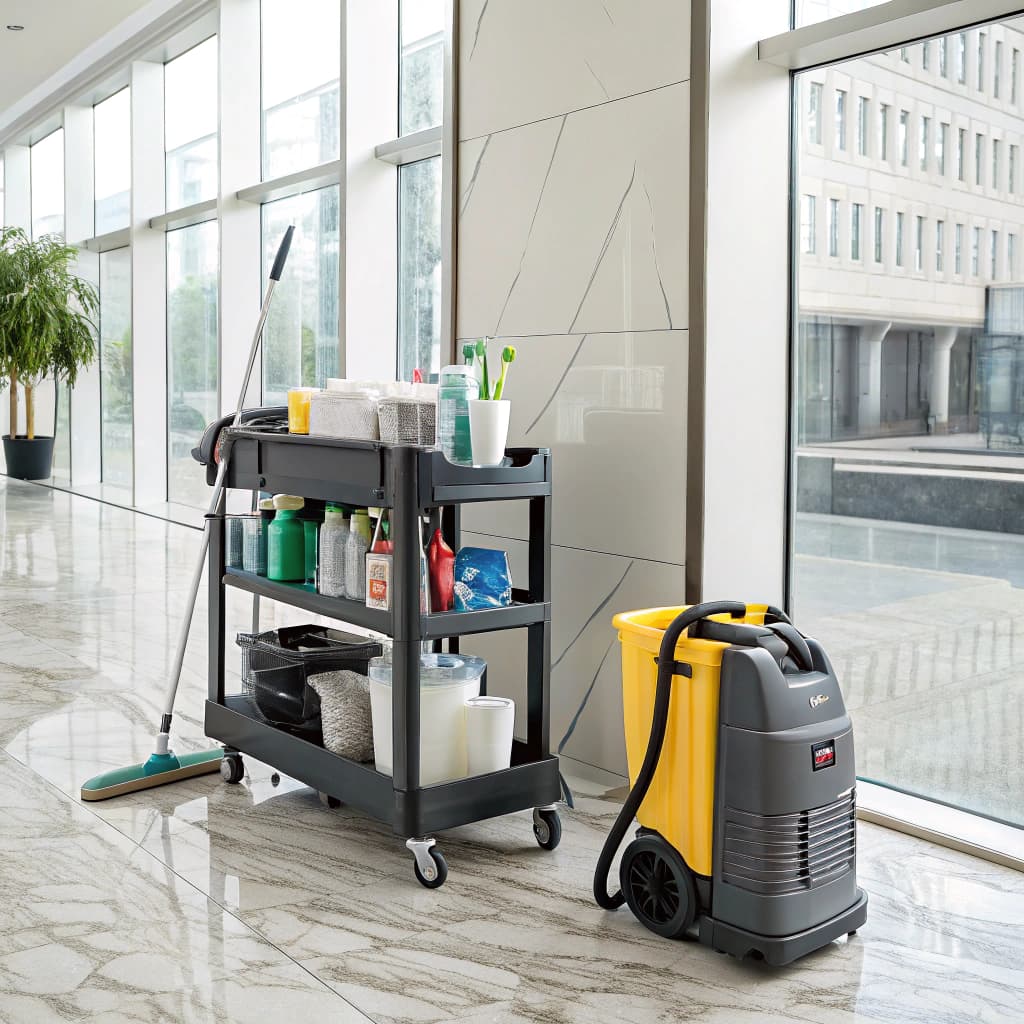
- Supplies, if the contractor stocks consumables.
- Access constraints such as security escorts, alarm windows or shared building hours.
Comparing bids fairly
Give every bidder the same written scope and ask them to price against it. Then compare line by line. A bid that comes in well below the others is usually missing something, most often periodic floor work, supplies or a realistic labor allowance. Ask what was left out before treating it as a saving. A quote can be a monthly flat fee for a defined scope or an hourly rate against an agreed schedule; both are normal, as long as the hours or the tasks are written down.
What to ask a contractor before signing
A few direct questions separate contractors quickly. A good one answers without hesitation and puts the answers in writing.
- Who cleans the building, and whether the same crew stays with it. Our crews stay with their buildings rather than rotating, because a crew that knows a property notices what changed.
- Whether staff are background-checked and trained before assignment to a site. Ours are.
- How the work is inspected, how often, and whether you see the results.
- What happens when a task is missed, and how the correction is confirmed.
- A current certificate of insurance naming your property.
- Which products run on the normal route. We use green, low-toxicity products across it.
- For California work, the written Injury and Illness Prevention Program that Cal/OSHA Title 8 section 3203 requires of every employer in the state.
- References from buildings like yours.
On references, depth matters. We have completed more than 1,000 projects for over 170 clients, and any contractor you consider should be able to put you in touch with customers whose buildings resemble yours.

Buildings in Tustin and the scope boundary
Tustin's commercial stock is mixed: office buildings, medical suites, retail centers, and business parks where an office front sits ahead of a warehouse or light industrial space. Each part of that mix needs its own lines in the scope, and the boundaries between them are where problems start.
In multi-tenant buildings, common areas are often on the landlord's contract while each suite has its own. Write down who handles the lobby, the shared restrooms and the corridors before the first visit, rather than discovering the gap when something is missed. In a flex building, the office side takes standard janitorial work while the rear takes machine scrubbing and different chemistry; one contractor covering both avoids a seam where neither side is responsible.
The same logic applies if you run sites beyond Tustin. Properties in Irvine or Santa Ana can sit under one scope format and one contact, with janitorial services across Orange County handled to the same written standard. Whatever you choose, start with the walk-through and the written scope, and judge every bid against it.
See also our pages on commercial cleaning across Orange County.