Professional janitorial services keep Tustin schools safe and clean by matching the work to the school day: restrooms serviced in cycles while students are on campus, classrooms and floors cleaned after dismissal, cafeterias reset between lunch periods, and heavy project work saved for summer and breaks. The order of operations matters as much as the products.
This guide explains how that schedule works across a campus in Tustin and the rest of Orange County, what a school should expect in a written scope, and where cleaning and disinfection differ. For the service itself, see our page on commercial cleaning services for schools in Orange County.
The school day sets the cleaning schedule
A school is two buildings in one. From morning drop-off to dismissal it is a crowded, occupied space where cleaning has to work around students. After the last bus it is an empty building with a few hours for full cleaning. A good program assigns each task to the half of the day where it actually works.
Restroom cycles during the school day
Restrooms set the pace on any campus. Paper and soap run out, floors get wet, and a single blocked fixture becomes the problem the whole hallway notices. Daytime coverage handles this in cycles: checking and restocking each restroom, wiping counters and fixtures, drying floors and pulling trash. Cycles are timed around passing periods, recess and lunch, when restrooms take the heaviest use, rather than spread evenly by the clock.
The evening crew then does the full clean: toilets, urinals, partitions, sinks and floors, with disinfection where it belongs. Grout lines and floor drains need periodic attention too. A dry floor drain trap pushes odor back into a clean room, and grout holding soil needs agitation and dwell time rather than a quick mop.
Classrooms after dismissal
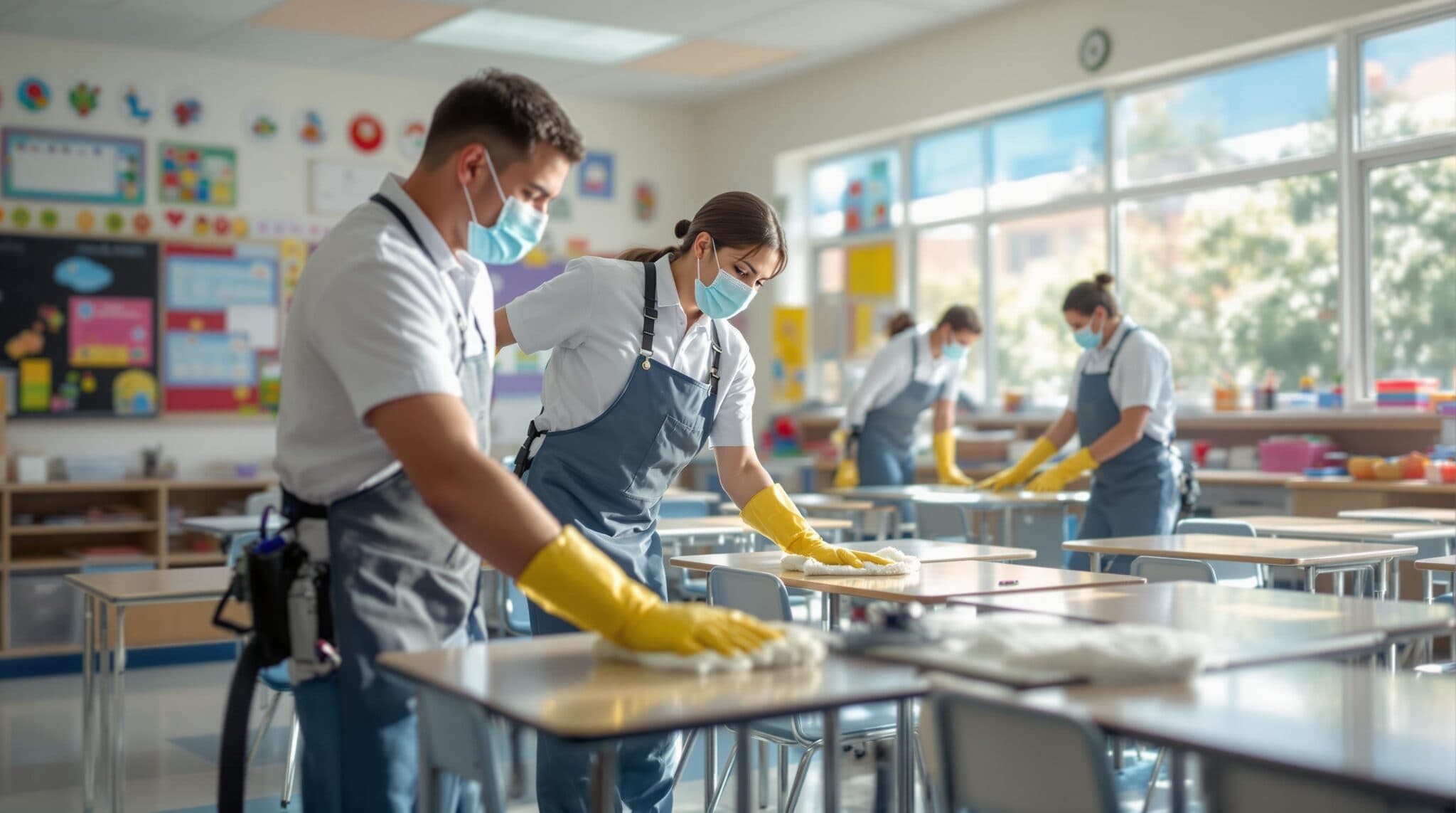
Classroom cleaning happens once students leave. A typical nightly sequence runs from high to low and from dry to wet: empty trash and recycling, dust reachable surfaces, wipe desks and tables, clean whiteboard trays and sinks, then vacuum or dust-mop and spot-mop the floor last. Teachers' desks are a common gray area, so the scope should say whether the crew wipes around materials or leaves them alone.
Early learning rooms need their own routine. Toys, manipulatives, nap mats, changing areas and low surfaces take direct contact from young children, and they are not just an extension of classroom cleaning.
Cafeterias, gyms and shared spaces
Shared spaces take the hardest use and have the least time between users. A cafeteria may serve several lunch periods back to back, a multipurpose room may host an assembly in the morning and a meeting at night, and gym floors carry a different finish from everything around them.
Between lunch periods the job is a quick reset: tables wiped, spills cleaned, floors spot-mopped and trash pulled before it overflows. After the last service the cafeteria gets a full clean, with tables and seating cleaned top to bottom and floors scrubbed. Food preparation areas in the kitchen usually stay with nutrition services staff, so the scope should draw that line clearly.
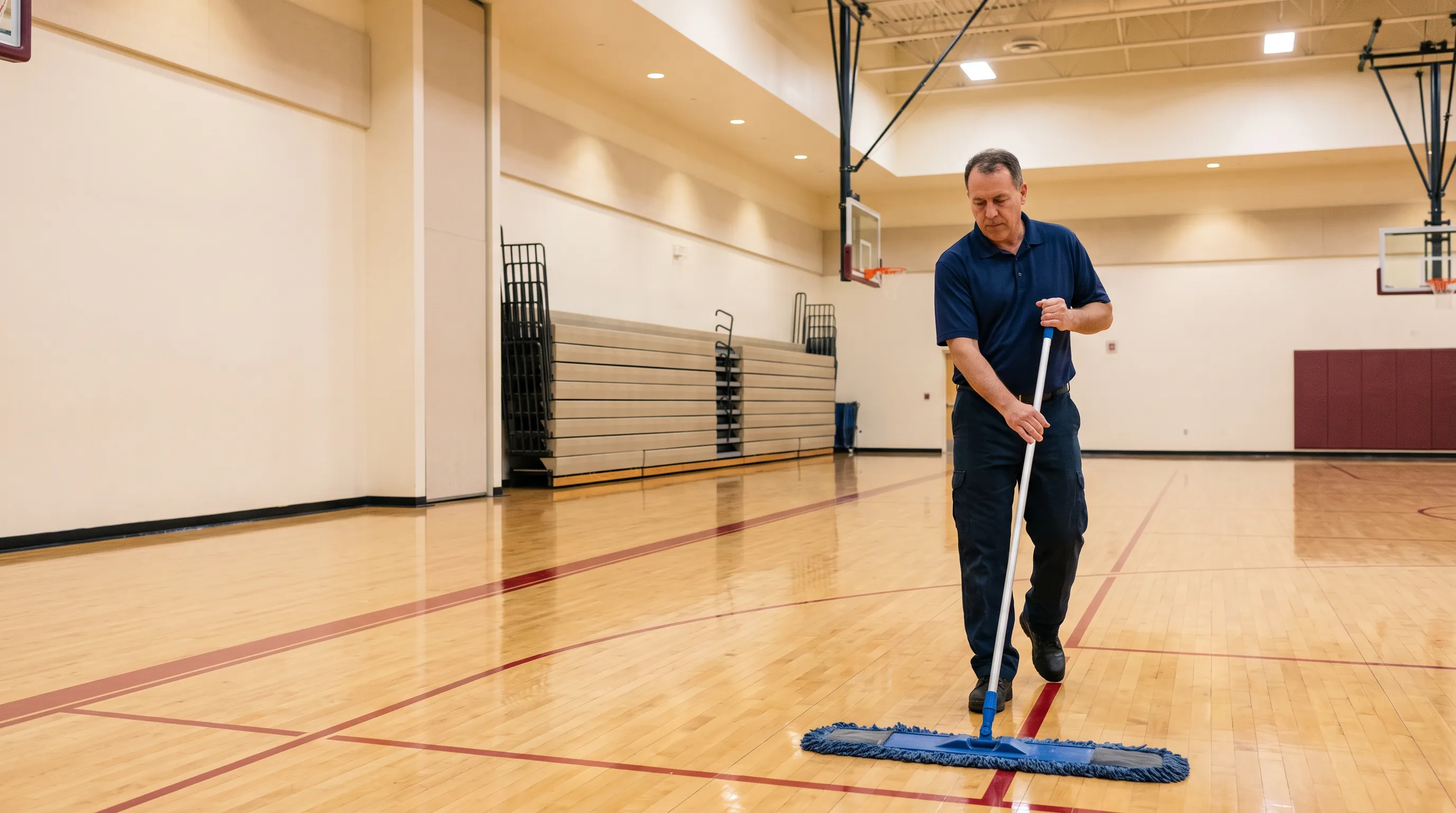
Spills cannot wait for the evening crew. Under OSHA's walking-working surfaces rule, employers have to keep floors clean, dry where feasible, and clear of hazards like spills. In a hallway full of students, that makes spill response a safety job rather than a cosmetic one. Wood gym floors sit on their own schedule, with dust-mopping as routine and finish work scheduled around the athletic calendar.
Clean first, then disinfect
Cleaning and disinfecting are separate operations, and the order is not optional. CDC guidance is that a surface must be cleaned before it is disinfected, because soil blocks the disinfectant from reaching the surface. Skipping the cleaning step is the most common way a school program fails quietly.
The same CDC guidance indicates that when nobody with a confirmed or suspected illness has been in a space, cleaning once a day is usually enough to remove virus that may be on surfaces. Disinfection is then reserved for the surfaces and situations that need it: restrooms, nurse's offices, and high-touch points such as door handles and railings during illness season.
Where disinfection is used, the product has to stay on the surface for the contact time printed on its label. When disinfection fails in a school, the usual cause is a product wiped away before its contact time ran out, not a weak product. When illness moves through a school, the sensible response is more frequent high-touch cycles and disinfection extended to affected classrooms, not fogging the whole building. Routine cleaning on the normal route uses green, low-toxicity products, which suits rooms full of children; our approach to green cleaning in Orange County explains how that works alongside disinfection.
Summer and break project work
The long breaks are when the heavy work gets done. Floors, carpet and high surfaces need time, an empty room and space to dry, and the school year rarely offers any of that. A good program plans this work months ahead so it fits around summer school, maintenance projects and staff returning early.
Typical project work includes:
- Stripping, scrubbing and refinishing resilient floors in classrooms and corridors.
- Carpet extraction in libraries, offices and classrooms.
- High dusting of vents, light fixtures, ledges and the tops of cabinets.
- Detailed restroom work on grout, partitions and fixtures.
- Interior glass, door kick plates and locker exteriors.
- A final reset before teachers return, so rooms are ready to set up.
Each item belongs in the scope as a defined job with its own schedule. Periodic work priced separately from the nightly route does not disappear when a school year gets busy. Shorter breaks during the year suit smaller projects, such as carpet in a single wing or one building's restrooms. Floor work is detailed on our page about commercial floor cleaning in Orange County.
Who is on campus: staff and continuity
The people cleaning a school matter as much as the method. Staff work in buildings where children spend their day, often with access to classrooms, offices and storage after hours. A school should know exactly who those people are and how they are supervised.
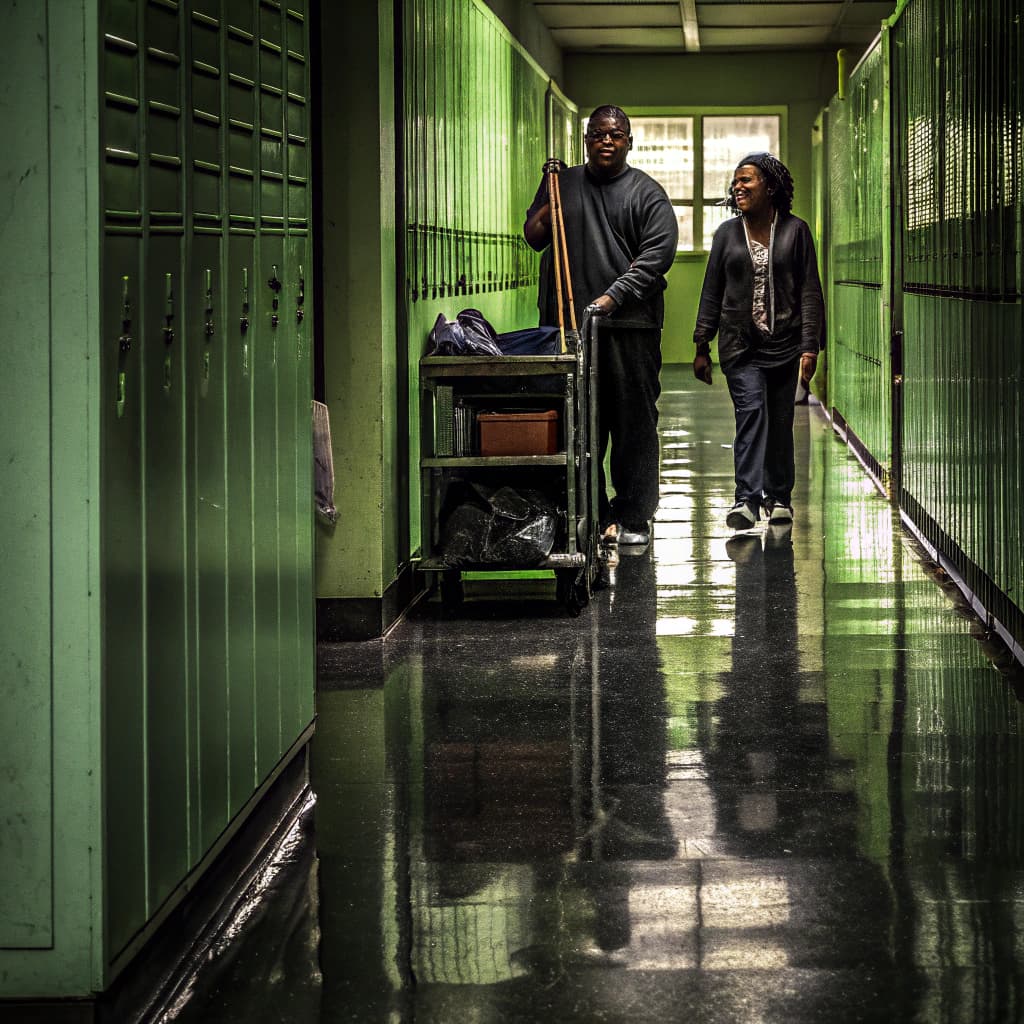
Our staff are background-checked and trained before assignment to any site, and crews stay with their buildings rather than rotating. On a campus that continuity pays off quickly. A crew that knows the building notices a dripping fixture, a propped door or a classroom that looks wrong, and reports it.
Ask any contractor the same questions. Who will clean the campus, and how long have they been with the company? What happens when someone is out? How is the work inspected, and how do results reach the site administrator? California employers must also keep a written Injury and Illness Prevention Program under Cal/OSHA Title 8 section 3203, covering hazard identification, training and correction, and a contractor working on your campus should be able to show theirs.
Our family has run commercial cleaning since 1979 from our Tustin headquarters. Whichever contractor a school chooses, the scope should follow the school day, keep cleaning and disinfection in the right order, and put summer project work in writing before the year begins.
See also our pages on Orange County janitorial services and Tustin janitorial services.