Casino-scale venues in Las Vegas are cleaned as a continuous operation rather than a nightly one. There is no closing time to work after, so cleaning is split into zones and cycles: constant response on the floor, restroom rounds that never stop, carpet and hard floor work rotated section by section through the quietest hours, and kitchens on their own schedule.
This guide explains how that system works for any venue that never empties: gaming floors, showrooms, food halls and the corridors between them. It covers what fails, why, and what a written scope for a venue like this should include.
High-traffic area cleaning for casinos and round-the-clock venues
The defining problem is that the building is always occupied. A traditional janitorial plan assumes an empty building for part of the night. A casino floor never offers that, so high-traffic area cleaning has to happen around guests, in short windows, without blocking paths or play.
Zones, not shifts
The practical answer is to divide the venue into zones and give each its own cycle. Entries, main aisles, cashier areas, restroom corridors and the routes to food outlets take the heaviest traffic and get the shortest intervals. Quieter gaming sections, back corridors and meeting areas run on longer ones. Each zone has a written list of tasks and a frequency, so coverage does not depend on whoever is on shift.
Response and routine
Two kinds of work run side by side. Response work handles spills, broken glass and overflowing bins the moment they appear. Routine work follows the cycle: emptying receptacles, wiping touchpoints, spot-cleaning carpet and polishing glass and metal. Spills cannot wait for the next round. Under OSHA's walking-working surfaces standard, 29 CFR 1910.22, employers keep floors clean, dry where feasible and free of hazards such as spills, and in a crowded aisle a wet patch is a fall waiting to happen.
Timing the heavy work
Deeper work moves around the clock with occupancy. Each venue has predictable low points, usually in the early morning hours, and those are when sections are roped off for extraction or machine scrubbing. A rotating plan cleans one section thoroughly each low period, so the whole floor is covered over a cycle without closing it at once.
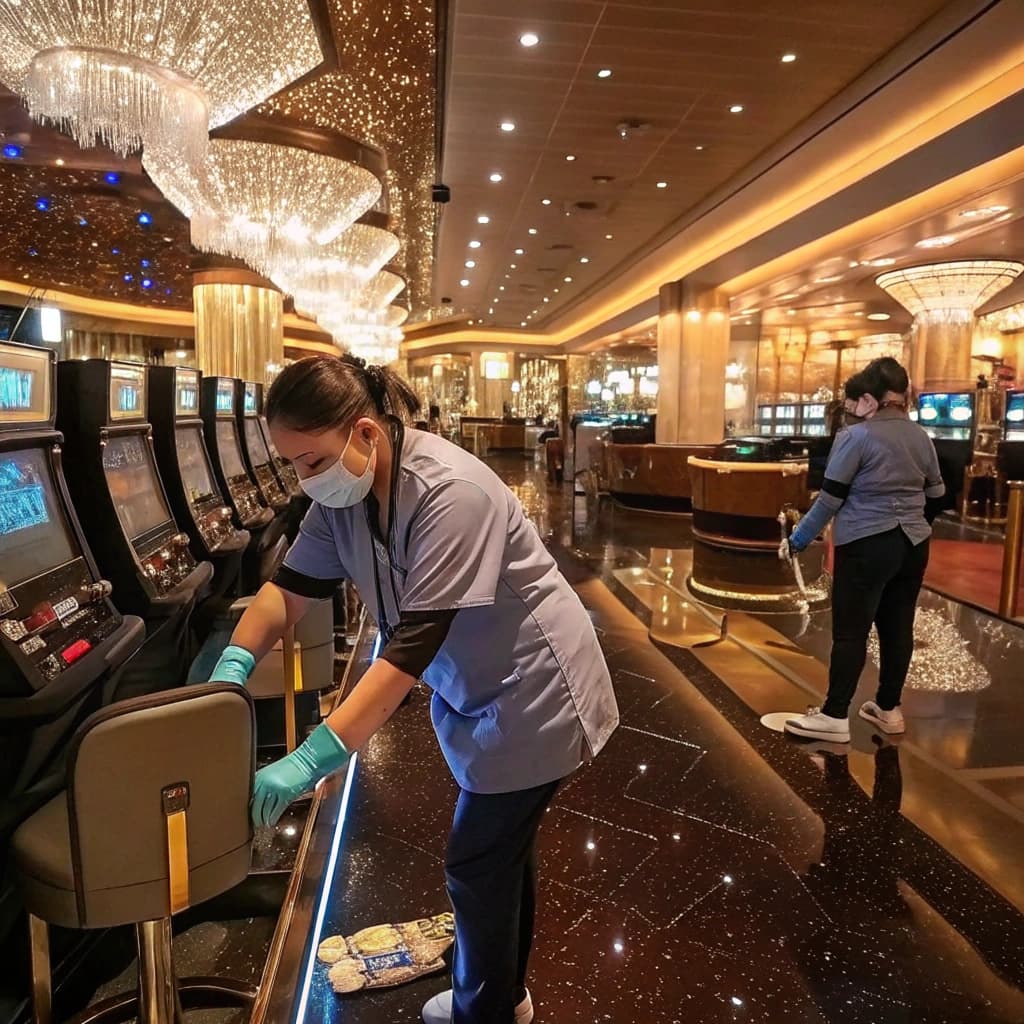
Gaming areas: cleaning slots, tables and touchpoints
Gaming equipment is handled constantly by different people, and most of it is electronic. That combination drives the method. Surfaces need regular attention, but liquid has to stay away from screens, button panels, bill validators and seams where it can reach the electronics.
Cleaning slots safely starts with the cloth, not the machine. Product goes onto a microfiber cloth, never sprayed directly onto a cabinet, screen or button deck. Screens get a cleaner suited to their coating, since some general cleaners haze or strip it. Button panels, handles, chair arms and the ledges where guests rest drinks take the most contact and get the most frequent wiping. Machine interiors and anything requiring a key belong to the venue's slot technicians, never to the cleaning crew.
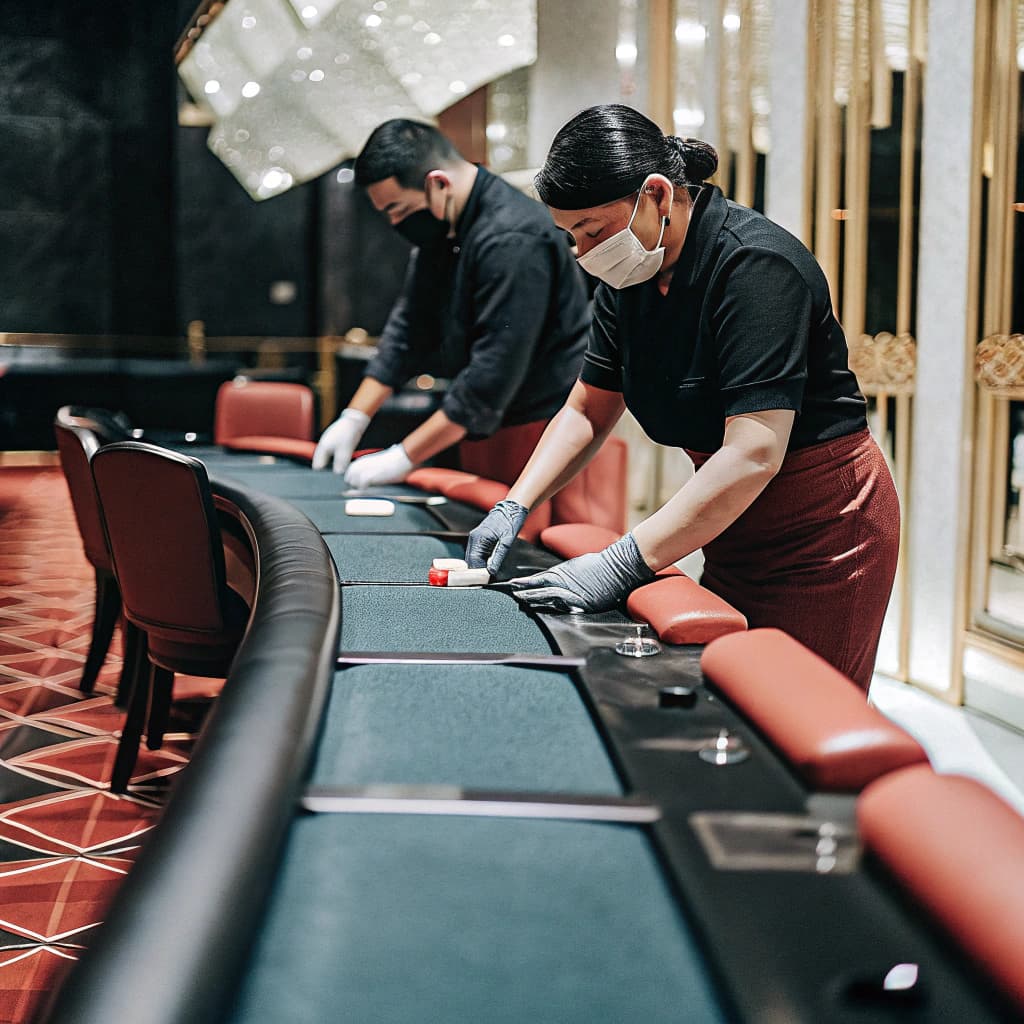
Table games follow the same principle. Rails and chair backs are cleaned on the cycle, while the felt and gaming equipment stay with table games staff unless the venue writes them into the cleaning scope. Where smoking is permitted, a film builds on glass, machine faces, light fixtures and vents. It needs a degreasing cleaner on a periodic cycle, because the routine wipe only moves it around.
Touchpoints across the floor, including ATM keypads, kiosk screens, elevator buttons and door hardware, should be listed by name in the scope. CDC guidance sets a floor of at least daily cleaning for high-touch surfaces, adding disinfection where appropriate and more frequent passes as use rises. In a venue that never closes, more often is the realistic reading. Disinfection only works on a surface that has already been cleaned.
Carpet in continuous-use venues
Carpet carries the visual weight of a gaming floor, and it takes punishment no office carpet ever sees: constant foot traffic, rolling carts, food and drink spills and soil from desert dust tracked in at every entry. A carpet program for this setting is a cycle of several methods, not one deep clean.
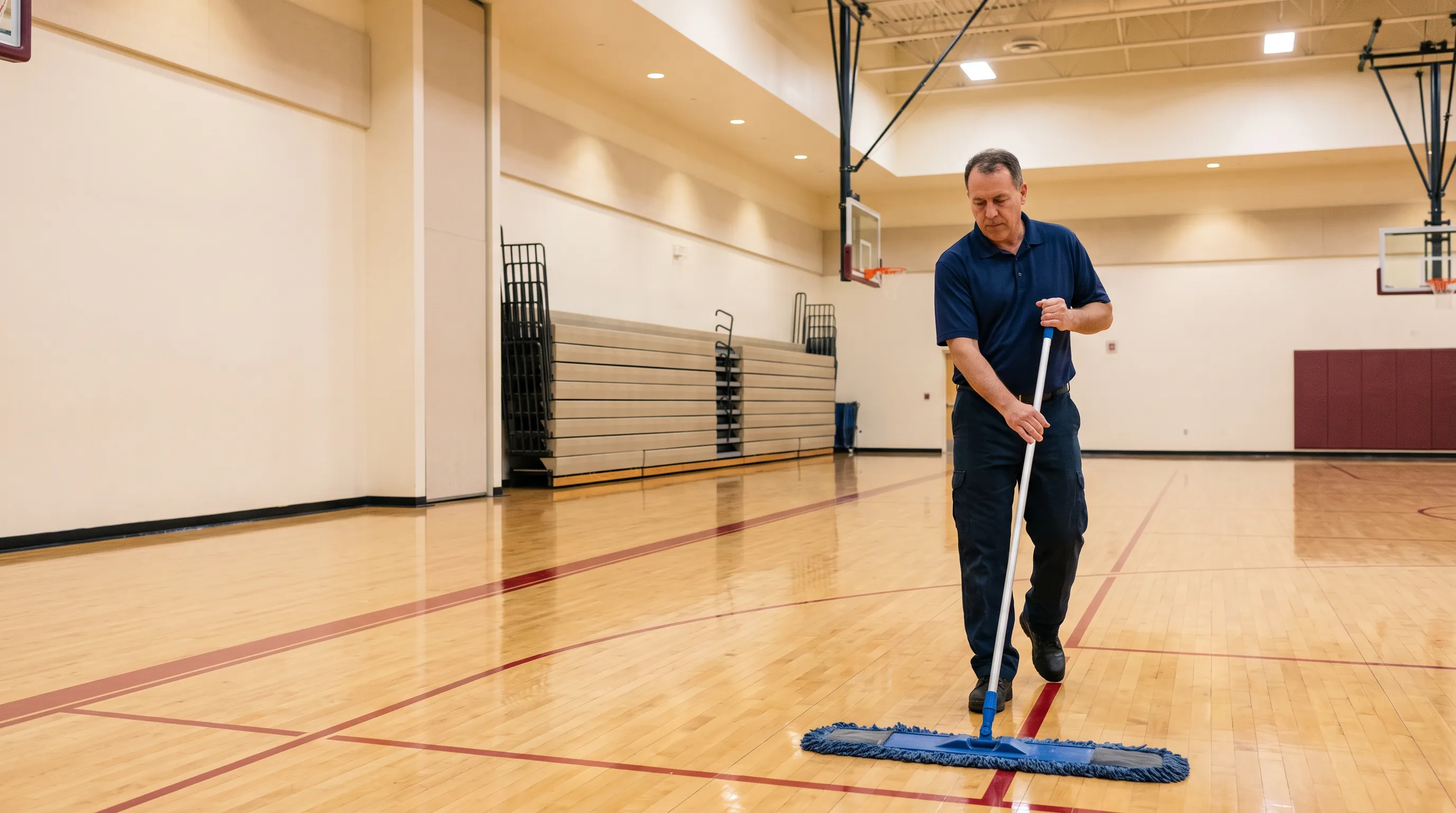
The foundation is daily vacuuming with HEPA-filtered machines, concentrated on the main traffic lanes where grit cuts fibers. Spots are treated as they happen, because a spill that sets overnight becomes a stain. Interim cleaning, typically a low-moisture method, keeps traffic lanes presentable between deeper cleans and lets a section reopen quickly. Hot water extraction is the restorative step, scheduled by section during low-occupancy hours with drying time built into the rotation.
Good casino carpet cleaning follows the manufacturer's care guide. The manufacturer and the venue's flooring specialists are the real experts on a patterned, high-density carpet, and the guide decides chemistry, temperature and method. Drying matters as much as cleaning. Carpet left damp under traffic wicks soil back up from the backing and soon looks dirty again.
Any carpet cleaning service working a venue in Las Vegas should be asked how it handles drying, how sections are sequenced and how it treats traffic lanes versus edges. Our page on carpet cleaning services in Las Vegas explains how extraction cycles are planned for commercial buildings.
Restrooms under constant load
A casino restroom is never closed long enough for a full clean, and it serves a new crowd every few minutes. The answer is a short restroom cycle all day and night, with full cleaning done one restroom at a time while guests are redirected to the next bank.
Each round restocks paper and soap, wipes counters and fixtures, clears trash and checks floors. Restocking comes before cleaning, because an empty dispenser is the first thing a guest notices. Color-coded microfiber keeps restroom cloths separate from those used on gaming surfaces and food areas.
Two problems build up out of sight. Grout holding organic soil needs agitation and dwell time rather than another quick mop. Floor drains need regular water or treatment, because a dry trap lets sewer odor back into a spotless room. Hard water adds a third: valley water runs about 16 to 17 grains per gallon of hardness, which leaves scale on faucets, urinals and glass. That calls for scheduled descaling rather than harder scrubbing on every round.
Food areas, kitchens and hood systems
Food areas run on two clocks. Front-of-house dining, food courts and bars need the same zone-and-cycle approach as the gaming floor. Back-of-house kitchens follow the kitchen's own cleaning program, which sits with the food operator.
For casino kitchen cleaning, the usual division is clear. Kitchen staff handle food-contact surfaces and equipment during and after service. A cleaning contractor can take floors, walls, drains, dish areas and non-food-contact surfaces after close. Kitchen floors need degreasing and scrubbing rather than mopping, and the grout lines between tiles hold soil that a mop passes straight over.
Exhaust hoods, filters and ductwork are a separate matter. Hood cleaning is a fire safety specialty with its own standard, and a casino in Las Vegas runs it through a dedicated hood cleaning contractor on a schedule agreed with that specialist. General cleaning crews wipe the exterior of a hood canopy at most. They should not take on the filters, plenum or ductwork, and a venue scope should name the hood specialist rather than leave the system ambiguous.
Writing the scope for a venue that never closes
Everything above works only when it is written down. A venue scope should list each zone, the tasks in it and the frequency of each. It should also state the low-occupancy windows when sections can be closed for heavy work.
The scope should separate routine cycles from periodic work such as extraction, machine scrubbing, high dusting and descaling, so the periodic work cannot quietly slip. It should define what belongs to slot technicians, table games staff, food operators and the hood contractor. Venues that are not casinos but share the same round-the-clock pattern, from showrooms to arenas, face the same questions. Our page on cleaning services for entertainment venues in Las Vegas covers how we scope that kind of work.
See also our pages on commercial cleaning across Las Vegas.